
Two Meteor Showers Peak Together Amidst Bright Moonlight This Week
Skywatchers can catch both the Southern Delta Aquariids and Alpha Capricornids peaking on the night of July 30-31. However, a nearly full moon will present challenges for viewing fainter meteors.

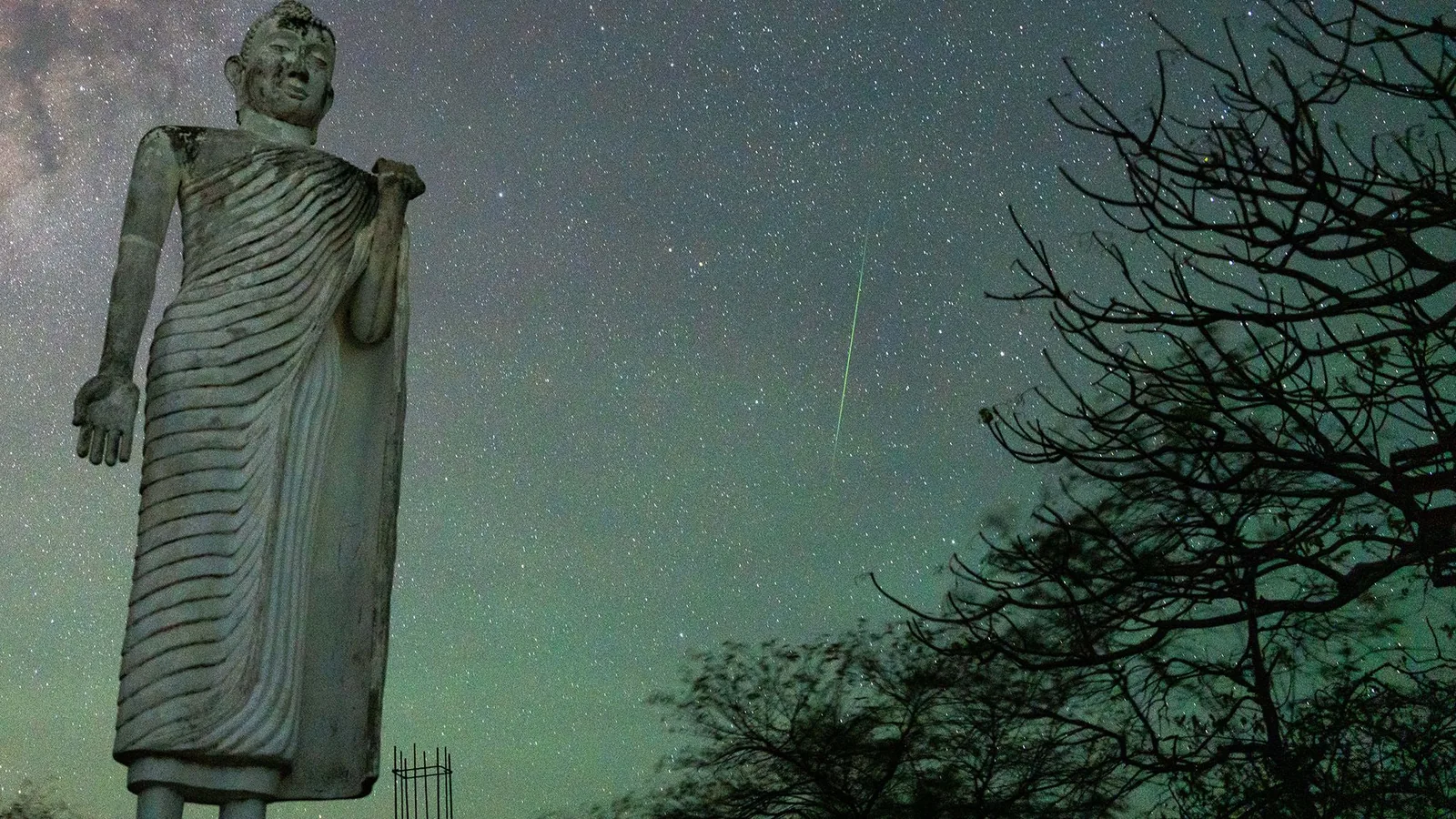
Two prominent meteor showers, the Southern Delta Aquariids and the Alpha Capricornids, will reach their peak activity simultaneously during the night of Thursday, July 30, into Friday, July 31. Despite the celestial convergence, stargazers face an obstacle in the form of an exceptionally bright moon, which will be 98% full, according to the American Meteor Society. This lunar illumination is expected to wash out many of the fainter shooting stars, diminishing the potential for a spectacular display.
The Southern Delta Aquariids, active annually from July 12 to August 23, typically produce about 25 meteors per hour under optimal dark-sky conditions. However, the proximity of this year's peak to July's full Buck Moon, which occurs on July 29, significantly compromises viewing opportunities. The Alpha Capricornids, active from July 3 to August 15, are less prolific, offering around five meteors per hour. This shower is, however, known for occasional bright fireballs—large meteoroids that burn brightly, sometimes with vibrant colors, as they streak through Earth's atmosphere.
Lunar Challenge and Viewing Strategies
For observers in North America, the bright moon will be a factor for most of the night, impacting the visibility of fainter meteors. While a full moon doesn't prevent meteors from occurring, its intense glare obscures the subtler streaks. This is particularly true for the Southern Delta Aquariids, which are often faint and less likely to produce fireballs, as noted by the American Meteor Society. Nonetheless, the concurrent activity of these two showers presents an opportunity for practicing meteor shower photography or capturing images of the moon itself.
The optimal time for observation will be between midnight and dawn. During these hours, the radiant point for the Southern Delta Aquariids, located in the constellation Aquarius, will be highest in the southern sky. Observers situated in the southern United States, Mexico, and the Caribbean will have a better vantage point compared to those located further north, as Aquarius ascends higher at lower latitudes. To maximize the chances of spotting any visible shooting stars, skywatchers are advised to position themselves with the moon behind them or obscured by natural or man-made obstructions like buildings, trees, or hills. Directing their gaze towards the darkest section of the sky is also crucial. As is generally the case with meteor showers, viewing is best achieved with the naked eye, negating the need for telescopes or binoculars.
Should weather conditions or the overwhelming moonlight prevent viewing during this July peak, a more opportune celestial event awaits in August. The renowned Perseid meteor shower is set to peak on the night of August 12-13. This event coincides with the new moon on August 12, ensuring dark, moonless skies that will allow for the shower's maximum rate of approximately 100 meteors per hour to be fully appreciated. Furthermore, the same new moon will facilitate a total solar eclipse, visible along a specific path stretching across eastern Greenland, western Iceland, and northern Spain. A partial solar eclipse will also be observable from parts of Canada and the northeastern United States. The convergence of a major solar eclipse and the peak of a significant meteor shower promises to make August 12-13 a potentially historic night for astronomy enthusiasts and skywatchers worldwide.