
Nancy Grace Roman Space Telescope Set for August 30 Launch
NASA's Nancy Grace Roman Space Telescope is scheduled to launch on August 30, 2026. The mission aims to explore dark energy and exoplanets with its expansive view.

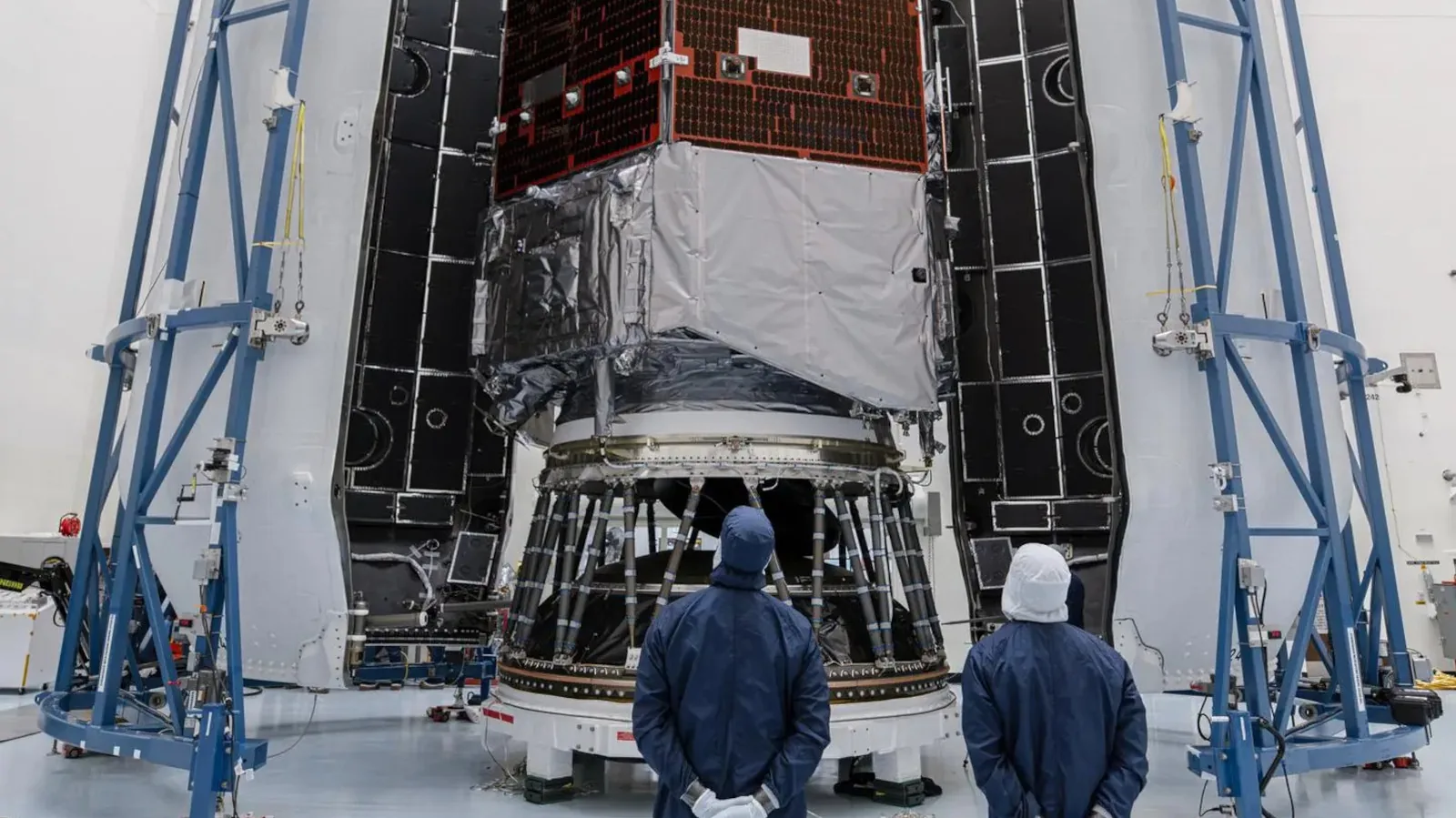
The Nancy Grace Roman Space Telescope is slated for liftoff on August 30, 2026, with the launch window opening no earlier than 7:26 AM Eastern Time. NASA will commence live coverage of the event at 6:20 AM ET. Engineers recently finalized the telescope's primary mirror inspection in late May, ensuring no damage occurred during rigorous testing phases. Originally slated for a September deployment, NASA announced in early June that the telescope would launch ahead of schedule.
Named in honor of Nancy Grace Roman, NASA's first Chief of Astronomy and revered as the "Mother of Hubble," this advanced observatory promises unprecedented cosmic views. The Roman telescope boasts a field of view at least 100 times larger than the iconic Hubble Space Telescope, enabling it to survey a significantly wider expanse of the universe simultaneously. This capability is crucial for its primary scientific objectives: studying the enigmatic nature of dark energy and addressing fundamental questions about this pervasive cosmic force.
Exploring the Universe and Beyond
Beyond its mission to unravel the mysteries of dark energy, the Roman telescope is equipped with sophisticated technology to facilitate the study of exoplanets. It features a coronagraph capable of blocking the intense light from stars, allowing for clearer observation of the planets that orbit them. This function is expected to yield substantial data for scientists seeking to determine the prevalence of habitable conditions across the galaxy and understand the commonality of solar systems similar to our own.
The telescope's development represents a significant leap forward in astronomical observation capabilities. Its large aperture and advanced instruments are designed to tackle some of the most profound questions in cosmology and astrophysics. The mission’s success hinges on its ability to capture detailed imagery and data from vast cosmic distances, providing insights that were previously unattainable. This project highlights NASA's continued commitment to pushing the boundaries of space exploration and scientific discovery.
Roman, who passed away in 2011, was a pioneering figure in astronomy, advocating for and leading the development of major space observatories. Her instrumental role in the Hubble program paved the way for subsequent generations of space telescopes. The naming of this new observatory after her signifies a recognition of her enduring legacy and her profound impact on the field of astronomy. The telescope's mission is a direct continuation of the spirit of discovery she embodied throughout her career.
The launch will be broadcast live on NASA Television and the agency's website, offering the public a front-row seat to this significant scientific event. Experts anticipate that the data gathered by the Roman telescope will revolutionize our understanding of the universe, from its expansion driven by dark energy to the potential for life on distant worlds. The mission is expected to operate for at least five years, with potential for an extended mission depending on its performance and scientific output. The scientific community eagerly awaits the first images and data from this powerful new eye on the cosmos.