
NASA Careers: Diverse Paths in Space Exploration
NASA hires engineers, scientists, and mission specialists across its 10 centers. November 2026 openings range from entry-level internships to senior leadership roles, with application deadlines typically 30 days from posting.

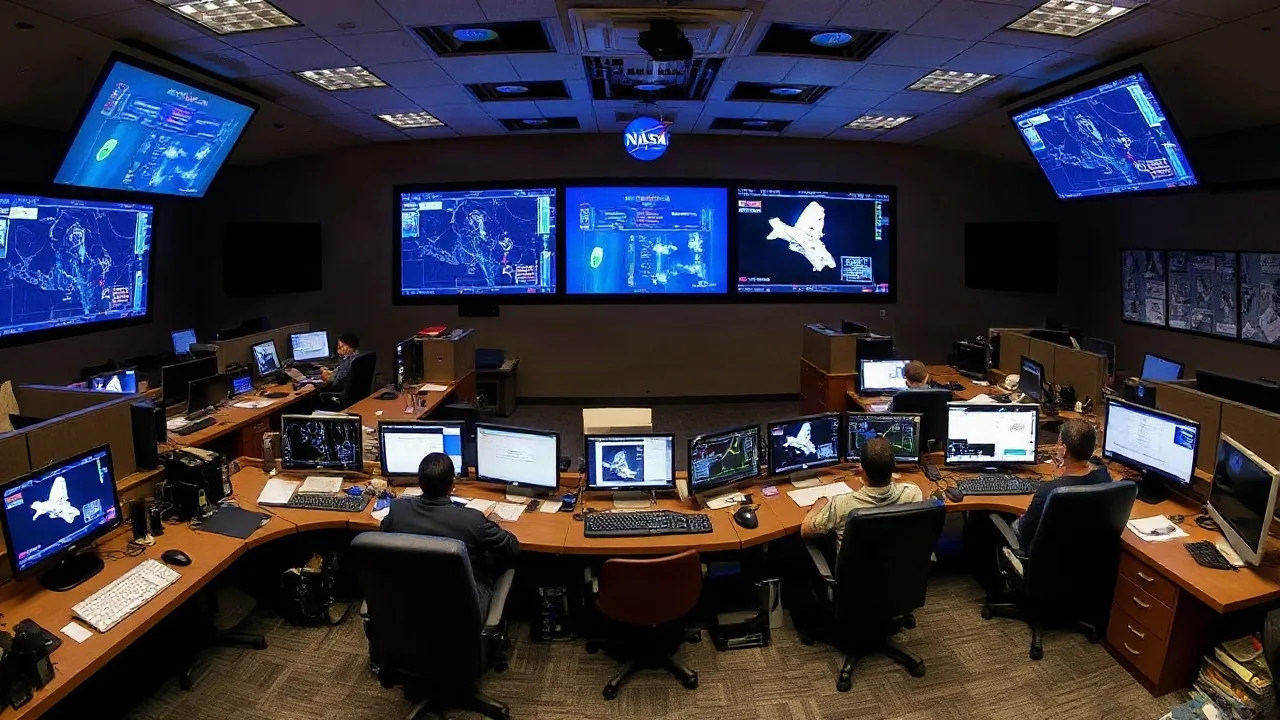
NASA's Johnson Space Center in Houston is actively recruiting aerospace engineers and flight controllers for the 2027 crew rotation cycle, marking one of the agency's largest hiring pushes since the Artemis program accelerated in 2023. The openings reflect NASA's expansion beyond low-Earth orbit operations into deep-space exploration, requiring professionals across multiple disciplines.
The space agency maintains career portals at each of its 10 field centers: Kennedy in Florida, Marshall in Alabama, Goddard in Maryland, JPL in California, Glenn in Ohio, Ames in California, Stennis in Mississippi, Dryden in California, Wallops in Virginia, and Johnson in Texas. Each center specializes in different mission phases, from launch operations to deep-space probes.
Entry Points and Educational Requirements
NASA employs professionals in over 300 occupational series, ranging from mechanical engineers and software developers to biologists and communications specialists. According to NASA's Human Resources office, roughly 40 percent of current hires each year come through internship or early-career pathways, not exclusively senior positions. Entry-level candidates typically need a bachelor's degree in engineering, physical science, computer science, or related fields, though some roles accept high-school graduates with relevant technical certifications.
The agency's aerospace jobs market in 2026 emphasizes systems engineering and autonomous vehicle operations. JPL recently posted 82 positions for robotics engineers and mission planners supporting the Europa Clipper and upcoming Mars rover programs. Kennedy Space Center is hiring 45 launch operations specialists to support both SpaceX Crew Dragon and NASA's own Space Launch System infrastructure.
Internship programs operate year-round at most centers. NASA's Pathways Internship Program offers paid positions during summer, fall, or spring semesters. Successful interns often convert to permanent positions within 18 months; last year, 68 percent of Pathways interns were hired into full-time roles, according to the agency's latest annual report.
The Mission Control and Flight Operations Pipeline
Flight Controller positions at Johnson Space Center represent the most specialized career track. These professionals monitor spacecraft systems, execute emergency procedures, and communicate directly with astronauts during orbital missions. The training pipeline requires 2 to 3 years of intensive education after hire, with a starting salary around $72,000 annually for GS-9 positions, climbing to $115,000+ for GS-13 supervisory roles by 2026 federal pay schedules.
Dr. Margaret Chen, NASA's Associate Administrator for Human Resources, stated in a November 2026 briefing: "The next phase of deep-space exploration demands mission controllers who can work autonomously with 20-minute communication delays to the Moon and beyond. Our recruitment pipeline reflects that reality, with an emphasis on problem-solving and real-time decision-making."
Flight controller candidates undergo a multi-month vetting process including psychological evaluation, technical examinations, and simulation trials. Only 15 to 20 percent of applicants advance to training. Once certified, controllers typically work 10-year rotations before moving to management or technical specialist tracks.
Engineering and Technical Career Trajectories
Mechanical and electrical engineers form the backbone of NASA's workforce. These roles span propulsion system design, structural analysis, power systems, and thermal management. A mechanical engineer at Stennis Space Center, testing Space Launch System engines, typically progresses from GS-7 (entry) to GS-13 (senior engineer) over 12 to 15 years, with salaries ranging from $42,000 to $155,000 in 2026 dollars.
Software and systems engineers are the fastest-growing occupational group. NASA's space industry partnerships with SpaceX, Sierra Space, and Blue Origin have created demand for engineers comfortable with both government and commercial aerospace standards. Goddard Space Center, which operates a robust Earth-observation fleet, posted 34 software positions in October 2026, all offering remote flexibility.
- Autonomous systems engineers: design self-driving rovers and spacecraft fault-detection systems
- Avionics specialists: maintain and upgrade flight computer hardware and firmware
- Structural analysts: model and test materials under extreme thermal and vacuum conditions
- Thermal engineers: design life-support and payload cooling systems for deep-space missions
- Mission designers: calculate trajectories and orbital mechanics for spacecraft launches
Scientists and researchers support payload development, data analysis, and fundamental research. Astronomy and planetary science positions typically require a PhD, though Master's-level applicants can enter as GS-7 researchers. These roles often include publication opportunities and direct involvement with peer-reviewed discovery.
How to Navigate the Application Process
All NASA positions post on USAJobs.gov, the federal government's consolidated career portal. Search filters allow candidates to narrow by center, job series, salary, and security clearance requirements. Most positions remain open for 10 to 30 days; high-demand roles fill quickly. Applying directly through each center's internal portal does not accelerate the process; USAJobs remains the official channel.
Federal hiring boards evaluate applications against job-related competencies, not education alone. Resumes must clearly articulate specific accomplishments: "Redesigned thermal model that reduced computational time by 35 percent" outweighs "Skilled in MATLAB." Selecting "yes" to the self-assessment questionnaire after applying is mandatory; skipping it disqualifies the candidate immediately.
Security clearances add 3 to 6 months to the hire process. Most technical positions require a Secret clearance; mission-critical roles may demand Top Secret. Candidates with prior military or federal service often move faster through background investigations.
NASA's career paths emphasize continuous learning. The agency offers tuition reimbursement, professional development courses, and sabbatical opportunities. Engineers and scientists regularly rotate between centers to gain cross-functional expertise, especially between design (Marshall, Goddard) and operations (Johnson, Kennedy) functions.
Salaries are determined by the General Schedule (GS) pay scale, which in 2026 ranges from $21,000 (GS-1) to $176,000 (GS-15). Most entry-level technical hires start at GS-7 or GS-9; PhDs often enter at GS-11. Cost-of-living adjustments vary by location: Houston, for example, sees 5 percent salary adjustments relative to the federal base, while San Francisco Bay Area roles receive 30 percent adjustments to reflect regional expenses.
The competition remains intense but accessible. NASA received over 18,000 applications in 2025 for fewer than 900 positions; focusing on specific skill sets and clearly connecting experience to job descriptions significantly improves odds. Networking within the NASA jobs community through scientific conferences, university partnerships, and contractor relationships can provide early visibility to upcoming openings.