
SpaceX Jobs: Launch Your Career in Modern Spaceflight
SpaceX is actively hiring engineers, technicians, and operations specialists as it scales production for Starship missions and Falcon rocket launches. Discover the roles, qualifications, and growth paths driving the private spaceflight revolution.

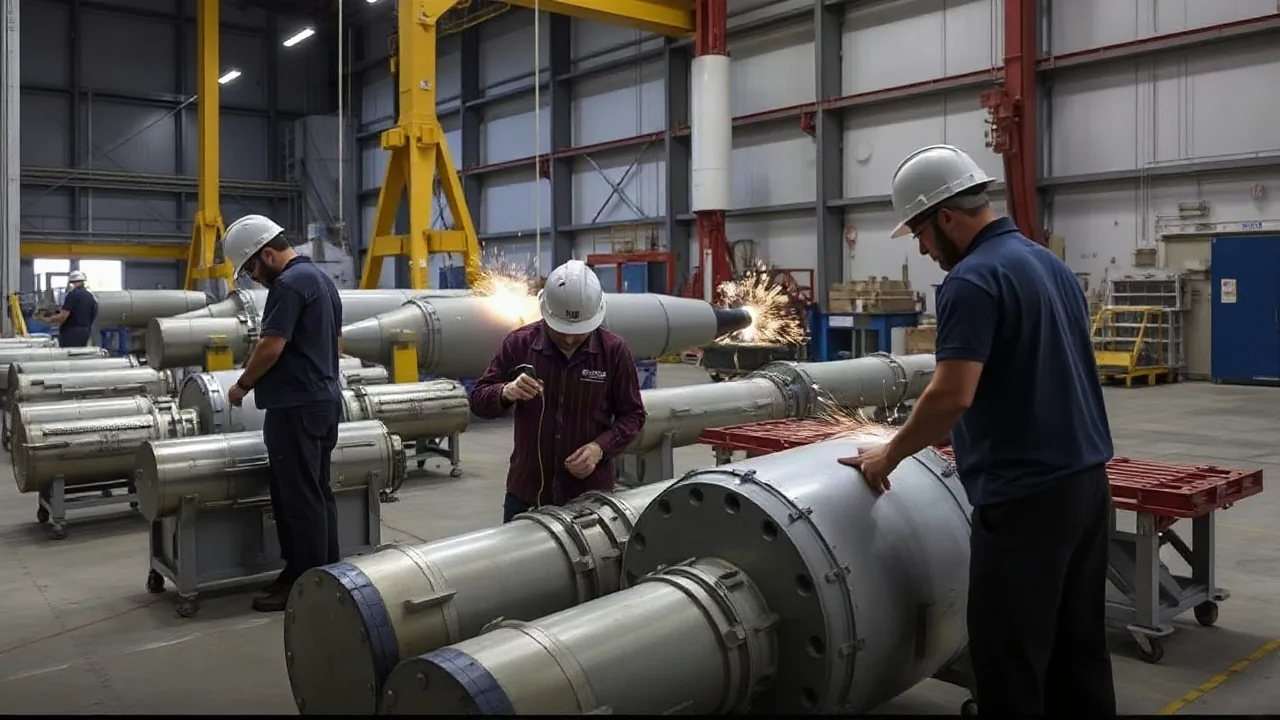
SpaceX is recruiting hundreds of personnel across its Texas, Florida, and California facilities as of November 2026, signaling aggressive expansion in manufacturing, launch operations, and mission control. The company's push to operationalize Starship for lunar cargo and crewed missions has created urgent demand for skilled workers in aerospace jobs that did not exist at traditional contractors five years ago.
Elon Musk's company posted over 1,200 open roles in October 2026, spanning manufacturing floors, engineering labs, and launch pads. This hiring surge reflects the competitive timeline SpaceX faces to support NASA's Artemis program, commercial satellite launches, and its own Mars development roadmap.
"We are in a phase where execution velocity matters more than ever," said a SpaceX recruiter during an aerospace industry panel in September 2026. "We need people who can move fast, solve novel problems, and commit to the mission of making humanity multiplanetary."
Core Roles and Technical Pathways
SpaceX actively seeks engineers across multiple disciplines. Mechanical engineers design propulsion systems, landing legs, and structural components for Falcon 9, Falcon Heavy, and Starship. Avionics engineers develop flight software, guidance systems, and navigation hardware. Manufacturing technicians operate CNC machines, perform quality assurance, and assemble engine components in high-volume production runs.
Entry-level positions typically require a bachelor's degree in engineering or physics, though some technician roles accept high school diplomas plus vocational training. The company also hires software engineers for mission control systems, ground support equipment, and autonomous landing algorithms.
- Propulsion engineers: design and test Raptor engines and fuel systems
- Structural analysts: optimize materials for Starship's heat shield and fuselage
- Launch operators: manage countdown sequences and vehicle telemetry
- Quality assurance inspectors: certify components for spaceflight readiness
- Software developers: build real-time control systems and data pipelines
Mid-career professionals with 5 to 10 years of experience at Boeing, Lockheed Martin, or Northrop Grumman are especially sought after for leadership roles in engineering teams and program management.
Compensation, Location, and Work Environment
Salary ranges vary by role and experience. Entry-level engineers typically earn $110,000 to $140,000 annually, with senior roles commanding $200,000 to $280,000 plus stock options. SpaceX offers health insurance, retirement matching, and access to on-site fitness facilities and cafeterias at major hubs.
The company operates primary facilities in three U.S. states:
- Boca Chica, Texas: Starship manufacturing and launch operations (largest workforce)
- Hawthorne, California: Falcon rocket production and corporate engineering
- Cape Canaveral, Florida: Launch operations and mission control for government contracts
Remote work is limited; most positions require on-site presence due to the nature of hardware assembly and launch support. Employees often work 50 to 60-hour weeks during active launch campaigns, a pace that tests both technical skill and personal commitment.
The culture emphasizes rocket science fundamentals over corporate hierarchy. Junior engineers regularly interact with senior leadership, and merit-based advancement is common. However, the intense schedule and high-stakes environment are not suited to all job seekers.
Why SpaceX Hiring Matters Now
SpaceX's 2026 recruitment drive reflects a turning point in spaceflight economics. The company has demonstrated reusable rocket technology at scale with over 150 Falcon 9 successful landings and is now targeting even higher cadence with Starship operational flights.
NASA awarded SpaceX a $2.6 billion contract extension in August 2026 to support lunar lander missions and cargo resupply through 2028. Separately, international governments and commercial satellite operators have booked launch slots years in advance, requiring SpaceX to expand workforce capacity by 25 to 30 percent over the next two years.
The skills demanded by SpaceX differ from legacy aerospace in important ways. Rapid iteration, rapid prototyping, and test-flight learning are embedded in company culture. Engineers must be comfortable with failure as a data point, not a career liability. This approach has shortened development cycles; Starship reached orbital altitude in its third full-scale test flight, whereas traditional programs might take twice as long.
For job seekers, joining SpaceX offers front-row seats to engineering decisions that shape the next decade of space exploration. Employees often cite the mission as a primary draw, though competitive pay and equity stakes matter as well.
Pathways to Application
Interested candidates should begin at spacex.com/careers, where job postings are updated weekly. The site filters by location, department, and experience level. Applications include a resume, cover letter, and often a technical assessment or coding test depending on the role.
The hiring process typically spans 4 to 8 weeks and includes a phone screen, technical interview, panel interview with team members, and an offer discussion. SpaceX does not require prior aerospace experience for junior roles; strong fundamentals in physics, mathematics, and problem-solving are sufficient.
University recruiting is another pathway. SpaceX partners with engineering programs at MIT, Caltech, University of Texas, and others to hire recent graduates into rotational engineering programs. These cohorts rotate through manufacturing, testing, and mission operations over 18 to 24 months.
Professional networks and referrals accelerate hiring. Current SpaceX employees receive bonuses for successful referrals, and the company actively recruits at engineering conferences and aerospace summits. Applicants with published research, patents, or notable open-source contributions often stand out in the initial resume screen.
The future of space exploration is being written by teams at SpaceX, and November 2026 represents a high-tide moment for job seekers ready to contribute. The window to join this effort remains open, but competition is fierce and growing.