
NASA Taps Tesla Cybertruck for SpaceX Crew-13 Rocket Escape
NASA will use Tesla's Cybertruck to extract astronauts from SpaceX rockets during potential launch emergencies, replacing traditional armored vehicles. The decision comes despite the Cybertruck's history of recalls.

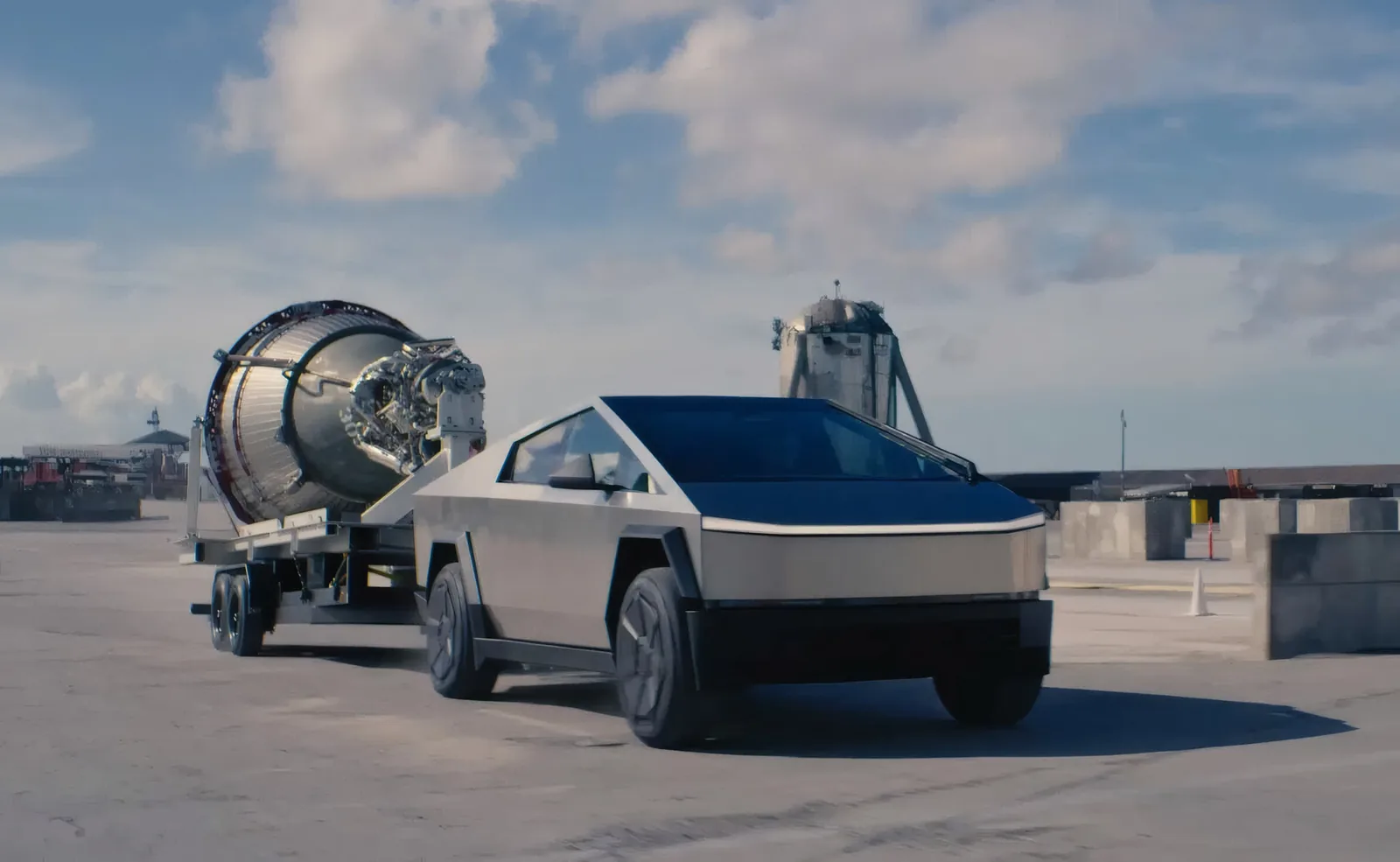
In a significant shift for astronaut safety protocols, NASA has announced that Tesla's controversial Cybertruck will serve as the designated escape vehicle for astronauts aboard SpaceX's upcoming Crew-13 mission. This choice marks a departure from the agency's long-standing reliance on Mine-Resistant Ambush Protected (MRAP) vehicles for launch-pad emergency evacuations.
The decision means that astronauts Jessica Watkins and Luke Delaney of NASA, along with Canadian Space Agency astronaut Joshua Kutryk and Roscosmos cosmonaut Sergey Teteryatnikov, will be evacuated by a Cybertruck should any issues arise during their launch, slated for no earlier than September 12, 2026. This marks the first time a production electric vehicle will be utilized for such a critical safety function.
NASA cited efficiency and resource management as key reasons for the switch. Richard Jones, a NASA official involved in the decision, explained that using the Cybertruck eliminates the need to deploy and coordinate a dedicated MRAP vehicle and its crew. This move also sidesteps potential conflicts over shared resources, particularly given the overlapping schedules with other high-profile missions like Artemis II and the concurrent SpaceX Crew-12 launch preparations.
Jones further noted that the Cybertruck offers practical advantages in terms of speed and ease of operation for astronauts, especially when wearing bulky gloves. "The vehicles are much quicker than MRAPs for moving astronauts out of danger. They're also easier to drive while wearing gloves," he stated. This agility could be crucial in the high-stakes environment of a potential rocket emergency.
Questions linger over Cybertruck's reliability
However, the choice of the Cybertruck, a vehicle that has faced numerous safety concerns and 11 separate recalls from the U.S. National Highway Traffic Safety Administration (NHTSA), has raised questions. Recalls have addressed issues such as accelerator pedal entanglement, potential wheel separation, and drive inverter failures – potential failure points astronauts would not want to experience during a rocket escape. This contrasts sharply with the robust security historically provided by MRAP vehicles, known for their heavy armor. NASA previously described the armor on their MRAPs as so thick that each door weighs 600 pounds, offering a bunker-like level of protection.
While Elon Musk, CEO of Tesla, has touted the Cybertruck's strength, including claims that its Armor Glass could withstand significant impact, a widely publicized demonstration where the window shattered upon impact with a metal ball has cast doubt on its durability. Musk attributed this to pre-existing damage from a sledgehammer test conducted earlier. NASA confirmed that no modifications have been made to the Cybertrucks being used for this purpose.
The Crew-13 astronauts are destined for the ISS to join Expedition 75. Their mission aboard the orbiting laboratory will focus on scientific investigations and technology demonstrations aimed at supporting future lunar and Martian exploration. Research areas for Expedition 75 include advancements in in-space manufacturing, the application of AI and augmented reality for health monitoring, and the bioprinting of human tissue.