
NASA's Roman Telescope Promises Direct Exoplanet Images with Advanced Coronagraph
NASA's new Nancy Grace Roman Space Telescope is set to revolutionize exoplanet discovery with its advanced coronagraph. This instrument can directly image planets beyond our solar system by blocking starlight, a capability unprecedented in space exploration.

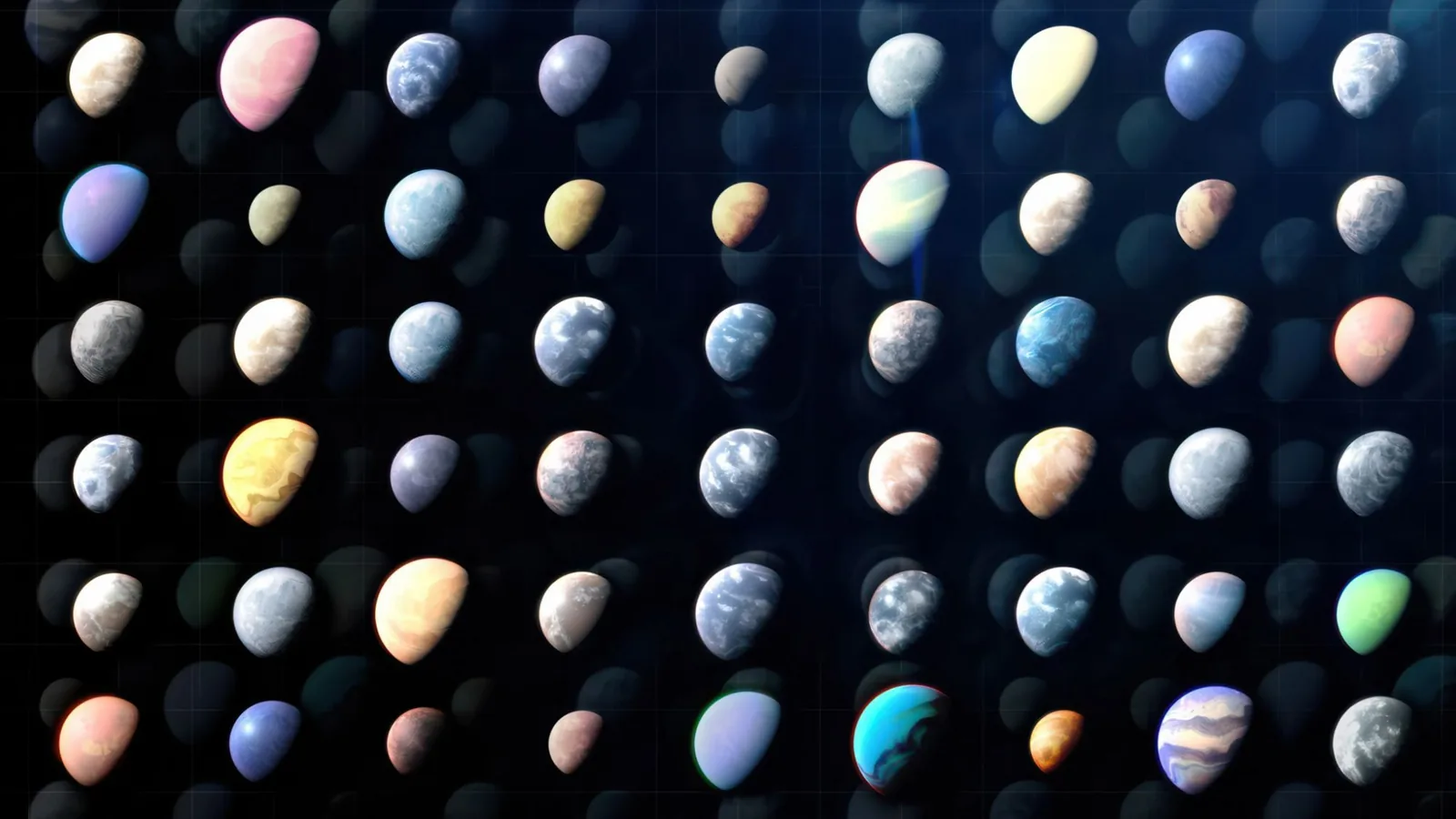
The Nancy Grace Roman Space Telescope, launched on August 30, 2026, is equipped with a groundbreaking coronagraph designed to directly photograph planets orbiting stars far beyond our solar system. This sophisticated instrument blocks out the overwhelming light of a star, allowing scientists to observe the fainter light reflected by its orbiting planets. Without this technology, starlight is so intense that it would typically obscure any nearby planetary details.
Think of the coronagraph as creating an artificial total solar eclipse, where a specially designed mask, rather than the moon, obscures the star's brilliance. While coronagraphs are not new, the one aboard Roman is considered the most advanced ever sent into space. "The Roman Space Telescope is carrying the most advanced coronagraph that humanity has ever put into space," stated Dominic Benford, the telescope's program scientist. Scientists anticipate this capability will reveal numerous 'Pale Brown Dots,' offering profound insights into our place in the universe.
Vanessa Bailey, Roman's coronagraph instrument scientist, expressed enthusiasm for the discoveries ahead. "I love the feeling of smallness that comes from understanding you're not alone in the universe," she remarked, anticipating the weight of existence that these exoplanet images might evoke.
Advanced Technology for Unprecedented Views
Coronagraphs have a history of use, even within our own solar system. NASA's PUNCH mission, launched in 2025, utilizes a coronagraph to study the sun's outer atmosphere, the corona, by blocking the sun's direct light. Historically, astronomers have used coronagraphs for over a century to study the sun by creating artificial eclipses. "That's the reason for the name," Bailey explained during a press briefing on August 29, 2026.
However, the application for studying exoplanets is where Roman's coronagraph truly shines. It can reduce starlight to mere parts per billion, enabling the direct observation of planets like Jupiter around other stars. "We can block that starlight until we have only a few parts per billion of the light of the star remaining," Benford elaborated. "As a result, we can directly see the light bouncing off something like a Jupiter around another star, which we've never been able to do before." This capability will not only provide images but also allow for the analysis of the light reflecting off these distant worlds, offering clues about their atmospheric composition.
While other space telescopes like the James Webb Space Telescope and the Hubble Space Telescope also employ coronagraphs, Roman's is significantly more sophisticated. Instead of simply blocking light, Roman's coronagraph uses a combination of patterned disks and special filters to create destructive interference. This phenomenon causes competing light waves to cancel each other out, effectively dimming the star and allowing the light reflected from exoplanets to pass through to the telescope's mirrors. This marks the first use of an "active" coronagraph in space.
The "active" nature of Roman's coronagraph means it can make real-time adjustments to its mirrors. Hundreds of tiny pistons integrated into the mirrors allow them to deform and adapt, correcting for small distortions that could otherwise compromise the delicate interference patterns. "These deformable mirrors are a real engineering feat," Bailey noted. "They can be commanded with the precision approaching the size of an atom, and this is what really allows us to make this transformative performance." This technology is expected to enable the detection of exoplanets that are approximately 100 million times fainter than their host stars.
Scientists are particularly interested in nearby star systems that previous observations have hinted may host Jupiter-like planets. Additionally, the coronagraph might reveal dust and debris from the planet formation process. "Perhaps that dust could exist in the habitable zones of the stars Roman looks toward, and perhaps this could tell us more about the birth of planet Earth," Bailey suggested. This research also serves as a precursor to NASA's future Habitable Worlds Observatory, which will feature an even more advanced coronagraph designed to find Earth-like planets.
Complementing the coronagraph is Roman's Wide Field Instrument (WFI), which can survey vast areas of the sky. The WFI uses two primary techniques to identify potential exoplanet candidates. The transit method detects dips in a star's brightness as a planet passes in front of it, similar to techniques used by the Kepler and TESS missions. "If you see that happen multiple times," explained Nicky Fox, associate administrator for NASA's Science Mission Directorate, "you can infer that it's a planet, and you can get the radius and the size of the planet from that observation."
The second WFI technique is gravitational microlensing. This phenomenon occurs when a celestial object with mass warps spacetime, bending the light from a more distant object. The WFI's microlensing capability is sensitive to Earth-size planets within the habitable zones of their stars, while the transit method is better suited for detecting planets closer to their stars. Together, the WFI and its coronagraph are expected to dramatically expand the catalog of known exoplanets, moving from thousands to potentially hundreds of thousands. "When you look up at the night sky, most of the planets out there are likely candidates for observation by the Roman telescope," Fox added.