
NASA Roman Telescope to Uncover Neutron Star Secrets
NASA's Nancy Grace Roman Space Telescope may soon reveal elusive neutron stars using gravitational microlensing. The telescope's advanced capabilities could provide crucial data on their mass distribution and origins.

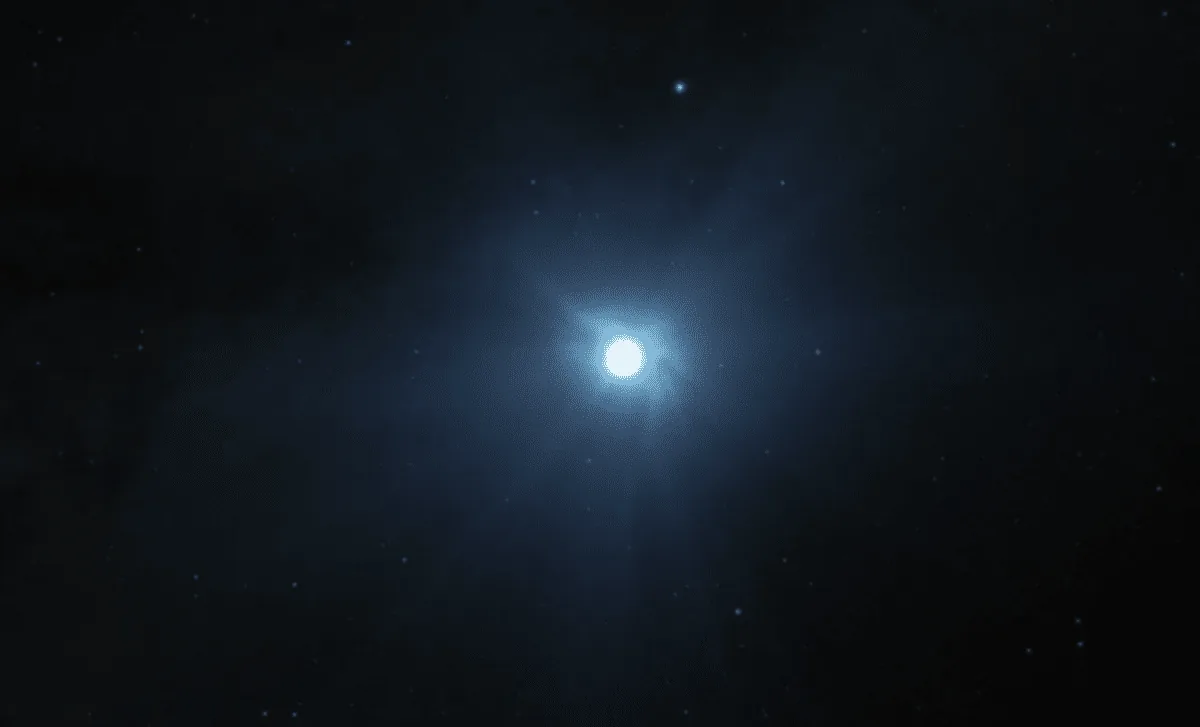
Astronomers are anticipating a significant leap in understanding stellar remnants thanks to NASA's upcoming Nancy Grace Roman Space Telescope. New research indicates the powerful observatory will be capable of detecting and studying neutron stars, the incredibly dense cores left behind after massive stars explode, which have largely remained invisible to current instruments.
Neutron stars are among the most extreme objects in the universe, packing more mass than our Sun into a sphere roughly the size of a city. Their immense density makes them difficult to observe, as they are often dim and solitary. "Most neutron stars are relatively dim and on their own," explained Zofia Kaczmarek, a researcher at Heidelberg University in Germany and lead author of the study published in Astronomy and Astrophysics. "They are incredibly hard to spot without some sort of help." The Roman telescope, however, is uniquely poised to offer that assistance.
The key lies in Roman's ability to harness gravitational microlensing. This phenomenon occurs when a massive object, such as a neutron star, passes between Earth and a more distant star. The intense gravity of the intervening object bends the light from the background star, causing it to briefly brighten and appear to shift in position. Roman's advanced instruments can precisely measure both the change in brightness (photometry) and the subtle positional shift (astrometry) of the background star.
Unlocking Mass and Origins of Stellar Remnants
This dual measurement capability is critical for identifying and characterizing neutron stars. While photometry alone can indicate that an object has passed in front of a star, it is the astrometric measurement that offers direct insight into the object's mass. "What's really cool about using microlensing is that you can get direct mass measurements," said Peter McGill, a co-author of the study from Lawrence Livermore National Laboratory. "Photometry tells us that something passed in front of the star, but it’s the amount the star’s position shifts that tells us how massive that object is."
This precise mass determination could resolve long-standing mysteries in astrophysics. Scientists currently lack a clear understanding of the mass distribution of neutron stars and black holes, and the exact boundary between these two types of compact objects remains uncertain. Roman's observations have the potential to reveal how these stellar remnants differ in size and weight, and to shed light on the significant velocities, or "kicks," that neutron stars acquire during their formation in supernova explosions. McGill emphasized, "We don’t know the mass distribution of neutron stars, black holes, or where one ends and the other begins with any certainty. Roman will really be a breakthrough in that." Understanding these kicks is vital for comprehending galactic evolution and the dynamics of stellar populations.
The research team plans to leverage Roman's extensive Galactic Bulge Time Domain Survey. This ambitious project will monitor millions of stars with high frequency, primarily to discover exoplanets using photometric microlensing. However, the telescope’s enhanced astrometric precision opens up an unprecedented opportunity for astrophysical research, particularly the detection of isolated neutron stars. These objects are thought to be scattered throughout the Milky Way but have been nearly impossible to study previously due to their faintness and isolation. "We’re seeing a small sample that’s not representative of the big picture," Kaczmarek noted. "Even a single mass measurement would be very powerful. If we found just one isolated neutron star, it would already be incredibly stimulating to our research." The Roman telescope's ability to survey vast regions of the sky could provide astronomers with the first substantial sample of these elusive objects.
Interestingly, the capacity to detect neutron stars and black holes via microlensing was not an initial design focus for the Roman telescope but has emerged as a highly anticipated scientific application. "This wasn’t part of the original plan," McGill commented. "But it turns out Roman’s astrometric capability is really good at detecting neutron stars and black holes, so we can add a whole new kind of science to Roman’s surveys." The findings from the telescope, anticipated to launch soon, promise to fundamentally alter our comprehension of the universe's most extreme objects and the processes that govern their existence.