
NASA Stock Opportunities in the Aerospace Industry
Companies tied to NASA missions are reshaping aerospace investment. Learn which public companies benefit from the space agency's growing budget and exploration goals.

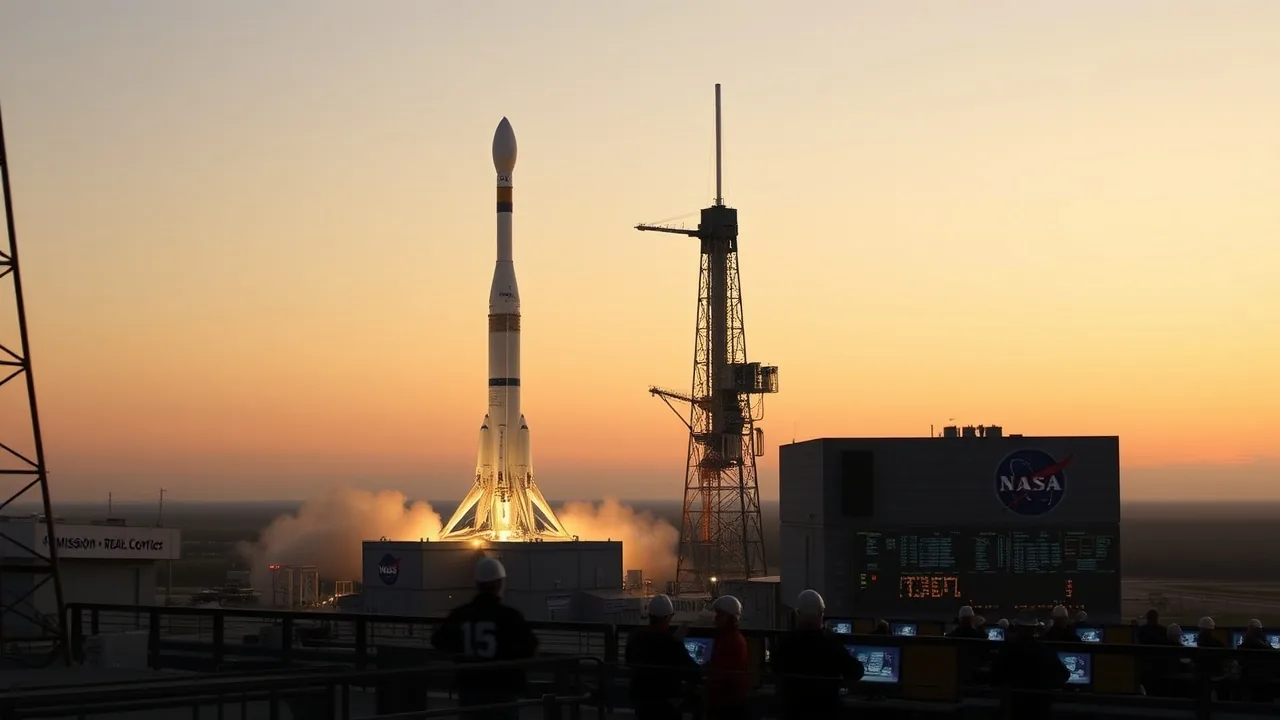
Investors searching for exposure to space exploration now have clearer targets as NASA's budget reached $25.4 billion in fiscal 2024, the highest allocation in over a decade. This funding surge is driving renewed interest in publicly traded aerospace contractors that supply components, launch services, and technology to NASA's ambitious mission portfolio.
The search interest in NASA stock has spiked alongside announcements of the agency's expanded Artemis program, aimed at returning humans to the moon by 2025 or 2026. Retail investors and institutional funds are both scrutinizing which public companies stand to gain the most from this multi-billion-dollar commitment.
Unlike NASA itself (a government agency without public equity), investors gain exposure through contractors. Lockheed Martin, Boeing, Northrop Grumman, and SpaceX's minority stakeholders represent the primary avenues for direct aerospace investment tied to federal space spending.
The Major Players in NASA Contracts
Lockheed Martin holds the largest single contract portfolio with NASA, valued at approximately $15 billion across multiple programs. The company manufactures the Orion spacecraft, critical for Artemis missions, and also produces components for the International Space Station.
Boeing maintains contracts worth roughly $8-10 billion annually through its Space and Launch division. The company builds the Space Launch System core stage and the CST-100 Starliner crew capsule, both central to NASA's deep-space exploration and crew transportation strategies.
Northrop Grumman brings in approximately $4-6 billion yearly from NASA work, primarily through its Innovation Systems division. The company manufactures solid rocket boosters, cygnus cargo vehicles, and advanced systems for launch vehicles.
Smaller public firms also benefit significantly. Axiom Space (partially private), Redwire Corporation, and Rocket Lab provide specialized capabilities:
- Axiom builds commercial space stations modules
- Redwire manufactures orbital infrastructure components
- Rocket Lab operates small-lift launch services
According to Jay Bennett, space policy analyst at the Aerospace Industries Association, "The 2024 NASA budget marks a fundamental shift in how Washington views space exploration. We're seeing sustained, multi-year funding commitments that allow contractors to plan investments in manufacturing capacity and workforce."
Why Investment Interest Surged in 2024
Three specific developments triggered the spike in investor searches for NASA-linked stocks. First, Congress approved a $25.4 billion NASA budget in late 2023, representing 3.1% growth over the previous year. Second, NASA confirmed the lunar landing schedule for Artemis II, cementing a timeline that contractors can build financial models around. Third, the agency released its Space Development and Exploration Strategy in March 2024, outlining $100+ billion in total space initiatives through 2034.
The aerospace industry has responded by ramping up manufacturing operations. Lockheed Martin, for example, increased its Orion assembly line from two to three spacecraft per year as of Q2 2024.
Investors should note that aerospace stocks do not move in lockstep with NASA announcements. Market performance depends on earnings, margins, guidance, and broader defense spending trends. Boeing and Northrop, for instance, derive only 15-25% of revenue from space contracts; the remainder comes from defense, commercial aircraft, or other divisions.
Market Realities and Investment Considerations
Stock valuations in the aerospace sector have remained relatively stable despite NASA budget increases. Lockheed Martin traded in a range of $485-510 per share for much of 2024, while Boeing faced separate pressures unrelated to space contracts. This suggests that NASA funding alone does not guarantee outsized returns.
Contract wins remain cyclical and competitive. NASA uses fixed-price contracts in many cases, which cap profit margins. Cost overruns, technical delays, or schedule slips can erode profitability even as contract values appear substantial on paper.
Diversification within the space investment sector has become more accessible. Public funds and ETFs focused on space and satellite themes now exist, offering exposure to 20-50 aerospace and satellite firms simultaneously. Examples include the Procure Space ETF (UFO) and the Invesco Space & Aerospace ETF (XAR).
Private equity interest in space companies has grown as well. Companies like Axiom Space, Relativity Space, and Sierra Space remain privately held or partially public, limiting direct stock access for retail investors. However, institutional funds investing in aerospace-focused venture capital continue to allocate capital to these emerging providers.
Long-term market analysis from investment banks suggests steady but modest gains in aerospace stocks tied to NASA missions. Goldman Sachs, in its 2024 aerospace outlook, projected 4-6% annual growth for the largest contractors over the next five years, driven primarily by government space spending and commercial satellite demand.
For investors considering exposure to NASA-related opportunities, direct stock purchases of Lockheed Martin, Boeing, or Northrop Grumman offer simplicity and liquidity. Alternative approaches include aerospace-focused ETFs, which reduce single-company risk. Understanding the non-space revenue streams of these companies is essential, as broader economic cycles, competition, and defense budgets will influence total shareholder returns as much as NASA funding.
The future of space exploration remains underfunded relative to global demand for satellite services, launch capacity, and in-orbit infrastructure. As NASA spending sustains at elevated levels and private commercial space accelerates, aerospace contractors are well-positioned to capture revenue growth, though stock appreciation depends on execution, margins, and broader market conditions.