
NASA Space Flight Missions: Lunar and Mars Goals Accelerate
NASA is ramping up ambitious missions to return humans to the Moon and launch crewed Mars missions by 2030s. New spacecraft, advanced propulsion systems, and partnerships are reshaping deep space exploration.

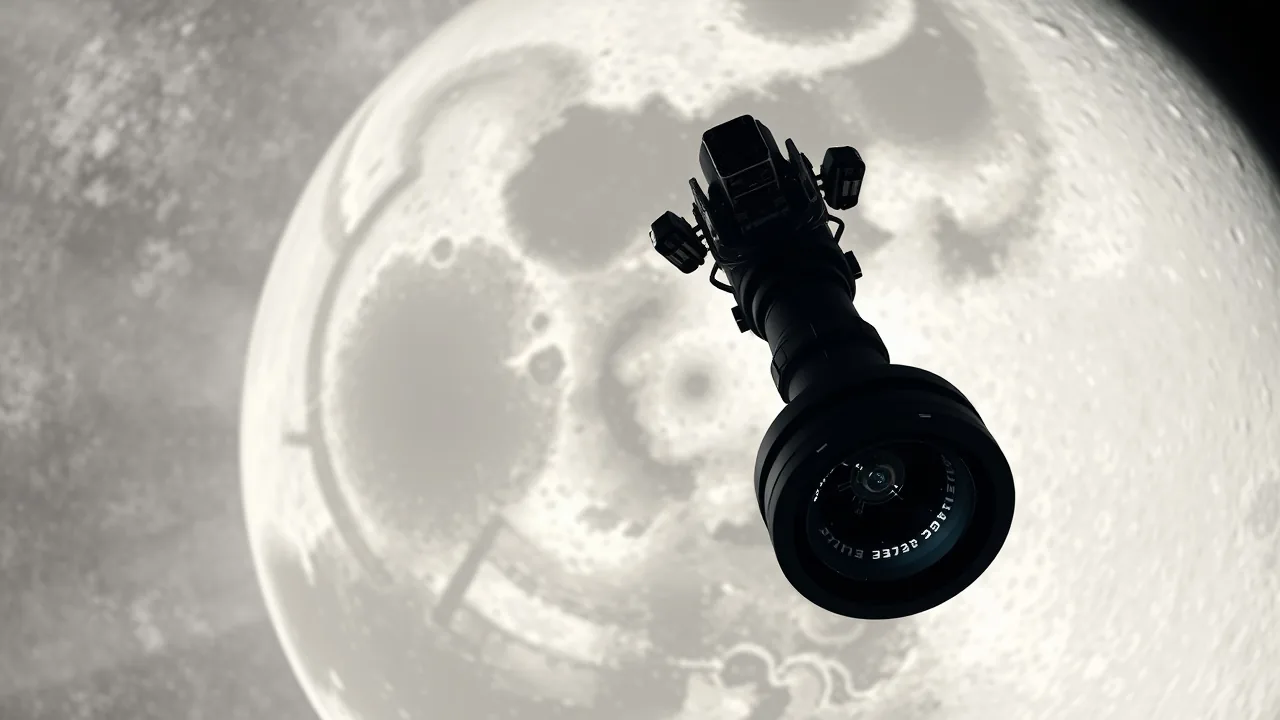
NASA launched the Artemis I uncrewed test flight in November 2022, completing a 25-day journey around the Moon and returning safely to Earth, clearing the path for Artemis II with astronauts aboard in 2025. That success marked a turning point in the agency's push to establish a sustainable lunar program and eventually send humans to Mars within the next decade.
The Artemis program represents NASA's most comprehensive effort since Apollo to establish a permanent human presence beyond Earth orbit. With the Space Launch System (SLS) rocket now operational and the Orion spacecraft proven, NASA is executing a multi-phase strategy that includes lunar Gateway stations, surface habitats, and resource utilization experiments.
According to Dr. Bill Nelson, NASA Administrator, "Artemis will land the first woman and first person of color on the Moon, and will use the Moon as a testing ground for technologies and procedures we'll need for Mars." This dual mandate shapes every current initiative across the agency's NASA space flight programs.
Current Missions and Near-Term Goals
Artemis II is scheduled for September 2025 and will carry four astronauts around the Moon for 10 days without landing, testing life support systems and crew operations in deep space. Following that, Artemis III will attempt the first crewed lunar landing at the Moon's south polar region in 2026 or 2027, where permanently shadowed craters may hold water ice reserves.
Beyond the lunar program, NASA is advancing future missions through multiple contractors and partnerships:
- Commercial lunar landers delivering payloads via NASA's Commercial Lunar Payload Services (CLPS) program, with companies like Intuitive Machines and Firefly Aerospace executing cargo drops
- The James Webb Space Telescope providing unprecedented deep-space imaging, informing mission planning and scientific objectives
- Gateway station modules being assembled to orbit the Moon, serving as a staging point for both lunar surface operations and Mars-bound missions
- Advanced life support and in-situ resource utilization (ISRU) experiments, testing water extraction and oxygen production from lunar regolith
These initiatives rest on sustained funding. Congress appropriated $25.4 billion to NASA for fiscal 2023, with space exploration consuming roughly 40 percent of that total. Budget stability has allowed contractors to maintain engineering teams and avoid costly schedule delays.
The Path to Mars and Deep Space Exploration
Mars remains the ultimate objective for NASA's human space exploration strategy. The agency projects a crewed Mars landing around 2035 to 2040, contingent on sustained testing in lunar orbit and on the lunar surface. Unlike Apollo's brief visits, this Mars campaign envisions extended surface operations lasting several months, requiring advances in power generation, radiation protection, and in-situ resource production.
NASA's Human Research Program is conducting studies aboard the International Space Station to understand how long-duration spaceflight affects bone density, muscle mass, and immune function. These data directly inform spacecraft design and crew selection protocols for Mars exploration missions lasting 2.5 to 3 years.
"The physiological challenges of a Mars mission are unlike anything we've faced before," said Dr. Jean Foxx, Chief of NASA's Human Factors and Behavioral Performance Laboratory. "We're developing countermeasures in real time, testing them with astronauts on the ISS." Resistance exercise protocols, radiation shielding materials, and psychological support systems are all under active evaluation.
The agency is also collaborating with private sector partners on aerospace technology development. SpaceX's Starship, though not officially part of NASA's Mars plan, represents a competing vision for high-capacity transport to deep space. Blue Origin, Axiom Space, and other contractors are building capsules, stations, and life support systems that may eventually support long-duration missions beyond Earth orbit.
Technological Advances Enabling the Next Generation
Recent breakthroughs in propulsion, materials science, and autonomous systems are reducing mission timelines and costs. Solid-state batteries under development at NASA centers promise 50 percent higher energy density than current lithium-ion packs, critical for long-duration rovers and habitat power systems.
Advanced manufacturing techniques, including 3D printing of rocket engine components and structural parts, have shortened production schedules. In 2023, NASA tested 3D-printed titanium tank segments from contractors, confirming durability under thermal and pressure cycling conditions matching real launch environments.
Autonomous navigation systems are also advancing. Orion's guidance computer relies on updated algorithms allowing the spacecraft to navigate without continuous ground contact, essential for Mars missions operating with 20-minute communication delays. Flight tests aboard Artemis II will validate these systems under real deep-space conditions.
The integration of artificial intelligence for mission planning, rover terrain classification, and real-time problem-solving is reducing astronaut workload. NASA's Kennedy Space Center is training crews using AI-assisted simulations that dynamically adjust scenarios based on crew performance.
These convergent technologies are compressing the timeline for ambitious goals that once seemed decades away. With Artemis II launching in 2025 and lunar surface missions following in 2026 and beyond, the operational phase of human deep space exploration is arriving sooner than many industry observers predicted just five years ago.