
NASA Space Shuttle: 30 Years of Reusable Spacecraft Innovation
The Space Shuttle program revolutionized spaceflight for three decades, launching 135 missions and fundamentally changing how humanity accessed orbit. Its legacy continues to shape modern spacecraft design and astronaut training.

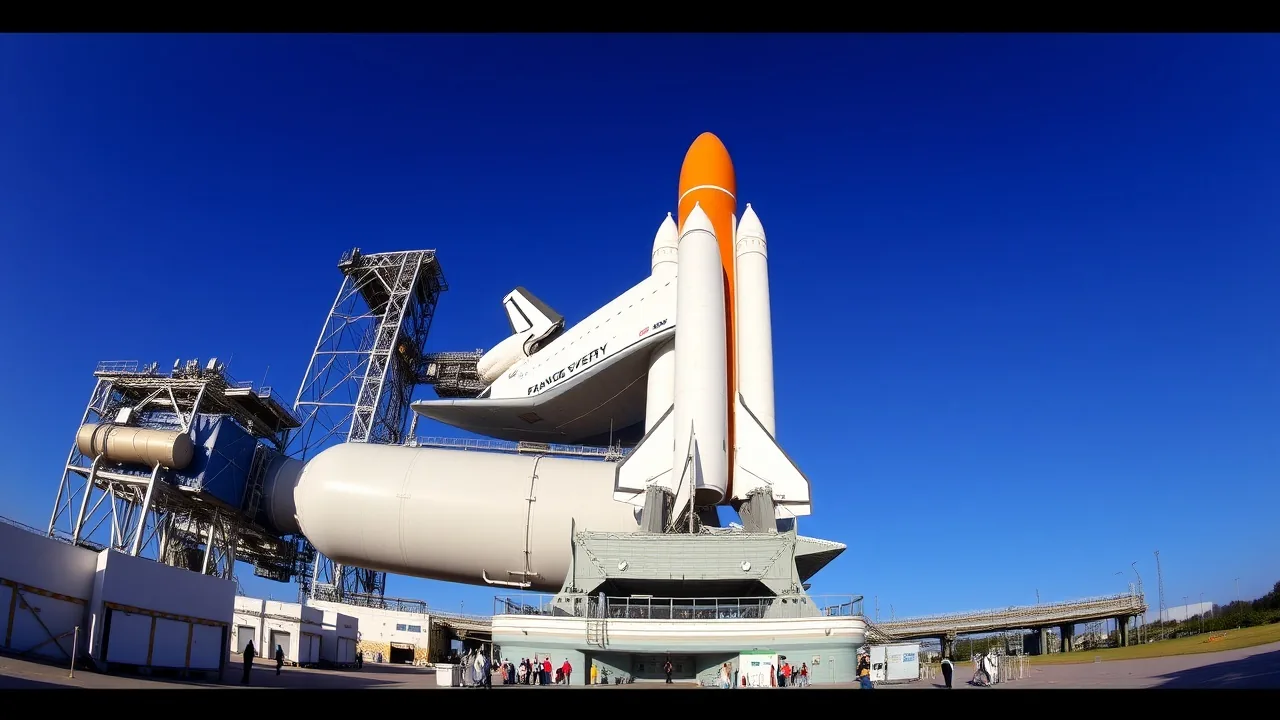
On April 12, 1981, Columbia lifted off from Kennedy Space Center as the first orbital test flight of the Space Shuttle, marking a watershed moment in NASA's space shuttle program. Unlike the capsule-based missions of Mercury, Gemini, and Apollo, this aircraft-like spacecraft could be recovered, refurbished, and flown again. That vision of routine, economical access to orbit captured the imagination of policymakers and engineers alike, though the reality proved far more complex.
The shuttle fleet operated from 1981 until July 2011, completing 135 orbital missions across five operational vehicles: Columbia, Challenger, Discovery, Atlantis, and Endeavour. These missions deployed the Hubble Space Telescope, launched planetary probes, and ferried thousands of tons of cargo to orbit. The program employed over 20,000 workers at its peak and became central to American spaceflight history.
Yet the shuttle program's two fatal accidents overshadow many of its accomplishments in public memory. Challenger broke apart 73 seconds after launch on January 28, 1986, killing seven astronauts and five mission specialists. Columbia disintegrated during reentry on February 1, 2003, with another seven crew members lost. These tragedies exposed the gap between the shuttle's marketed reliability and its actual risk profile.
Engineering Ambition and Technical Reality
The shuttle was, in technical terms, extraordinarily ambitious. It combined elements of aircraft (wings, landing gear, cockpit), spacecraft (life support, thermal protection), and rocket (main engines, external tank). No single vehicle before or since has attempted to blend so many engineering domains into one design.
Early promotional materials promised cheap, frequent access to orbit. NASA estimated that shuttle operations would eventually cost as little as $10 million per flight. Instead, the average mission cost ballooned to roughly $450 million in inflation-adjusted dollars by the 2000s. Turnaround time between flights stretched from weeks to months.
According to John Logsdon, director emeritus of the Space Policy Institute at George Washington University, "The Space Shuttle was oversold as a vehicle. The promise of a truck to space became a partially reusable spacecraft that required enormous post-flight maintenance and refurbishment." Logsdon's assessment reflects a broader consensus among aerospace historians: the shuttle succeeded brilliantly at specific missions but failed to achieve its core economic objective.
The program did, however, pioneer several lasting technologies. The reusable spacecraft concept proved viable for certain mission profiles. The shuttle's main engines became the most powerful single-nozzle liquid-fueled engines ever built, and versions of that technology continue in development today.
Impact on Orbital Infrastructure and Human Spaceflight
The shuttle's true legacy lies not in revolutionary economics but in what it enabled. Between 1993 and 2009, shuttle missions serviced the Hubble Space Telescope five times, with astronauts conducting repairs and upgrades that transformed the instrument from a flawed observatory into humanity's most productive telescope. Without the shuttle's crewed servicing capability, Hubble would have been retired as a partial failure.
The shuttle also served as the primary vehicle for assembling and supplying the International Space Station. From 1998 until 2011, shuttle crews delivered modules, supplies, and personnel to the station. Thirty-seven of the 135 shuttle flights contributed directly to ISS operations.
Key achievements of the shuttle program include:
- Deployed and serviced the Hubble Space Telescope and conducted major upgrades
- Launched the Magellan, Galileo, and Ulysses planetary probes
- Carried the Spacelab laboratory on 22 missions, conducting microgravity research
- Assembled and resupplied the International Space Station
- Lifted 7.3 million pounds of cargo to orbit across all missions
The astronaut programs trained by NASA evolved around shuttle operations. Shuttle crews typically numbered 5 to 8 astronauts, and the vehicle's payload bay allowed for specialized roles beyond pilot and commander. Mission specialists could conduct extravehicular activities (spacewalks), while payload specialists brought domain expertise in science or engineering.
The shuttle proved that humans could work productively in space in ways that pure automation could not. Astronauts repaired Intelsat satellites, deployed planetary probes, and fixed the Hubble. These hands-on operations established the model for how future crewed spacecraft would contribute to exploration and infrastructure development.
Lessons for Modern Spaceflight
The shuttle program's retirement in 2011 forced a reckoning within NASA and the aerospace industry. For 30 years, the shuttle had been the centerpiece of American space exploration strategy. Its departure left the U.S. dependent on Russian Soyuz vehicles for crew transport to the ISS, a situation that lasted until SpaceX's Crew Dragon certification in 2020.
Current spacecraft design reflects lessons learned from the shuttle era. SpaceX's Falcon 9, Blue Origin's New Shepard, and Sierra Space's Dream Chaser all incorporate partial reusability concepts but avoid the shuttle's complexity. These vehicles focus on specific mission profiles rather than attempting to be all-purpose orbit trucks.
NASA's current human spaceflight NASA legacy now emphasizes partnerships with commercial providers rather than government-owned-and-operated fleets. The Artemis program aims to return humans to the Moon by 2026, building on shuttle-era expertise but with new vehicles and international partners. Orion, the crewed spacecraft for Artemis, draws on lessons from both Apollo and the shuttle experience.
The Space Shuttle remains the only winged spacecraft ever to fly orbital missions and return to land on a runway. That distinction, combined with 135 successful flights and its pivotal role in supporting science and infrastructure, ensures the program a permanent place in spaceflight history. Its failures taught expensive lessons about complexity, risk management, and the dangers of over-promising technology. Its successes demonstrated what crewed spaceflight could achieve when engineering and mission control operated at their best.