
NASA's Swift Rescue Satellite Faces Orbital Glitch
Katalyst's Link satellite, designed to save NASA's Swift observatory from reentry, is experiencing reaction wheel failures, causing it to spin and disrupting communications. Engineers are working on a solution.

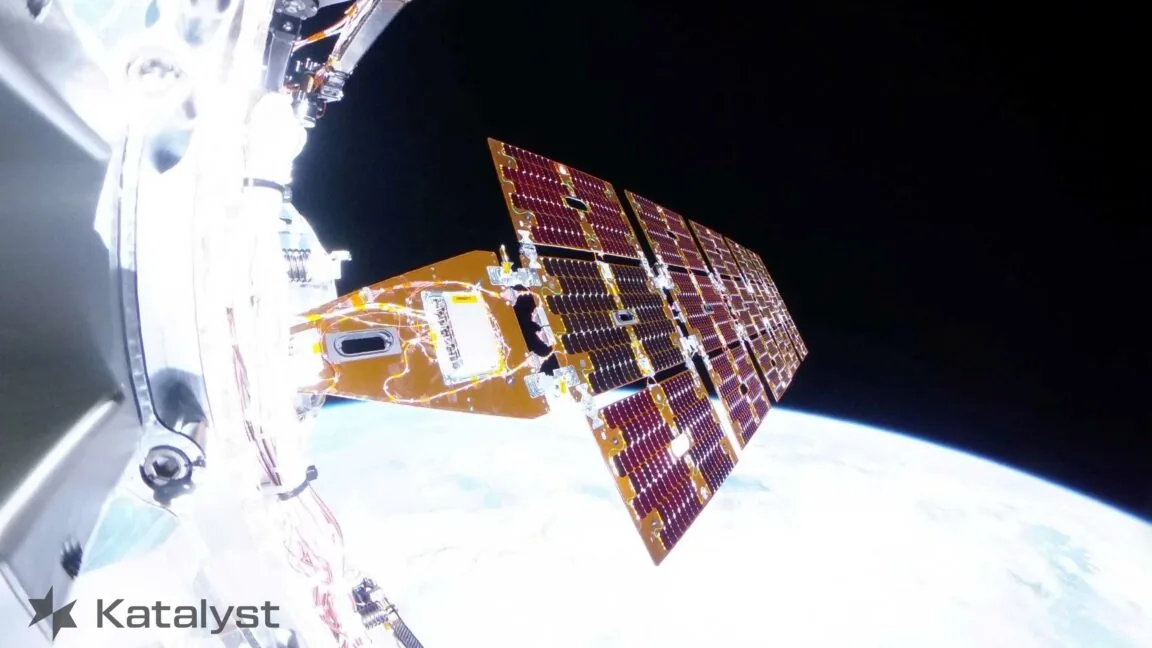
A pioneering commercial satellite mission intended to prevent NASA's Swift gamma-ray telescope from burning up in Earth's atmosphere is encountering its own orbital challenges, NASA announced Tuesday. The Link satellite, developed by Katalyst Space Technologies, experienced significant issues with its attitude control system over the weekend. These problems have caused the spacecraft to spin erratically and led to intermittent communication with ground control.
According to NASA, a preliminary assessment revealed that two of Link's three crucial reaction wheels are currently inoperable. Additionally, there is a partial loss of functionality in its cold gas thruster system. Reaction wheels are standard components in spacecraft, used to manage and adjust a satellite's orientation in orbit by expending momentum. The cold gas thruster system on the Link satellite is designated for precise maneuvering, particularly as it approaches its target, NASA's Swift observatory.
Rescue Mission's Troubled Ascent
The ambitious Link mission commenced on July 3, launching into orbit aboard a Northrop Grumman Pegasus XL rocket. In the initial weeks, both NASA and Katalyst reported steady progress. The satellite successfully deployed its solar arrays, established stable contact with Katalyst's operations center, and completed initial firings of its xenon-fueled electric thrusters. These electric thrusters are vital for the rescue operation, designed to gradually raise Link's orbit to rendezvous with the Swift observatory, located approximately 200 miles above Earth. Once attached to Swift using robotic arms, these thrusters would then elevate Swift's orbit, averting its planned destructive reentry.
Now, the electric thrusters are being tasked with an unintended role: stabilizing the Link spacecraft itself. Without intervention, the Swift observatory, which is nearly 22 years old and operating far beyond its design life, is slated to reenter the atmosphere and disintegrate within months. Swift cannot propel itself to a higher orbit as it lacks an independent propulsion system. NASA officials are keen to extend Swift's mission because it is one of the few instruments capable of detecting gamma-ray bursts, the universe's most powerful cosmic explosions. NASA is compensating Katalyst $30 million for the salvage operation.
Beyond preserving Swift's scientific capabilities, the mission also serves as a crucial technology demonstration. NASA is leveraging this operation to evaluate the burgeoning commercial satellite servicing industry. Facing Swift's rapidly decaying orbit, NASA imposed an unusually compressed nine-month timeline for Katalyst to design, build, and launch the Link satellite. Katalyst met this challenge, delivering the spacecraft for integration with the Pegasus rocket in early June. Despite initial delays caused by adverse weather and a rocket technical issue, the launch proceeded on July 3.
Even before the current technical setbacks, NASA officials expressed satisfaction with the mission's progress. Shawn Domagal-Goldman, director of NASA’s astrophysics division, previously stated, “From a programmatics standpoint, I consider this a success already, just from the fact that we’re even going to try this.”
Katalyst's Link spacecraft continues to generate sufficient power and maintain communication with ground teams, NASA confirmed. This ongoing functionality provides engineers valuable time to devise a strategy for addressing the reaction wheel malfunctions. Kieran Wilson, Link’s principal investigator at Katalyst, had anticipated potential issues, noting in past programs, “Our previous programs had issues with power systems and communications. Those are a lot of the basic things that most of the engineering team gets very concerned about because we’re confident that as long as we have spacecraft that can function at a fundamental level, that gives us the freedom and flexibility to work through any issues we find during rendezvous and more challenging dynamical operations.”
NASA stated that after reestablishing stable attitude control and conducting further status assessments, Katalyst intends to update Link’s guidance, navigation, and control systems. These adjustments will adapt to the spacecraft’s altered configuration. Working in tandem with NASA teams, Katalyst will then evaluate revised plans for approaching and capturing the Swift observatory, contingent on the safety of the maneuver and Link’s overall health. The success of the rescue now hinges on these engineers' ability to overcome the unexpected orbital glitch.