
New Jersey Meteorite Offers Clues to Life's Origins
A meteorite that crashed through a New Jersey home on July 16, 2024, is providing scientists with unprecedented insights into the conditions that may have fostered life's beginnings on Earth. The pristine sample originated from a briny asteroid.

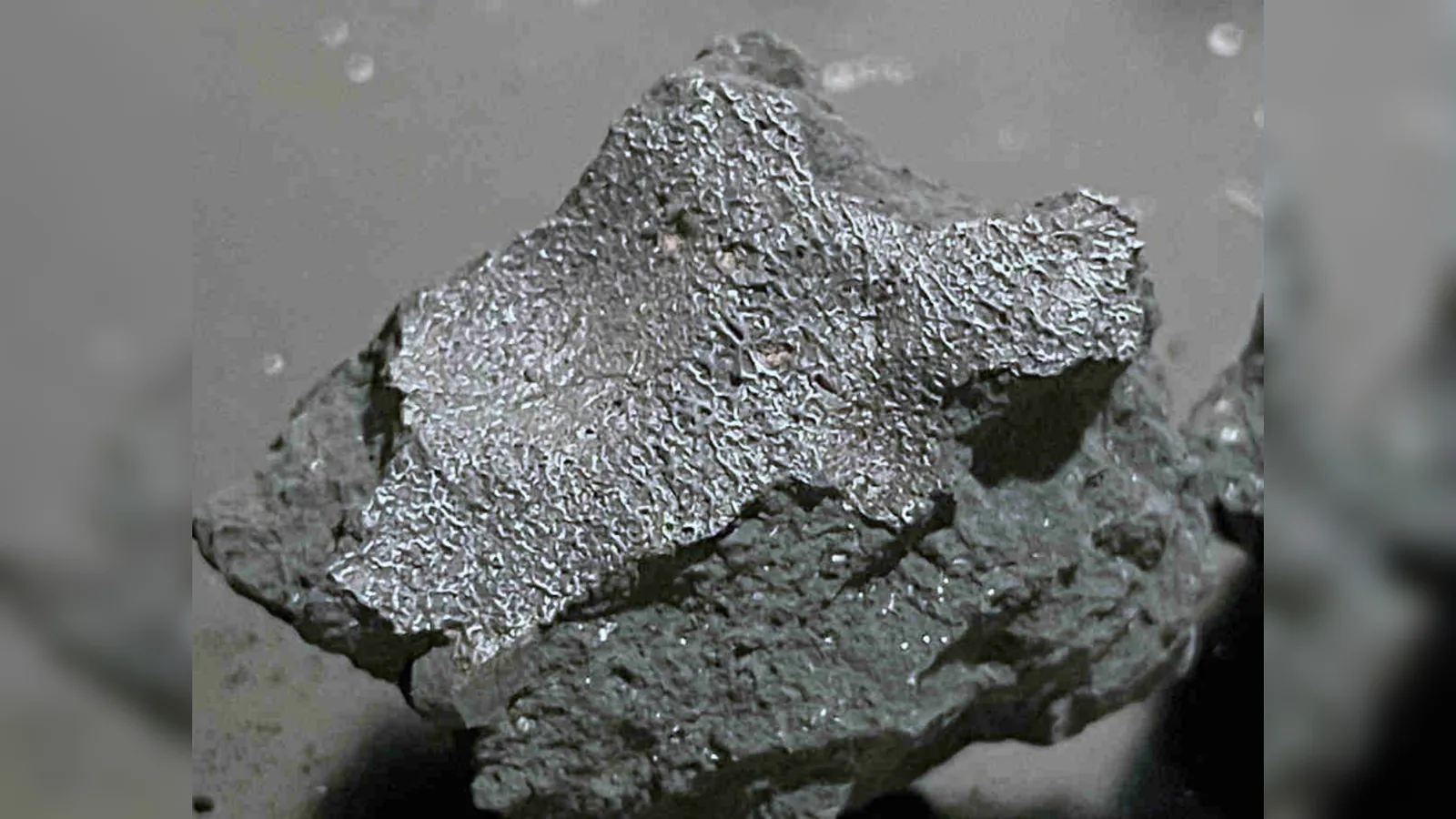
A space rock that blasted through a bedroom ceiling in Hillsborough, New Jersey, on July 16, 2024, is now offering scientists a rare glimpse into the potential origins of life. The meteorite, weighing approximately 110 pounds, was traced back to a unique, briny asteroid that may have once harbored liquid saltwater, a key ingredient for life as we know it. The incident occurred two years ago when a sonic boom rattled the New York City area, followed by a fiery streak across the sky. The object eventually crash-landed in a suburban New Jersey home, leaving behind a sulfurous scent.
Remarkably, the homeowner reacted swiftly and prudently, collecting the scattered fragments of the space rock with gloves and jars. This careful handling prevented contamination from skin oils and moisture, preserving the meteorite's integrity for scientific study. The homeowner's quick thinking extended to contacting the American Meteor Society almost immediately, ensuring the samples remained exceptionally pristine. "He had the wherewithal to put on gloves and take out jars," explained lead author and meteor astronomer Peter Jenniskens of the SETI Institute and NASA’s Ames Research Center. "And for this type of meteorite, carbonaceous chondrites, it's very important because they just suck in every moisture you can think [of]."
A Rare Find: The Hillsborough Meteorite's Unique Classification
Upon analysis led by co-author Mike Zolensky, a meteoriticist at NASA's Johnson Space Center, the meteorite, now dubbed the "Hillsborough meteorite," revealed a wealth of organic compounds and amino acids. These were formed through chemical reactions with minerals present within the rock. What set this discovery apart was the extensive evidence of alteration by water. Classified as a CM2 carbonaceous chondrite, a type of primitive meteorite formed in the early solar system, it presented a puzzle. Typically, CM2 meteorites originate from parent asteroids with minimal water alteration, unlike CM1 meteorites, which come from more water-rich bodies.
The Hillsborough meteorite, however, displayed characteristics of both, leading researchers to categorize it as a CM1/2. This designation signifies a type that falls between the two established categories and is exceptionally rare, with this being only the second such meteorite observed on Earth. "Thanks to the homeowner’s quick reaction, these are the most pristine CM1/2 meteorites we know of," Jenniskens stated. Researchers also identified small, salty fragments within the sample. This led to the conclusion that the meteorite likely originated from a near-surface region of its parent asteroid, where liquid water evaporated, leaving behind salt deposits. This briny asteroid environment is crucial for understanding potential life-forming chemical reactions.
Theories suggest that life on Earth may have been kickstarted by minerals and molecules delivered by impacting meteorites. The pristine condition of the Hillsborough sample could provide vital evidence to support these hypotheses. Early analysis indicates that the amino acids found within the rock likely formed on its parent asteroid, facilitated by the chemical reactions occurring in this saline setting. This discovery underscores the importance of studying such extraterrestrial materials to unravel planetary formation and the potential for life beyond Earth.
Further contributing to the scientific understanding of this celestial visitor were public observations and footage captured by various cameras across the eastern U.S. Experts, including Jenniskens, used this data, along with Doppler weather radar from Newark Airport which detected a trail of falling debris, to reconstruct the object's trajectory. This information pinpointed its origin to the inner asteroid belt. The trajectory analysis even suggested a possible connection to areas previously observed by NASA's Lucy mission, which is actively exploring asteroids in our solar system. This integrated approach, combining witness accounts with scientific data, highlights the power of citizen science and advanced technology in astronomical research. The discovery of this unique meteorite could redefine our understanding of early solar system chemistry and the conditions necessary for life's emergence.