
Northern Lights Visible Tonight: 7 States Have Chance to See Aurora
Several U.S. states may have a chance to witness the aurora borealis tonight, September 10, 2026. Alaska has the highest likelihood, with seven other states seeing a low probability.

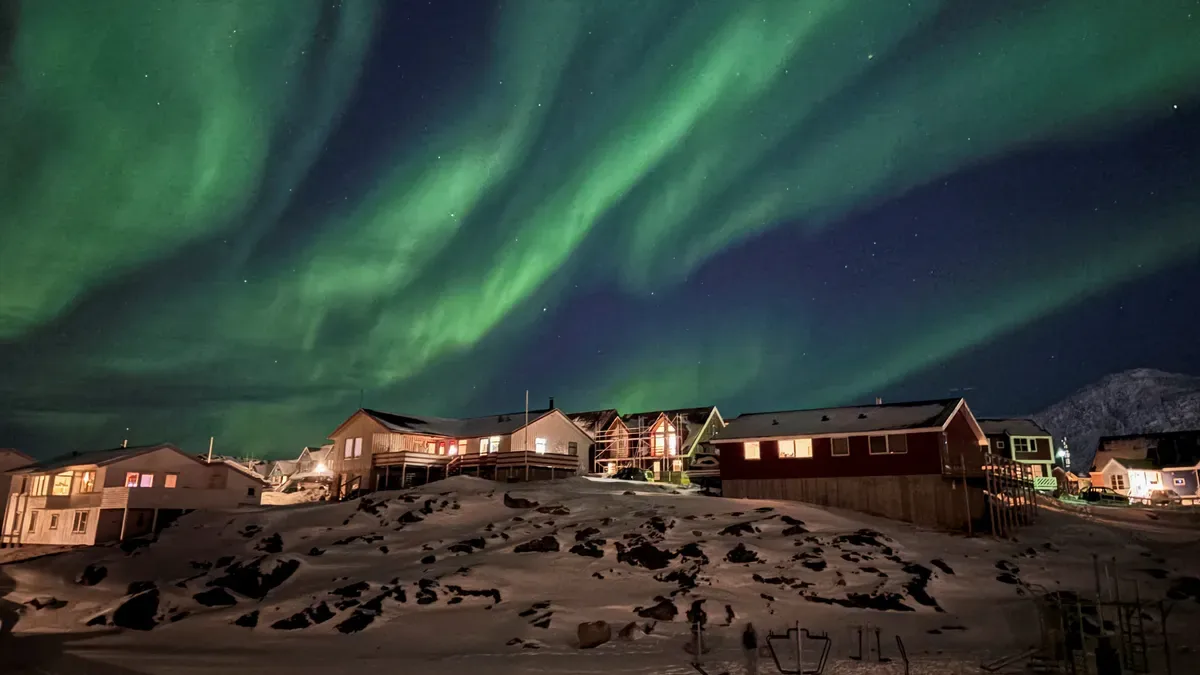
Auroras, often called the northern lights, could be visible in multiple U.S. states on the evening of September 10, 2026. According to the National Oceanic and Atmospheric Administration's Space Weather Prediction Center, Alaska has a high chance of witnessing the celestial display, while seven other states have a low probability.
The phenomenon, known as the aurora borealis, typically appears as vibrant ribbons of light in various colors dancing across the night sky. This spectacle is the result of solar winds carrying charged particles from solar activity, such as solar flares or coronal mass ejections, which are essentially bursts of energy and gas from the sun.
When these charged particles interact with Earth's magnetosphere, they penetrate the planet's atmosphere. There, they collide with oxygen and nitrogen particles, generating the mesmerizing light show that captivates viewers. The intensity and visibility depend on the strength of the solar activity and the geomagnetic conditions.
Understanding Aurora Visibility Factors
The NOAA identified the following states as having a potential chance to see the northern lights: Alaska, Idaho, Minnesota, Montana, North Dakota, South Dakota, Washington, and Wisconsin. While northern Alaska is expected to have the best viewing conditions, states located on or near the U.S.-Canadian border are predicted to have a lower chance. The exact visibility can vary significantly based on local weather conditions, light pollution, and the specific angle of the geomagnetic storm.
For residents in these areas, checking aurora forecast apps and websites, often updated by agencies like Space Weather Prediction Center, is recommended. These tools can provide real-time predictions and alerts, helping aurora enthusiasts maximize their chances of a successful viewing. Patience is also key, as the aurora can appear and disappear quickly.
The ongoing solar cycle is predicted to increase the frequency and intensity of solar activity in the coming years, meaning opportunities to witness the aurora borealis might become more common. Scientists at NASA and other organizations continue to monitor the sun's activity to better predict these events, providing valuable data for both scientific research and public engagement with space phenomena.