
Partial Lunar Eclipse Peaks Aug. 27-28: What to See
A deep partial lunar eclipse will be visible across the Americas, Europe, and Africa on August 27-28, 2026. Up to 96.2% of the moon will enter Earth's shadow.

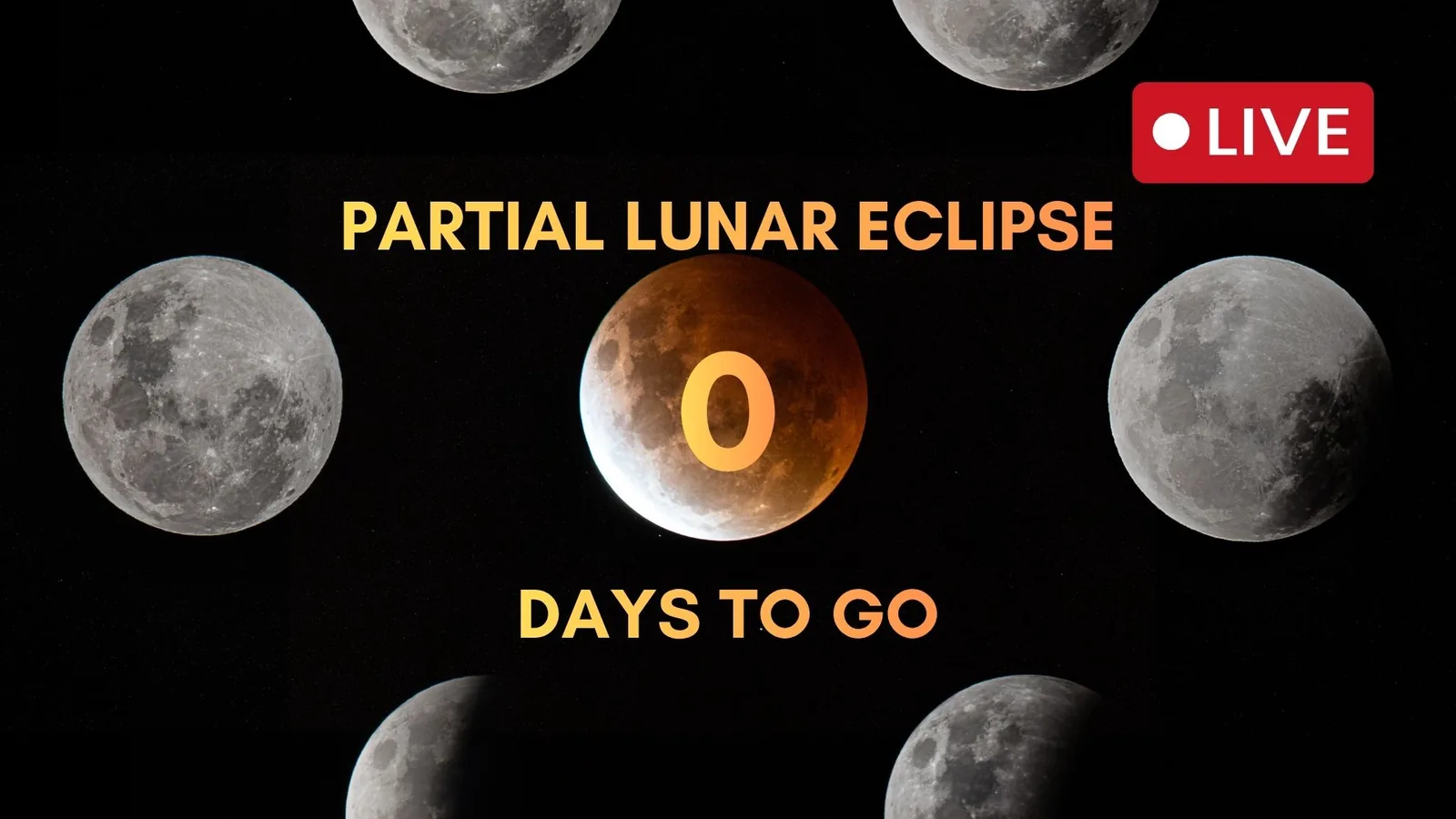
A significant partial lunar eclipse is set to grace the night sky on August 27-28, 2026, offering millions across North and South America, Europe, and Africa a celestial spectacle. The event, coinciding with the full Sturgeon Moon, will see nearly the entire lunar surface—up to 96.2%—slip into Earth's dark umbral shadow at its peak.
This astronomical event provides an accessible viewing opportunity for a vast audience. According to TimeandDate.com, approximately 987 million people in North and South America are positioned to witness the full partial phase, while an estimated 3.34 billion individuals globally will have the chance to observe at least some portion of the eclipse. The visibility and specific appearance of the eclipse will, however, be dependent on local weather conditions.
The full moon in August carries the traditional name "Sturgeon Moon," a moniker derived from the historical abundance of sturgeon fish in the Great Lakes and Lake Champlain during this time, making them a vital food source for Indigenous peoples. Other cultural names for this full moon include "Corn Moon," "Harvest Moon," and "Mountain Shadows Moon," reflecting diverse regional traditions.
Eclipse Timing and Visibility
The eclipse commences on August 27 at 9:23 p.m. EDT (0123 GMT on August 28) as the moon enters Earth's outer penumbral shadow. The visibility will intensify over several hours as the moon progresses into the darker umbral shadow, reaching its maximum coverage at 96.2% of the lunar surface. While not a total eclipse, a notable reddish hue is anticipated for the obscured portion of the moon.
For those unable to view the eclipse directly due to cloud cover or geographical limitations, numerous online livestreams will be available to broadcast the event in real-time. This ensures that enthusiasts worldwide can still experience the moon's transformation as it darkens and takes on an eerie, reddish tone.
Unlike solar eclipses, lunar eclipses are safe to view with the naked eye and require no special equipment. Binoculars or telescopes can enhance the experience, offering a closer look at lunar craters and the dramatic transition across the moon's surface. The entire event is expected to be visible from any location where the moon is above the horizon, with the Americas offering the most comprehensive views.
The phenomenon of eclipses often occurs in pairs, a consequence of the moon reaching specific points in its orbit known as nodes. When these nodes align with the Earth's orbital plane around the sun, an "eclipse season" arises, potentially leading to a solar eclipse during a new moon and a lunar eclipse during the subsequent full moon, or vice versa. This orbital dance positions the Earth, moon, and sun in alignment, facilitating these captivating astronomical displays.