
Perseid Meteor Shower Peaks: Best Viewing Tips for August 2026
The annual Perseid meteor shower reaches its peak viewing period on August 12th and 13th, 2026. NASA advises that the best time for observation in the Northern Hemisphere is in the predawn hours, with optimal conditions due to the new moon phase.

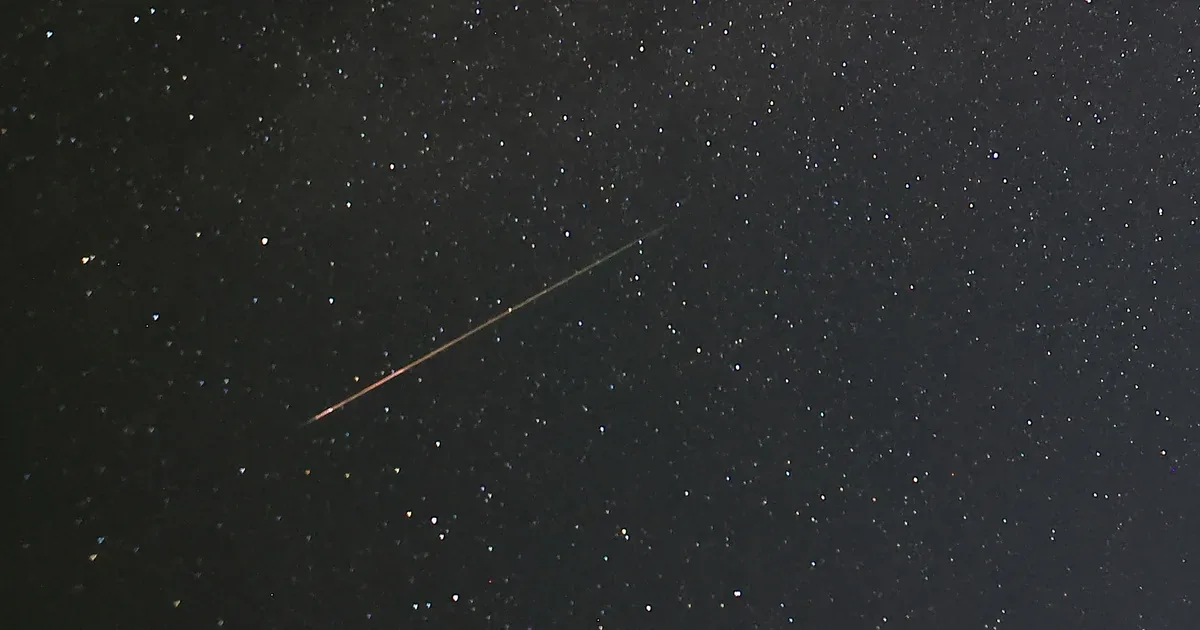
Stargazers across the United States can anticipate a spectacular celestial display as the annual Perseid meteor shower reaches its peak viewing window on the nights of August 12th and 13th, 2026. NASA has designated the Perseids as one of the year's most prolific events, often producing swift, bright meteors that leave luminous trails across the night sky.
According to NASA, observers can expect to see between 50 to 100 meteors per hour under optimal conditions. These dazzling streaks of light, commonly known as shooting stars, occur when Earth passes through debris trails left by comets. The Perseids originate from the comet 109P/Swift-Tuttle, an icy body with a 133-year orbit around the sun, not due to return until 2125. The phenomenon of meteor showers has been documented for over two millennia, making the Perseids a long-standing favorite among celestial events.
Optimal Viewing Conditions Enhance the Show
This year's Perseid shower is particularly well-timed for optimal viewing. The moon will be in its new moon phase during the peak dates, meaning minimal moonlight will interfere with observations. "New moon means we don't have moonlight flooding the sky, and you tend to see way more meteors as a result," explained Dr. Aparna Venkatesan, an astronomer from the University of San Francisco. She noted that while the moon is a beautiful celestial object, its brightness can significantly diminish the visibility of fainter meteors.
Astronomer Zach Vanderbosch of the McDonald Observatory in Texas highlighted the comfort of viewing the Perseids during late summer. "We don't have to suffer through a cold winter night to get a good view of meteors," he said, referring to other popular showers that occur in colder months. The warmer temperatures make it more enjoyable for people to spend extended periods outdoors watching the sky.
To best enjoy the show, experts recommend venturing outdoors after dark, away from the disruptive glare of city lights and any cloud cover. For those in the Northern Hemisphere, the prime viewing time will be in the predawn hours of August 13th. However, meteors can also be visible starting around 10 p.m. local time on August 12th. Dr. Venkatesan plans to travel to the Sierra Nevada mountains for darker skies. The meteors will appear to radiate from the constellation Perseus, which will be high in the northern sky between midnight and dawn.
Vanderbosch advises viewers to allow their eyes at least half an hour to adjust to the darkness. He suggests focusing on a specific patch of the sky. "There's just something magical about it," he added, noting that meteors can often be spotted even in peripheral vision. He also cautioned against looking at phone screens, which can disrupt dark adaptation.
The Perseids are renowned for producing bright fireballs, adding to their appeal. The debris particles, some no larger than a grain of sand, enter Earth's atmosphere at speeds up to 133,000 miles per hour, burning up and creating the visible streaks. This annual event offers a consistent and impressive astronomical experience for the public, connecting people with the wonders of the cosmos.