
SpaceX Falcon 9 Sets Reuse Record on 100th Launch of 2026
SpaceX is set to launch its 100th Falcon 9 mission of 2026 on Aug. 25, featuring a booster making its record-breaking 37th flight and highlighting the company's push for rocket reusability.

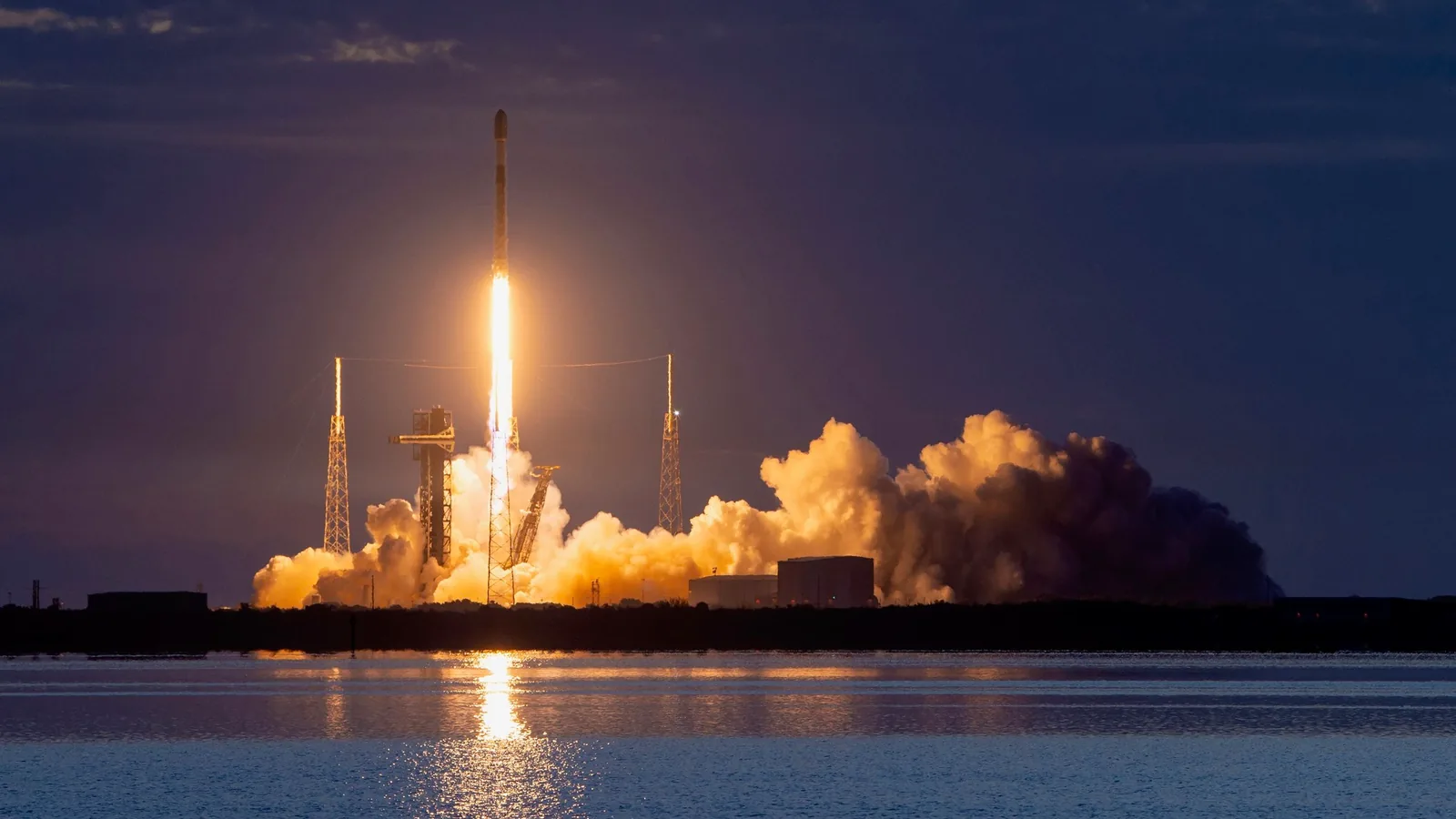
SpaceX is poised to achieve a significant milestone on August 25, 2026, with its 100th Falcon 9 launch of the year, carrying 29 Starlink internet satellites from Cape Canaveral Space Force Station in Florida. The launch window opens at 1:49 a.m. EDT (0549 GMT). More notably, the rocket's first stage booster, designated B1067, will undertake its 37th mission, setting a new world record for rocket stage reuse. This event underscores SpaceX's commitment to making spaceflight more economical and sustainable through extensive reusability.
The Falcon 9 has established itself as the most active orbital rocket globally. In 2025, it completed 165 missions, surpassing the combined total of all other orbital rockets worldwide, with every flight proving successful. The core of this operational efficiency lies in the extensive reuse of its first stage, a strategy that significantly reduces launch costs compared to traditional expendable rockets. While competitors are actively working to replicate this success, including recent orbital landing achievements by two Chinese rockets, none have yet matched SpaceX's rapid turnaround for subsequent flights.
Advancing Reusability and Future Ambitions
SpaceX currently boasts six Falcon 9 boosters that have each completed at least 30 flights, with B1067 leading the fleet at 36 previous missions. Other high-flight boosters include B1077 and B1078 with 30 flights each, B1069 with 32 flights, B1063 with 34 flights, and B1071 with 35 flights. This track record demonstrates a mature and reliable reuse program. The company is not resting on its laurels; founder and CEO Elon Musk has articulated ambitious plans for complete and rapid reusability with the upcoming Starship vehicle, designed to fly multiple times per day. This contrasts with the Falcon 9 and Falcon Heavy, which, while partially reusable, still feature expendable upper stages.
Following the launch on Tuesday morning, the B1067 booster is expected to return to Earth for recovery, further contributing to SpaceX's reusability objectives. Approximately 8.5 minutes after liftoff, the booster will land autonomously on the drone ship "A Shortfall of Gravitas," positioned in the Atlantic Ocean. Meanwhile, the rocket's upper stage will proceed to deploy the 29 Starlink satellites into low Earth orbit about 61.5 minutes post-launch. This particular launch is the 77th mission in 2026 dedicated to expanding the Starlink constellation, the largest satellite network ever assembled, which currently comprises over 11,000 active spacecraft and continues to grow.