
SpaceX Falcon Rocket's Moon Crash Offers Lunar Base Warning
A SpaceX Falcon 9 rocket's controlled crash into the Moon serves as a stark reminder of the debris risks and challenges facing future lunar bases, impacting scientific observation.

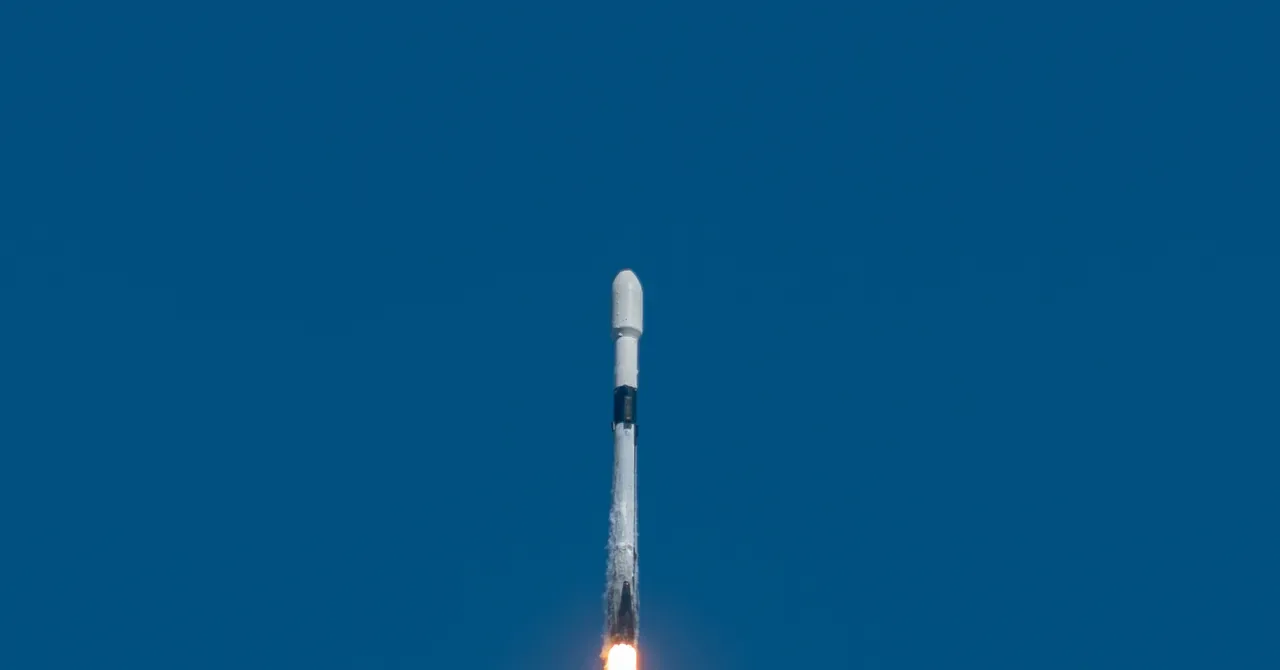
A SpaceX Falcon 9 rocket, after completing its mission, is on a collision course with the Moon, scheduled to impact on August 25, 2026. This event, while largely a scientific curiosity and a demonstration of orbital mechanics, carries significant implications for future lunar operations, particularly the establishment of permanent bases. The impending crash is expected to create a debris plume visible from Earth through telescopes, drawing the attention of astronomers worldwide.
The uncontrolled decay of space hardware in orbit, leading to lunar impacts, highlights a growing concern within the space community: space debris. While much attention is focused on Earth's orbit, the Moon is increasingly becoming a destination for scientific instruments, resource exploration, and potentially, human habitation. The Falcon 9's impact serves as a tangible, albeit unintentional, demonstration of the potential hazards posed by non-functional spacecraft and rocket stages in lunar environments. Such debris can pose risks to sensitive scientific equipment, future landing sites, and astronaut activities.
Debris Raises Concerns for Lunar Science and Future Missions
Astronomers are particularly interested in the upcoming impact, not just for the spectacle, but for the scientific data it may yield. The plume of lunar regolith, or soil, kicked up by the rocket's impact could offer insights into the Moon's composition. However, the broader concern is the generation of new debris. As more nations and private companies aim for lunar missions, the risk of accidental collisions or the scattering of defunct hardware increases. This is especially critical for the proposed lunar bases, which would rely on precise operations and the availability of safe landing zones.
The incident follows a series of recent space-related events that underscore the dynamic nature of celestial exploration. In late July 2026, wildfires near Madrid disrupted NASA's Deep Space Communications Complex, illustrating the fragility of Earth-based infrastructure supporting space missions. Meanwhile, China's Tianwen-2 probe successfully rendezvoused with the asteroid Kamo’oalewa, aiming to collect samples, and the US approved the launch of a satellite designed to reflect sunlight, a project astronomers warned could interfere with optical observations. These events, alongside new findings about Earth's gravitational field and the longevity of our planet relative to the Sun, paint a picture of an increasingly active and complex celestial arena.
The Falcon 9's lunar journey is a consequence of orbital mechanics. After its second stage separated, it was left in an orbit that eventually intersected with the Moon. While this particular rocket was not intentionally aimed at the Moon, its fate serves as a critical warning. Future missions, whether robotic or crewed, must account for the potential for defunct stages and spacecraft to become orbital hazards. Strategies for responsible de-orbiting, retrieval, or controlled disposal will become paramount as lunar activity escalates.
The potential visibility of the impact from Earth, potentially through amateur telescopes, adds another layer to the event. While exciting for observers, it also emphasizes how interconnected our celestial neighborhood is becoming. The actions of one entity, even years after a mission's primary objective is complete, can have observable effects. For organizations like NASA and private spaceflight companies, this necessitates a more comprehensive approach to space situational awareness and responsible stewardship of cis-lunar space.