
NASA Images Show SpaceX Rocket's Moon Crater After 5,400 MPH Impact
NASA's Lunar Reconnaissance Orbiter captured new images of a crater left by a SpaceX Falcon 9 rocket's upper stage that impacted the Moon on August 5 at 5,400 mph. The crater overlaps a pre-existing one.

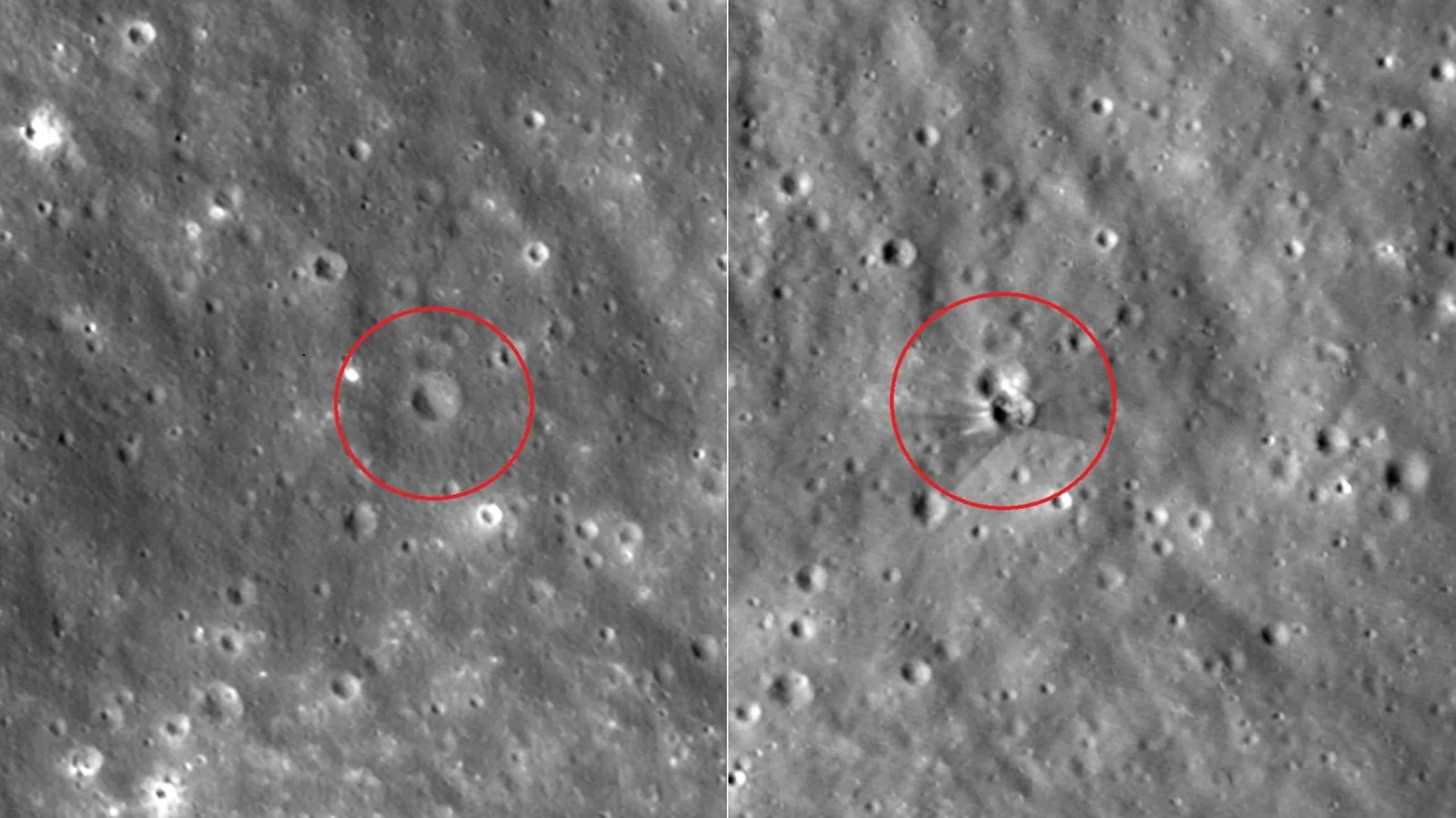
NASA has released striking new images from its Lunar Reconnaissance Orbiter (LRO) showcasing the impact site of a SpaceX Falcon 9 rocket's upper stage, which collided with the lunar surface on August 5, 2026. The rogue rocket stage, essentially discarded space junk, met its end in the Moon's "Magnificent Desolation" after being captured by its gravity, impacting at an astonishing 5,400 miles per hour.
The resulting crater, approximately 60 feet wide and less than 10 feet deep, is notable for overlapping a pre-existing crater, creating a unique visual effect akin to a lunar Venn diagram. These detailed images were acquired by the LRO, a sophisticated terrain mapping satellite that orbits the Moon at an altitude of 60 miles. The orbiter captures the lunar landscape every two hours as it completes its global circuit.
While NASA's LRO provided these high-resolution visuals, the initial photographic evidence of the Moon's newest impact feature was captured by the Korea Pathfinder Lunar Orbiter. This mission, operating under the guidance of NASA's Jet Propulsion Laboratory, pinpointed the exact location of the crash before the LRO conducted its follow-up observation for more detailed analysis.
Lunar Impact Site Reveals Streaks of Debris
Close examination of the impact zone reveals distinctive bright and dark streaks radiating outwards. NASA scientists explain that the darker streaks are composed of surface soil and rocks that have been disturbed, while the lighter streaks originate from material ejected from deeper within the lunar regolith, likely pulverized by the immense force of the collision. The distribution and nature of these streaks offer valuable data for understanding lunar geology and impact dynamics.
The incident highlights a growing concern within the space community: the increasing amount of space debris accumulating in orbit and on celestial bodies. With more commercial and governmental missions launching than ever before, spent rocket stages and other discarded hardware pose a significant risk. The Outer Space Treaty of 1967, which advocates for avoiding harmful contamination of space and celestial bodies, lacks specific definitions and enforcement mechanisms, particularly concerning private companies.
This event is not the first time humanity's orbital activities have left a mark on the Moon. In 2022, a Chinese Long March rocket stage also impacted the lunar surface, creating its own crater. The previous year, Russia's Luna-25 mission, which aimed to land a probe near the lunar south pole, ended in a crash after encountering an "unpredictable orbit." As human activity on the Moon intensifies, with plans for permanent bases and increased scientific exploration, the pristine lunar environment faces an escalating threat of debris.
The accidental landing of the SpaceX rocket stage serves as a stark reminder of the environmental responsibilities that accompany humanity's expansion into space. Just as conservation efforts are crucial on Earth, thoughtful management of space resources and waste is becoming paramount to preserving other worlds for future exploration and potential habitation. The data gathered from this impact will undoubtedly contribute to ongoing discussions about space traffic management and lunar environmental protocols.