
SpaceX Rocket Stage to Impact Moon, Create New Crater August 5
A spent SpaceX Falcon 9 rocket stage is on a collision course with the Moon, set to impact on August 5 and create a new crater. The event marks a rare instance of space debris hitting the lunar surface.

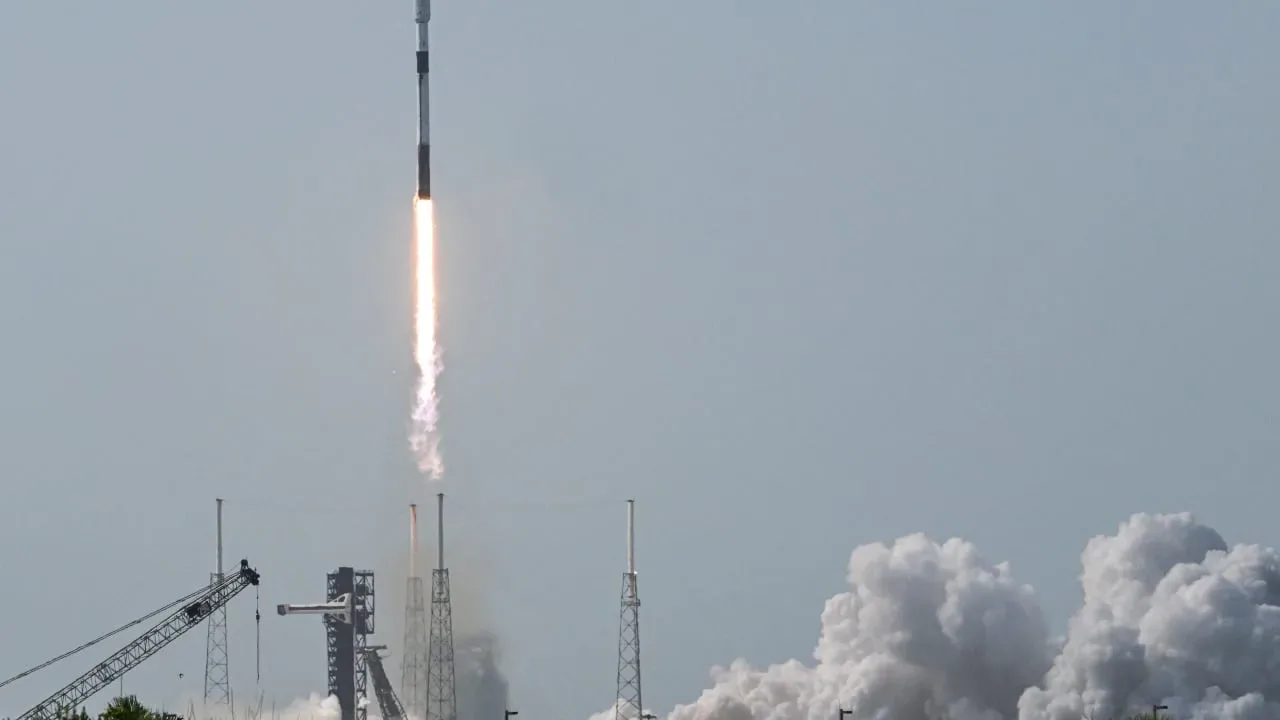
A significant piece of SpaceX hardware is on a trajectory to collide with the Moon on August 5, 2026, creating a new crater. The upper stage of a Falcon 9 rocket, launched on January 15, 2025, is expected to impact the lunar surface at approximately 6:35 a.m. UTC, traveling at roughly 8,700 kilometers per hour. This event marks only the second known accidental crash of rocket debris onto the Moon, following a similar incident in March 2022 involving Chinese mission debris.
The rocket stage, measuring about 12 meters long and four meters in diameter with an estimated mass of four tons, will release kinetic energy equivalent to an explosion of approximately three tons of TNT upon impact. While not a deliberate detonation, the immense force will shatter the rocket and eject a substantial amount of lunar soil, dust, and metal fragments into space. Scientists anticipate this material will form a cloud that could rise between 15 to 100 kilometers high, potentially remaining visible through sensitive telescopes for several minutes due to the Moon's lack of atmosphere and weak gravity.
Tracking the impact and potential observation
The impact is scheduled to occur on the Earth-facing side of the Moon, near the Einstein crater. While the initial flash from the impact may be faint and difficult to observe with amateur telescopes, researchers are primarily interested in the resulting dust cloud. Simulations suggest the cloud could be visible, particularly in regions with clear nighttime views of the Moon, such as eastern North America and parts of South America. Professional astronomers will utilize high-speed cameras, and orbital spacecraft like NASA's Lunar Reconnaissance Orbiter and South Korea's Danuri are expected to capture images before and after the collision. The Danuri spacecraft is slated to pass within several kilometers of the impact zone shortly before the event.
The creation of a crater approximately 20 to 30 meters in diameter and five meters deep is expected. Although too small to be seen from Earth with the naked eye, it will be documented by lunar orbiters. This collision, while unintentional, highlights the growing challenge of managing space debris. As more nations and private companies, including those from the United States and China, plan extensive lunar missions and infrastructure development, ensuring the safe disposal of spent rocket stages and other hardware becomes increasingly critical.
Historically, intentional impacts have been used for lunar research. During the Apollo program, NASA deliberately crashed rocket stages to generate seismic data. In 2009, the LCROSS spacecraft was intentionally impacted near the lunar south pole to search for water ice, producing a plume analyzed by scientific instruments. This current event, however, was not planned and could have potentially been averted by adjusting the rocket stage's trajectory after its mission concluded in January 2025.