
SpaceX Starship: The Next Era of Interplanetary Travel
SpaceX's Starship program aims to revolutionize space exploration through reusable rockets designed for lunar missions, Mars colonization, and deep-space missions. The fully integrated vehicle represents humanity's most ambitious push toward interplanetary settlement.

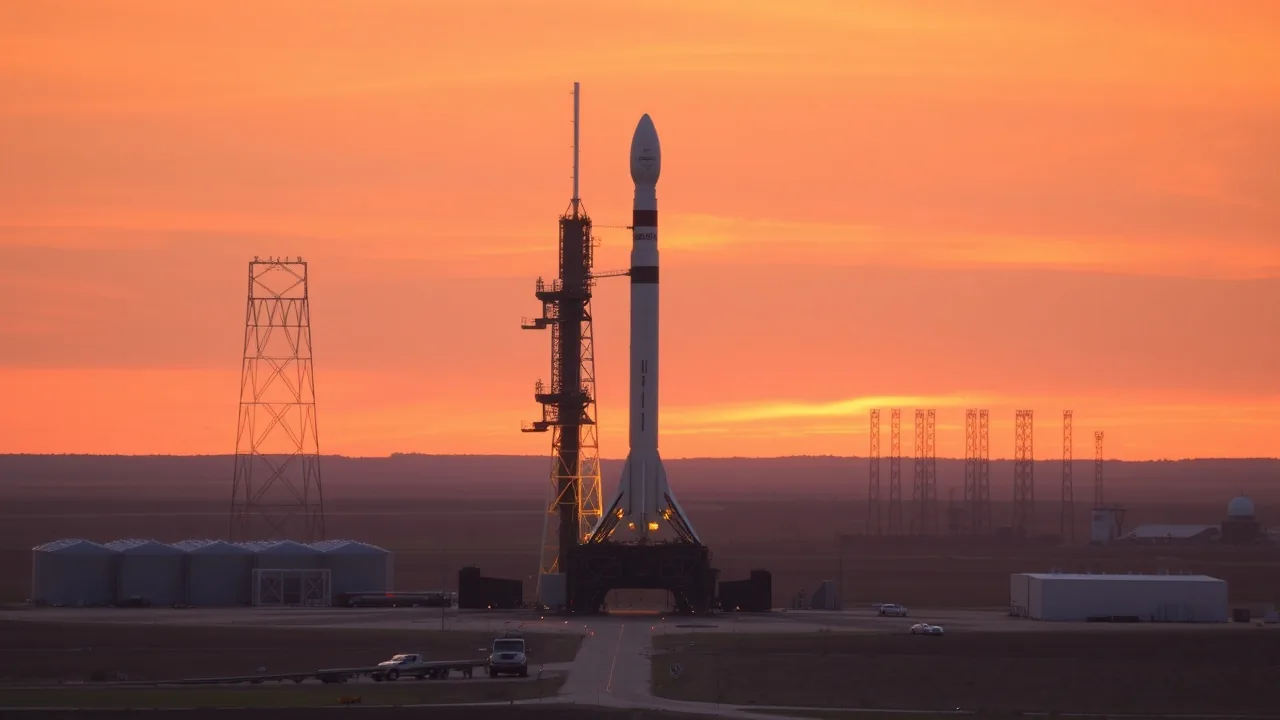
SpaceX conducted another integrated flight test of Starship in early 2025, marking incremental progress toward the company's vision of making interplanetary travel routine. The fully stacked vehicle, standing 120 meters tall, embodies the most ambitious rocket program underway as the aerospace industry pivots toward sustained human presence beyond Earth orbit.
Elon Musk's company unveiled Starship as the successor to the Falcon 9, designed from the ground up for rapid reusability and massive payload capacity. Unlike traditional expendable rockets, Starship's first stage, known as Super Heavy, and its upper stage are both designed to land and be reflown within days, fundamentally altering the economics of space exploration.
The vehicle stands as the most powerful rocket ever built, with the capacity to carry 150 metric tons to low Earth orbit or 100 metric tons beyond. For context, the Space Launch System, NASA's in-house rocket, lifts roughly 70 metric tons to low Earth orbit, demonstrating Starship's outsized capability.
Current Test Progress and Near-Term Milestones
SpaceX has completed multiple integrated flight tests, progressively advancing booster catches, orbital refueling demonstrations, and heat shield performance. In its recent test campaign, the Super Heavy booster achieved controlled return to the launch pad at Starbase, Texas, a critical milestone for operational reusability.
The upper stage, known as Ship, has conducted several ascent tests, with engineers collecting thermal imaging and structural data during reentry. These flights are generating real-world engineering data that guides refinements to tiles, separation mechanisms, and propellant management.
According to SpaceX's development roadmap, the company targets initial cargo missions to the Moon via NASA's Human Landing System contract within the next two years. These uncrewed sorties will validate landing systems and surface operations before crewed lunar missions begin.
"Starship is the key to making life multi-planetary," said a SpaceX engineer in recent interviews regarding the vehicle's long-term trajectory. The company has not provided firm dates for Mars missions, but internal planning documents suggest the first crewed sortie to Mars could occur in the late 2020s if development and regulatory approvals remain on schedule.
NASA Partnership and the Lunar Architecture
NASA selected Starship as its exclusive lunar lander for Artemis III and beyond, committing billions in development funding. The agency views the vehicle's payload capacity and reusability as essential to building a sustained presence on the Moon and eventually Mars.
Under the Human Landing System program, SpaceX must demonstrate:
- Autonomous landing capability in low-light and unknown terrain conditions
- Crew ascent stage reliability from the lunar surface
- Life support system integration for multiple-day surface stays
- Dust mitigation strategies for engine operation near crewed equipment
These technical requirements represent years of work beyond the current test campaign. NASA engineers are actively collaborating with SpaceX teams at both Johnson Space Center and Kennedy Space Center to finalize specifications and validation protocols.
The lunar missions serve as a stepping stone to Mars. SpaceX's long-stated goal involves establishing a self-sustaining city on Mars within 30 years, with Starship as the sole vehicle capable of transporting the cargo and crew volumes required for such a settlement.
Why Starship Matters for the Space Industry
Starship's success or failure will reshape how humanity accesses space. If the company achieves full reusability, launch costs could drop from thousands of dollars per kilogram to hundreds, unlocking economic models that currently exist only in theoretical studies.
The broader aerospace sector is watching closely. Rocket technology has remained largely the same for decades: expensive, expendable, and dependent on government contracts. Starship threatens that status quo.
Blue Origin, Relativity Space, Axiom Space, and other companies are developing complementary vehicles and infrastructure, betting on Starship's success as validation that a commercial space economy is viable. If Starship fails to deliver on reusability claims, the entire sector's growth projections may contract.
The regulatory environment has begun shifting to accommodate rapid iteration. The FAA's experimental test license framework allows SpaceX to conduct multiple flights per year with minimal delay between tests, a flexibility that traditional aerospace programs do not enjoy.
Mars colonization remains SpaceX's stated ultimate objective, but the immediate value lies in lunar logistics. NASA's Artemis program provides funding, scientific objectives, and international credibility that serve as proof-of-concept for a Mars architecture.
Industry analysts estimate that successful interplanetary travel infrastructure could generate a multi-trillion-dollar economy within 50 years, encompassing mining, tourism, research, and off-world manufacturing. Starship is positioned as the foundational vehicle for that future.
The next 24 months will be critical. SpaceX must demonstrate booster catch reliability, orbital refueling at scale, and heat shield performance under realistic reentry conditions. If those milestones slip, NASA's Artemis timeline shifts, and competitor programs gain scheduling flexibility.
For now, attention remains fixed on Starbase, where every test generates data that either validates the design or reveals problems requiring fundamental rethinking. The stakes could not be higher: Starship's development will largely determine whether humanity returns to the Moon as a temporary visitor or establishes permanent settlements. That distinction will define the next era of aerospace engineering.