
SpaceX Stock Price: Market Trends and Investment Outlook
SpaceX remains privately held in 2026, but secondary market activity and aerospace sector momentum shape investor interest. Explore valuation trends, competition, and what drives demand for commercial space ventures.

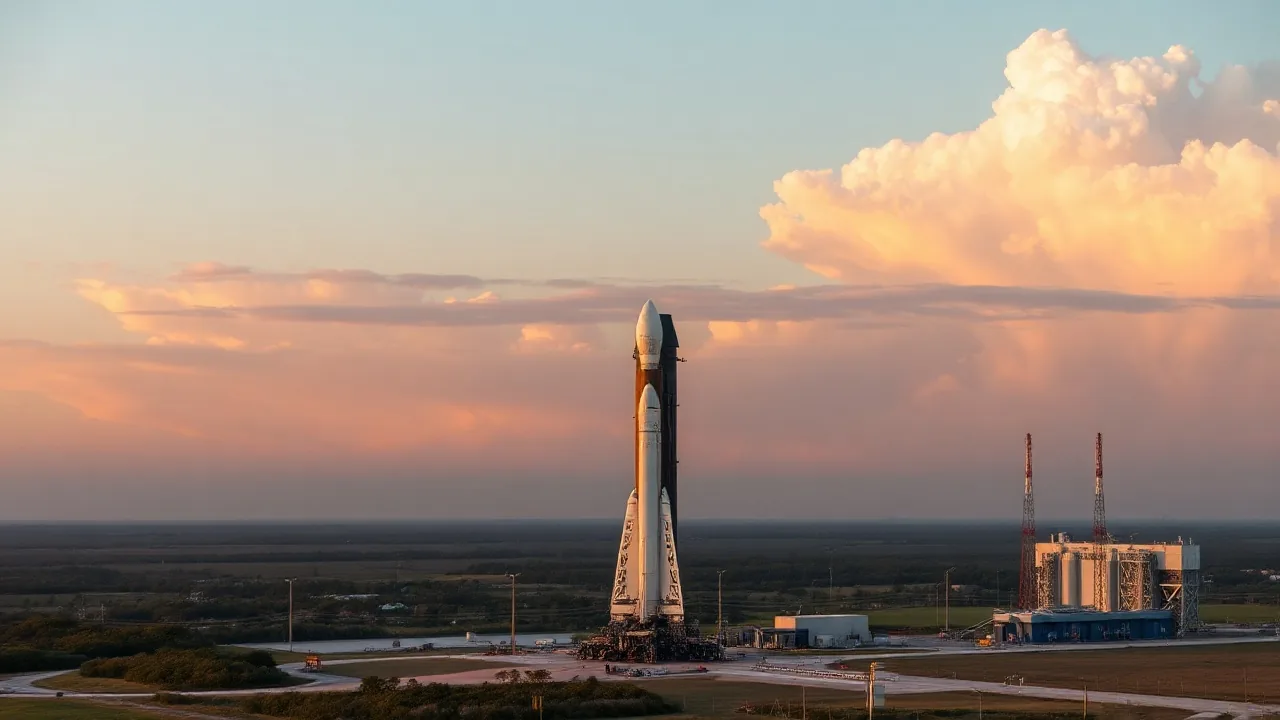
Elon Musk's SpaceX continues to dominate headlines as the world's most valuable private aerospace company, with secondary market trades valuing the firm at roughly $210 billion as of mid-2026. Despite remaining privately held, the company's stock activity on platforms like SharesPost and Forge Global attracts institutional and retail investors betting on the future of commercial spaceflight. The absence of a public listing has not dampened enthusiasm; instead, it has created a vacuum of accessible investment options for those seeking exposure to the space economy.
Secondary market prices for SpaceX equity have climbed steadily through the first half of 2026, reflecting confidence in the company's Starship program, Starlink satellite revenue, and government contracts with NASA and the Space Force. One analyst at Morgan Stanley noted in April 2026 that "SpaceX's integration of launch services, satellite deployment, and deep-space infrastructure positions it as the indispensable backbone of American spaceflight for the next decade." This convergence of commercial and government revenue streams has made SpaceX shares among the most sought-after private equity holdings.
For mainstream investors unable to access private share purchases, the path forward has shifted toward aerospace sector ETFs, space-focused mutual funds, and publicly traded suppliers to SpaceX. These vehicles provide indirect exposure while sidestepping the illiquidity and accredited-investor barriers that characterize private equity in space technology.
The Space X IPO Question: Why Private Remains Dominant
Speculation about a potential space x ipo resurfaces periodically, yet Musk and SpaceX leadership have shown no urgency to go public. In a June 2026 interview, SpaceX President Gwynne Shotwell reiterated that the company's capital needs are met through operations and selective funding rounds, removing the traditional IPO driver. The private structure affords SpaceX strategic flexibility to pursue long-term moonshot projects, such as Starship human missions to Mars, without quarterly earnings pressure from public shareholders.
This approach mirrors the strategy of other billionaire-backed ventures that prioritize mission alignment over market expectations. However, the lack of public listing creates opportunity costs: retail investors cannot easily own spacex stock directly, and SpaceX forgoes the balance-sheet boost and acquisition currency that public companies enjoy. Industry observers believe that if an IPO occurs, it would likely arrive after Starship achieves sustained orbital operations and Starlink reaches profitability thresholds that satisfy institutional underwriters.
Competing Aerospace Players and Market Dynamics
SpaceX's private valuation must be contextualized against public peers. Axiom Space, which is pursuing orbital space station modules, filed for a SPAC merger in 2024 and continues seeking capital. Relativity Space, a 3D-printed rocket startup, raised Series C funding at a $4.2 billion valuation in late 2025. These competitors highlight that venture capital remains abundant in the space sector, yet none have achieved SpaceX's operational scale or revenue diversity.
Traditional aerospace contractors, including Boeing and Lockheed Martin, trade on the Nasdaq and NYSE respectively. Their valuations benefit from legacy defense contracts and established supply chains, yet they lag SpaceX in launch cadence and next-generation propulsion. Investors seeking pure-play space exposure through public markets often default to small-cap and mid-cap holdings in that supply ecosystem, including companies that manufacture rocket engines, avionics, and composites.
The nasa etf category, which bundles government contractor and space-adjacent equities, grew in assets under management to $12.8 billion by May 2026. These funds capture upside from space spending without direct SpaceX ownership, making them a practical vehicle for retail investors.
Fundamentals Driving Investor Interest
Three primary factors underpin demand for SpaceX equity in 2026:
- Starlink Revenue Growth: The satellite internet division generated an estimated $2.7 billion in revenue during 2025 and is projected to exceed $4 billion by year-end 2026, with positive cash flow expected in the near term.
- Government Contracts: NASA awarded SpaceX lunar lander missions totaling $2.9 billion through 2027. The Space Force continues to rely on Falcon 9 launches for national security payloads, with annual commitments exceeding $1 billion.
- Starship Development: The company completed its 11th integrated flight test in May 2026, advancing toward rapid reusability targets. Each successful test reduces the path-to-profitability for heavy-lift Mars and Earth-orbit missions.
Secondary market valuations have climbed modestly despite broader tech volatility, suggesting sustained confidence in SpaceX's long-term cash generation. Analysts at Goldman Sachs estimated that Starship alone could unlock $50 billion in annual revenue potential by 2035 if rapid reusability targets are met, assuming successful deployment for national security and commercial missions.
For those focused on investing in space commerce, the calculus remains straightforward: SpaceX equity commands a premium due to operational proof and financial trajectory. Yet the private structure means that entry points require significant capital or access to specialized brokerages. Secondary market volatility in 2026 has ranged from 8 to 12 percent quarter-to-quarter, reflecting sentiment swings tied to Starship test outcomes and geopolitical factors affecting government contracts.
The broader aerospace sector, bolstered by increased space funding from the Biden-Harris administration and allied nations, continues to attract capital. SpaceX's leadership in that ecosystem ensures that any investor seeking space x stock price exposure will benefit from sector tailwinds, whether through private secondaries or complementary public holdings in the supply chain and infrastructure sectors surrounding commercial spaceflight.