
SpaceX Targets Tuesday for Falcon 9 Starlink Launch After Monday Scrub
SpaceX's planned Monday launch of its Falcon 9 rocket carrying Starlink satellites was scrubbed due to weather concerns. The mission is now targeting a Tuesday morning liftoff from Cape Canaveral.

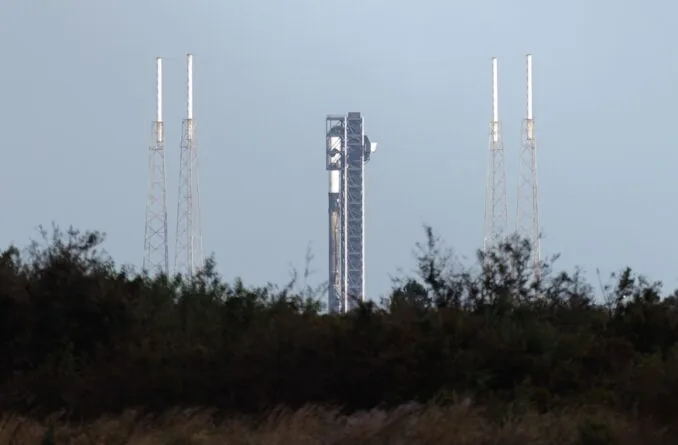
SpaceX has postponed its planned Monday launch of a Falcon 9 rocket from Cape Canaveral Space Force Station, now targeting Tuesday morning for the mission to deploy more Starlink internet satellites. The original liftoff attempt was scheduled for Monday afternoon but was scrubbed hours prior.
The Starlink 10-19 mission aims to add another batch of Starlink V2 Mini Optimized satellites to the company's low Earth orbit constellation. This mission marks the 72nd flight for these broadband internet satellites this year, and following this launch, SpaceX will have completed 93 Falcon 9 flights in 2026. The revised launch window is set for 10:26 a.m. EDT on Tuesday, August 11.
Weather Outlook for Tuesday's Attempt
The 45th Weather Squadron has forecasted a favorable outlook for the Tuesday launch attempt, with a 90 percent chance of suitable conditions at the start of the window. This probability decreases to 75 percent as the window progresses. Forecasters noted that the Atlantic ridge axis is expected to shift southward, bringing light south-southwesterly winds to the spaceport. "With the relatively dry air mass remaining in place, conditions will be similar to Monday, with the Cumulus Cloud Rule remaining the primary concern and an increasing probability of violation towards the end of the window," launch weather officers reported on Sunday. This indicates that cloud formation will be the primary factor to monitor.
The Falcon 9 first stage booster designated for this flight is B1085, which will be undertaking its 18th mission. This particular booster has a notable flight history, having supported previous missions including NASA’s Crew-9, the GPS III-7 satellite, and the Fram2 payload. The rocket is expected to follow a northeasterly trajectory after departing the launch pad.
The Starlink program, initiated by SpaceX in 2019, aims to provide global broadband internet coverage, particularly in underserved and remote areas. The constellation has grown rapidly, with thousands of satellites now in orbit. While the expansion of Starlink is crucial for internet access, it has also raised discussions among astronomers regarding potential impacts on celestial observations due to light pollution and collision risks in orbit.
The successful deployment of these satellites is vital for SpaceX's ongoing efforts to expand its satellite internet service, competing in a growing market for global connectivity. Each successful launch contributes to a more robust and widespread network, enhancing the company's service offerings and its position in the telecommunications industry.