
Total Solar Eclipse August 12: Path of Totality Across Europe
Europe is set to witness its first total solar eclipse in 27 years on August 12, 2026. The moon's shadow will traverse Greenland, Iceland, and northern Spain, bringing a brief period of twilight.

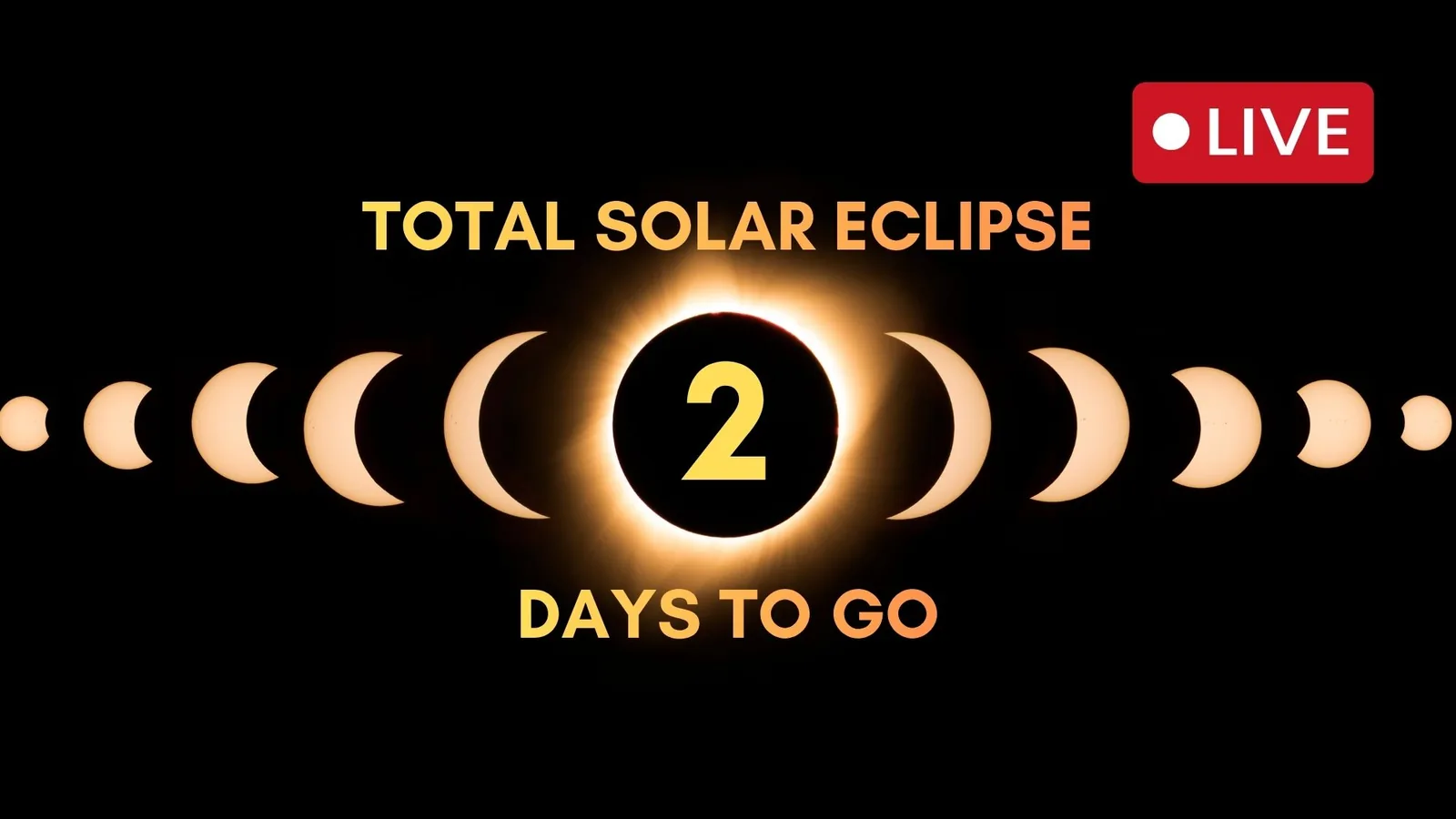
Europe is on the cusp of a rare celestial event as the continent prepares for its first total solar eclipse since 1999. On August 12, 2026, the moon's umbra will cast a shadow across Greenland, Iceland, northern Spain, and the Balearic Islands, plunging these regions into a temporary twilight. Millions more across Europe and parts of northeastern North America will observe a partial solar eclipse.
This significant astronomical event will be meticulously tracked by journalists from the ground. Skywatching editor Daisy Dobrijevic is aboard the MS Spitsbergen, an HX Expeditions vessel exploring Greenland's Scoresby Sund, the world's largest fjord system. Her aim is to capture the totality from this dramatic Arctic location, hoping for clearer skies than a previous attempt. Meanwhile, skywatching writer Anthony Wood will be in Valoria la Buena, Spain, participating in the citizen science project DEB (Distributed Eclipse Broadcast) initiative. He will witness the eclipsed sun low on the western horizon shortly before sunset, marking his first total solar eclipse.
Observing the Sun's Corona and Potential Auroras
During totality, the moon will completely obscure the sun, revealing its outer atmosphere, known as the corona. This ethereal glow is typically hidden by the sun's intense brightness. A fascinating question arising ahead of the eclipse is whether the northern lights could be visible during the event. For observers located above the Arctic Circle, where daylight will briefly give way to twilight, a rare alignment might make seeing the aurora borealis possible, though this would require extraordinary luck.
The total solar eclipse offers a unique opportunity for scientific observation. Citizen scientists involved with the DEB initiative, a network of solar observers led by professional astronomers from Southern Illinois University Carbondale and partially funded by NASA, will be collecting valuable data on the sun's atmosphere. This collaborative effort aims to enhance scientific understanding while bringing the public closer to solar phenomena.
For those planning to watch any part of the eclipse, proper eye protection is paramount. Certified eclipse glasses, conforming to ISO 123-12-2 standards, are essential. It is critical never to look directly at the sun without them, and damaged or scratched glasses should not be used. Even under cloudy skies, many of the dramatic effects of totality can still be observed, though a clear sky offers the most immersive experience. The path of totality, where the sun is completely hidden, is relatively narrow, with wider regions experiencing a partial eclipse.
The eclipse's visibility will vary significantly by location. While some areas will experience the full spectacle of totality, others will only see a partial obscuration of the sun. For the most up-to-date information on viewing times and locations, skywatchers are advised to consult specialized eclipse maps and apps. The countdown is on for this spectacular event on August 12, 2026, promising a memorable display for observers across Europe and beyond.