
Tyrannosaurus Rex's Tiny Arms: Unraveling a Paleontological Puzzle
Paleontologists continue to debate the purpose of Tyrannosaurus rex's famously short arms, exploring theories from social displays to adaptations for hunting larger prey.

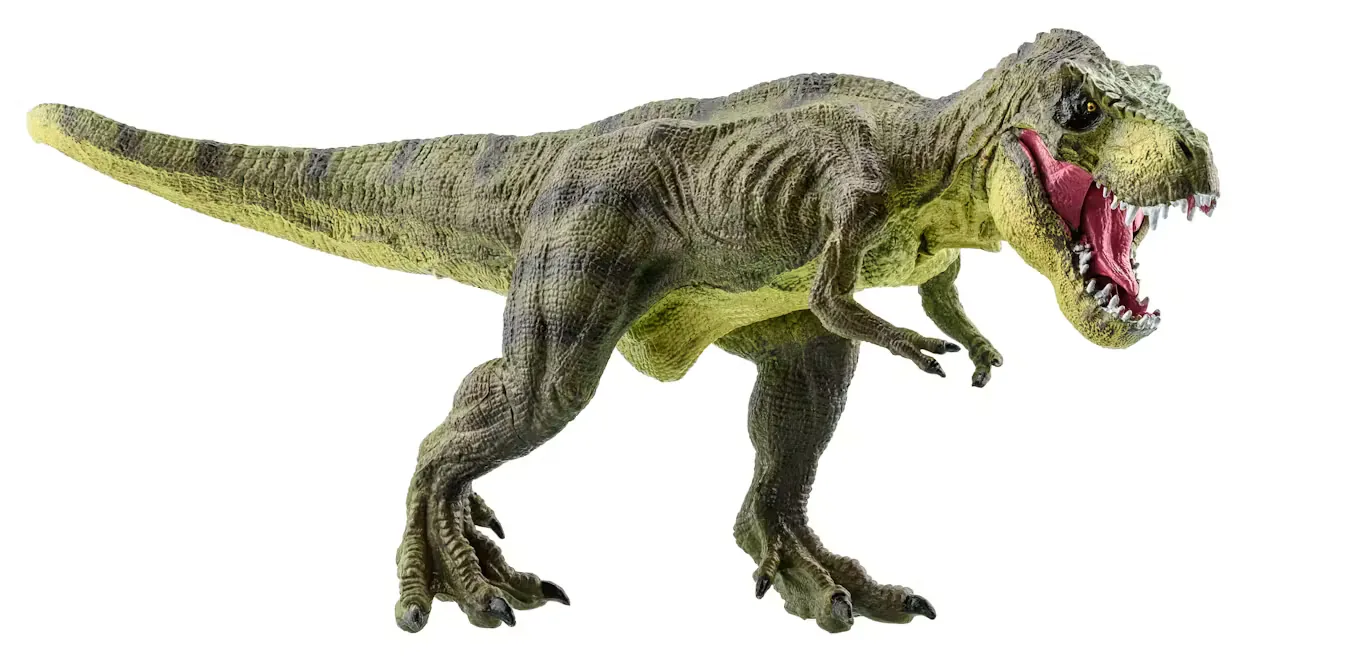
The question of why the mighty Tyrannosaurus rex possessed such proportionally small arms has long puzzled scientists and captured the public's imagination. Despite its colossal size, estimated at up to 40 feet long and weighing as much as an African elephant, the iconic predator's forelimbs measured only about 3 feet in length, roughly 30% of its leg length. This anatomical peculiarity, observed across its theropod family tree, remains a subject of intense scientific inquiry.
Paleontologists, who study ancient life through fossils, have proposed several hypotheses to explain the function, or lack thereof, of these diminutive appendages. One early theory suggested the arms might have been used for social displays, akin to a peacock's tail feathers. However, a lack of significant skeletal differences between male and female T. rex specimens makes this idea less likely. Another possibility is that the arms served as weapons to grasp prey. Yet, this scenario is improbable, as the T. rex's immense jaws would likely have made contact with prey long before its short arms could reach.
Evolutionary Arms Race or Vestigial Relics?
More recent hypotheses suggest the arms' brevity was an adaptation to the competitive feeding environment. In scenarios where multiple carnivores vied for a single carcass, shorter arms would be less vulnerable to accidental or intentional bites from rivals, a strategy seen in modern territorial predators like Komodo dragons. The theory posits that as the T. rex's skull and jaws evolved to become larger and more powerful for hunting and consuming prey, the arms became less essential and possibly even a liability. This aligns with a broader evolutionary trend observed in theropods, where arm length decreased as skull size increased.
Some researchers propose the arms may have become vestigial – body parts that lose their original function over evolutionary time, similar to the hindlimbs of whales. These structures persist but no longer serve a significant purpose. Another perspective, supported by mathematical modeling, links smaller arms directly to larger skulls in theropods. While the precise benefit of shrinking arms as heads grew is still debated, some speculate it may have aided in maintaining balance with a heavier head. The correlation between skull size and arm length is strong, yet the underlying evolutionary driver remains elusive.
The enduring mystery of the Tyrannosaurus rex's short arms highlights the complexities of evolutionary biology. The fossil record provides clues, but definitive answers often require more data. Each new fossil discovery offers a potential piece of the puzzle, pushing the boundaries of our understanding of these magnificent prehistoric creatures. The ongoing scientific investigation into T. rex's anatomy and behavior underscores the dynamic nature of paleontology, where questions about even the most famous dinosaurs can lead to profound insights into life millions of years ago.
This investigation into the functional morphology of dinosaur arms is crucial for reconstructing the ecology and evolutionary pressures faced by these ancient animals. The T. rex, in particular, continues to be a focal point for understanding predator-prey dynamics and the adaptive strategies that led to survival for over a million years before the asteroid impact that caused a mass extinction event approximately 66 million years ago. Understanding these adaptations can offer broader lessons about evolutionary trade-offs and the diverse paths life can take.