
Snake Evolution: How Lizards Lost Legs Over 100 Million Years
Scientists are unraveling the ancient origins of snakes, exploring how these legless reptiles evolved from lizard ancestors over 100 million years ago through new fossil discoveries and modern techniques.

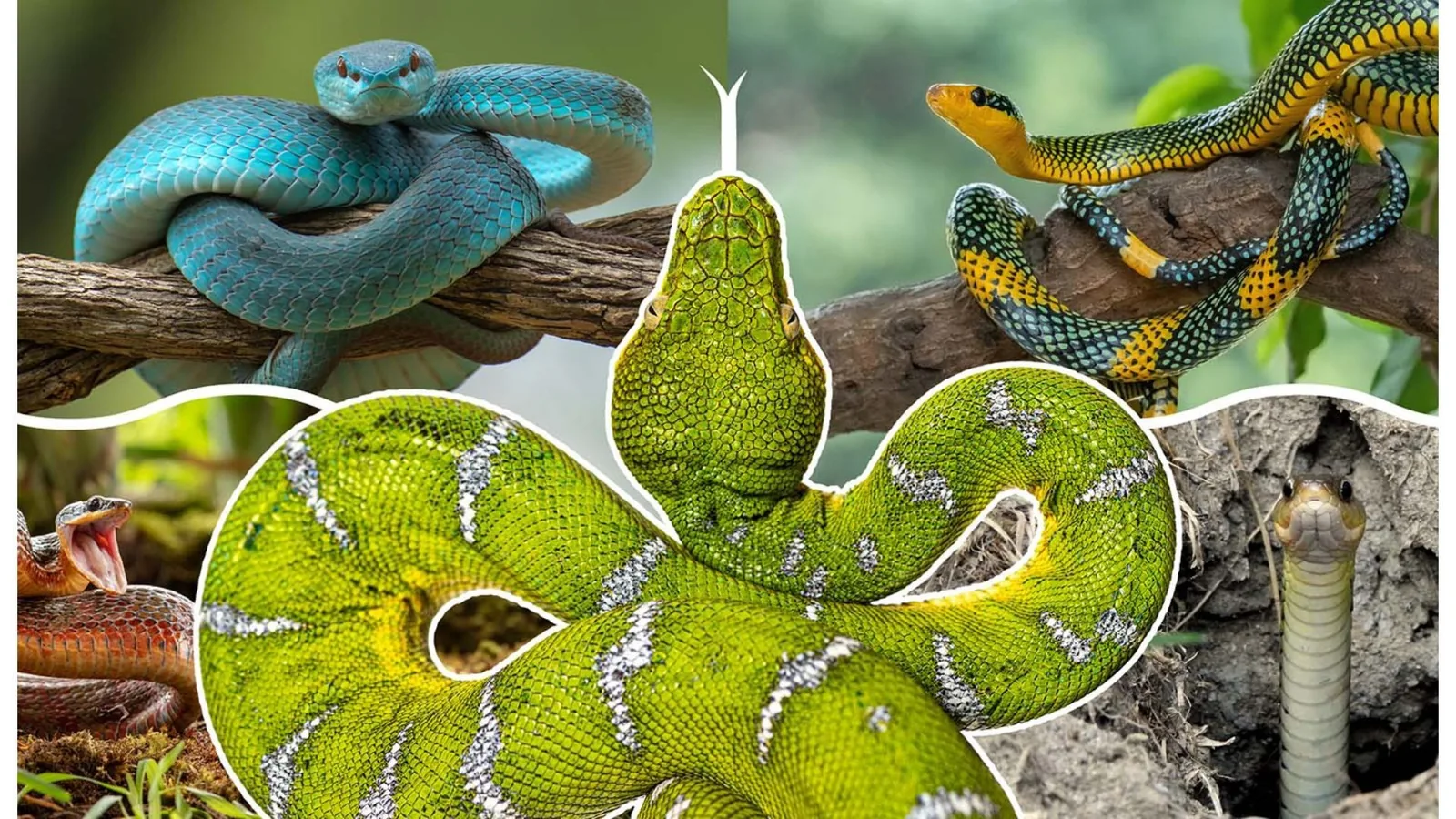
The evolutionary journey of snakes, a group that has conquered diverse environments from land to sea and underground, is being pieced together with new fossil evidence and advanced scientific analysis. While the exact origins remain a puzzle, researchers are refining theories about how these reptiles, estimated to have emerged around 160 million years ago, diverged from their lizard kin and became the diverse group of over 4,000 species known today.
Marc Tollis, an evolutionary biologist at Northern Arizona University, suggests that early snakes might have exploited a niche by preying on mammals in burrows, a theory driven by the long and often sparse fossil record. “Like the creatures themselves, the snake fossil record is long and thin, leaving gaps in snaky history,” Tollis noted in an overview of early snake and lizard evolution. Major questions, such as their precise starting point and closest relatives, persist, but new discoveries are continually updating the narrative of snake development.
The diversification of snakes began approximately 125 million years ago, allowing them to spread across six continents and inhabit land, sea, and even trees. Their impressive adaptations range from minuscule threadsnakes to massive pythons, exhibiting varied hunting strategies and reproductive methods. Evolutionary biologist Alex Pyron of George Washington University highlights their success: “Despite that, snakes are some of the most successful animals,” marveling at their capabilities, which he likens to superpowers for what is fundamentally a streamlined predatory form.
Unraveling Ancestral Habitats
Determining the original habitat of the first snakes—whether terrestrial, marine, or subterranean—is a key challenge. Early fossil finds emerged from various environments, complicating efforts to pinpoint their ancestral home. Tiago Simões, an evolutionary biologist at Princeton University and co-author on a recent review paper, pointed out this difficulty with ancient fossils.
One prominent hypothesis posited an underground origin, partly supported by the reduced eyes of some modern burrowing snakes. However, vertebrate paleontologist Catie Strong of Harvard University argues that these snakes are highly specialized for their current environments, such as termite mounds, and may not represent the earliest forms. “They have weird, alien-looking skulls fit for their subterranean environment and insectivore diet,” Strong explained, noting features like a “pronounced underbite” that protects their mouths. Her research, conducted with Michael Caldwell at the University of Alberta, suggests these specialized creatures are unlikely to be at the root of the snake family tree.
Another theory, gaining traction in the late 20th century, suggested a marine origin. Fossils from the Middle East, dating back nearly 100 million years when the region was submerged, along with links to extinct aquatic reptiles like mosasaurs, fueled this idea. However, this hypothesis has been challenged by the discovery of older, clearly terrestrial snake fossils. The current scientific consensus leans towards an origin on land, with some early snakes later adapting to aquatic life. Simões stated, “So the current consensus is that the Middle Eastern swimmers didn’t spring from the water but dived into it from land.”
Fossil discoveries in Patagonia, such as 95-million-year-old Najash rionegrina and 80-million-year-old Dinilysia patagonica, offer further clues. While Dinilysia likely lived above ground, Najash exhibits features suggesting a partially subterranean lifestyle. Caldwell speculated that these large-bodied snakes, similar to modern pythons, might have used underground spaces for shelter while hunting on the surface.
Investigations into the braincases of ancient snakes and lizards, using 3D X-ray imaging, have revealed characteristics consistent with burrowing, such as a small cerebellum. Yet, other brain features did not align perfectly with a purely subterranean existence. Combining these findings, Strong supports a theory of terrestrial evolution, possibly in sandy environments, which would have also allowed for occasional underground navigation.
The Loss of Limbs
A defining feature of snake evolution is the complete loss of limbs, a trait observed in several distinct lizard lineages. Daniela Garcia Cobos, an evolutionary biologist at the American Museum of Natural History, explained that limbs can be a disadvantage for creatures moving through dense grass or underground: “When one is crawling underground or moving through grass, limbs are literally ‘a drag’”.
Scientists estimate this transition occurred between 150 million and 125 million years ago, though precise timing and location remain elusive. Early fossil snakes typically showed hind limbs but lacked forelimbs, with the status of pelvic regions in fossils like Dinilysia being uncertain. The elusive four-legged snake ancestor, a crucial transitional form, has been a subject of intense search. A candidate identified in 2015 was later debunked as a lizard. More recently, Brugnathair elgolensis, a four-legged Jurassic fossil found in Scotland and described in 2025, has been proposed as a potential snake ancestor. Paleontologist Susan E. Evans from University College London described it as lizard-like, but Caldwell believes its jaw structure and tooth shape indicate snake lineage, stating, “It’s got all the right skull features.” The debate highlights the ongoing quest to fill the gaps in the remarkable evolutionary history of snakes.