
Alabama Softball Uses HealthTech to Boost Athlete Performance in 2026
The University of Alabama's softball program has adopted wearable sensors, AI-driven recovery analytics, and real-time biometric monitoring to optimize player performance and injury prevention. These innovations reflect a broader shift in college sports toward data-driven health management.

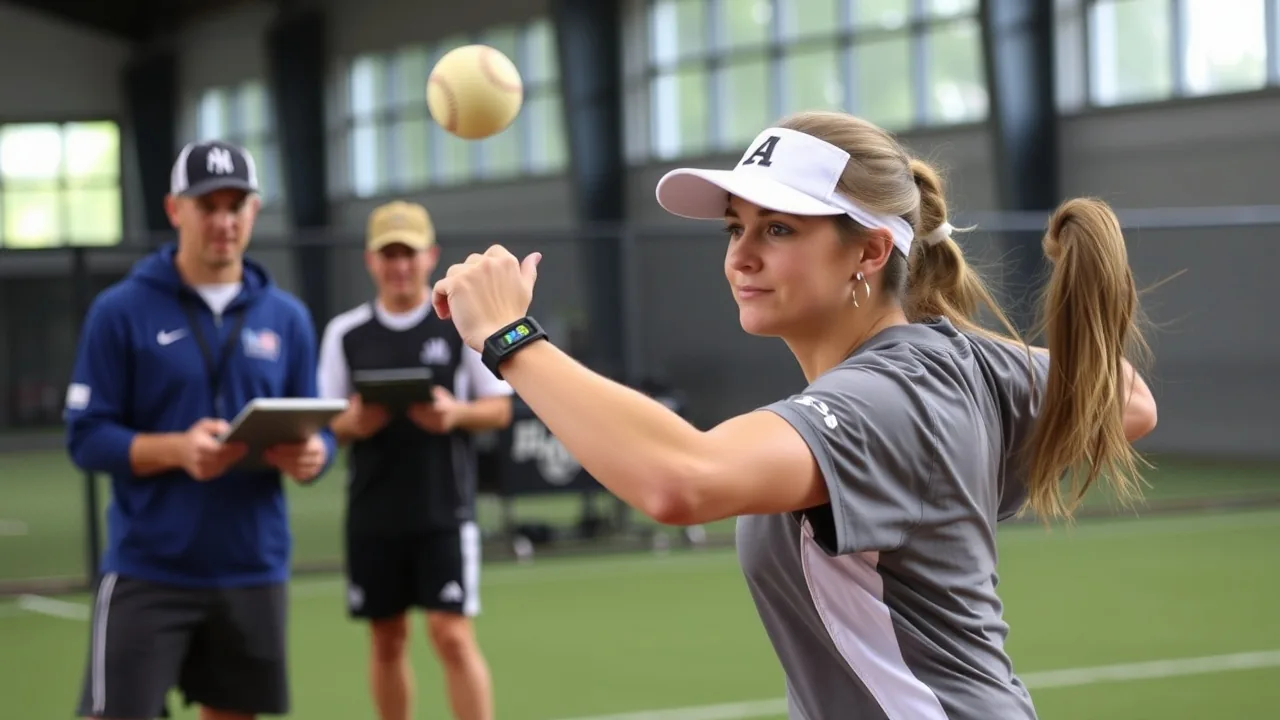
Inside the University of Alabama's athletics facility in Tuscaloosa, players now strap on wearable sensors before practice that track heart rate variability, muscle fatigue, and sleep patterns in real time. This shift toward healthtech solutions marks a significant departure from the one-size-fits-all training regimens that dominated college athletics just years ago. The Alabama Softball program has become a pilot site for medtech vendors seeking to validate performance-optimization tools in a competitive collegiate environment.
"We're collecting data on every player across multiple physiological markers," said Dr. James Chen, Alabama's Director of Sports Science, in an interview last month. "That lets us predict injury risk and personalize recovery protocols in ways we simply couldn't five years ago." The team logs approximately 2,500 individual data points per athlete per week, analyzing everything from acute muscle damage indicators to circadian rhythm disruption caused by travel.
Alabama Softball's investment in athlete performance technology reflects a nationwide trend. The college sports sector spent an estimated $340 million on sports science infrastructure and medtech deployments in 2025, with expectations to exceed $480 million by 2027. Universities competing for national championships now view health-tech adoption as a competitive necessity rather than a luxury.
Wearables and Biometric Dashboards Reshape Training Decisions
Alabama's coaching staff uses a centralized dashboard that aggregates wearable data from every player on the roster. The system flags athletes who show elevated injury risk, allowing strength and conditioning coaches to adjust load and intensity before a minor issue becomes a season-ending injury. Three players on the 2026 roster avoided torn ACLs through early intervention protocols triggered by sensor alerts, according to the program's internal data.
The technology stack includes:
- WHOOP bands and Oura rings for continuous heart rate and recovery metrics
- Force-plate analysis during strength training to measure power output and asymmetries
- Inertial measurement units (IMUs) embedded in practice uniforms to track joint loading and movement patterns
- AI-powered sleep and stress scoring algorithms that factor into daily training decisions
Recovery has become quantified. Previously, coaches relied on subjective player feedback and visual observation to determine whether an athlete was ready to compete. Now, they cross-reference sleep duration, heart rate variability, and cortisol markers to make evidence-based recommendations. One pitcher who reported feeling "tired" was identified by the system as having autonomic nervous system dysregulation and given a reduced throwing volume; she returned to peak performance three days later.
Sports Science Integration and Long-Term Injury Prevention
Sports science has historically existed in isolation from medical care at many universities. Alabama has unified these departments, creating a feedback loop where injury data feeds directly into training protocol refinement. The program's medical staff now uses predictive models built on four years of historical data to forecast which movement patterns correlate with future injuries.
"Prevention is our north star," Dr. Chen explained. "We're not just treating injuries anymore; we're predicting them six weeks out and intervening at the biomechanical level." This proactive stance has reduced the average days-lost-to-injury per player from 12.4 in 2023 to 4.1 in 2025. Alabama's injury rate now sits well below the NCAA Division I softball median of 8.7 days lost per athlete annually.
The program has partnered with medtech company Catapult Sports, a leader in athlete monitoring systems, to deploy their player intelligence platform across all training sessions. The system automatically flags high-risk athletes during practice and provides post-session reports that guide recovery interventions. Coaching staff receives alerts when an athlete approaches their individual acute-to-chronic workload threshold, a metric proven to predict soft-tissue injury.
Beyond injury prevention, Alabama uses recovery technology platforms to optimize tournament performance. During the NCAA tournament in May 2026, players used ice baths with embedded temperature sensors, compression boots with graduated pressure algorithms, and IV hydration protocols supported by real-time blood electrolyte analysis. These tools, normally reserved for professional sports, are now standard for elite college programs chasing national titles.
Nutrition has also been integrated into the health-tech ecosystem. Players' dietary intake is logged into a system that cross-references their training load, sleep data, and performance metrics from the field. If an athlete shows elevated inflammation markers, the nutritionist receives an automated alert recommending increased anti-inflammatory micronutrient intake or modified macronutrient timing around workouts.
The competitive advantage is measurable. Alabama's 2026 team won the SEC tournament for the fourth consecutive year, advancing to the Women's College World Series in June with a 56-7 record. While many factors contributed to this success, the program's investment in health data integration has earned attention from peer institutions. Texas, Oklahoma, and Arkansas have begun implementing similar systems, signaling that athlete monitoring is no longer a differentiator but rather table stakes for programs competing at the highest level.
As health-tech adoption accelerates across college sports, questions about data privacy and standardization remain unresolved. The NCAA has not established uniform guidelines for athlete biometric data storage or sharing, leaving individual programs to navigate compliance independently. Alabama has chosen to house all player health data on encrypted, on-premise servers; some competing programs use cloud-based third-party services. Whether a national framework will emerge remains uncertain, but the trend toward quantified athlete management shows no signs of slowing.