
Cow Gut Discovery: New Organelle Links Microbes to Climate Change
Scientists have identified a novel organelle, the "hydrogenobody," in cow gut microbes. This discovery sheds new light on how animal digestion contributes to methane emissions and offers potential strategies for mitigating climate change.

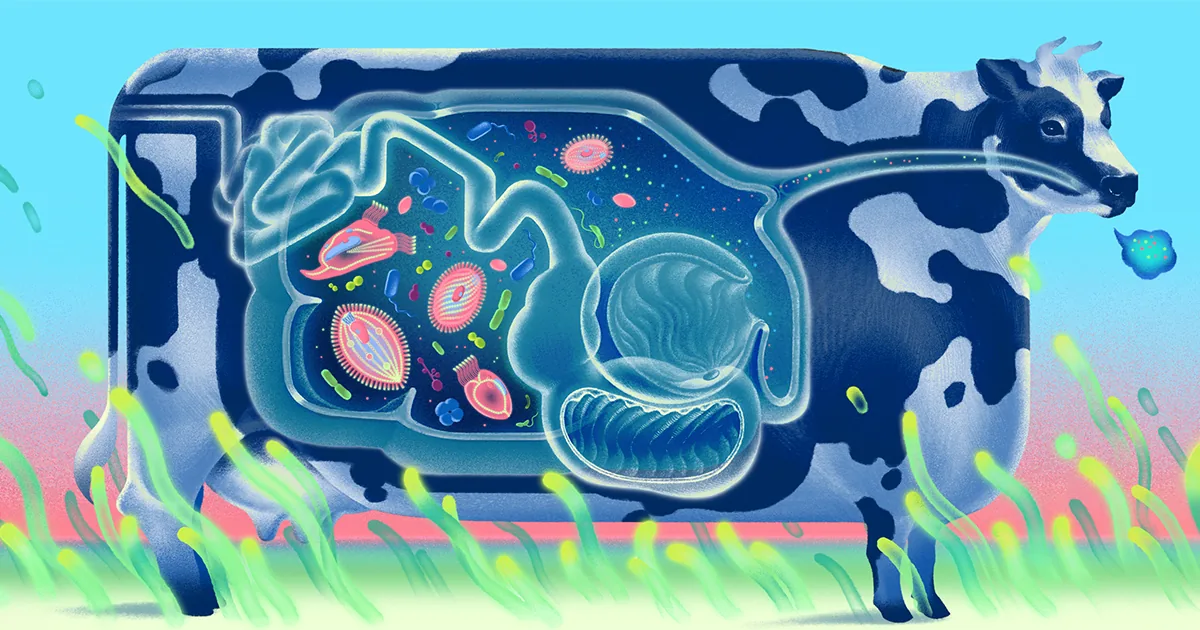
A groundbreaking study has revealed a previously unknown cellular structure within the microbes inhabiting a cow's digestive system, offering critical insights into the generation of methane, a potent greenhouse gas. Researchers identified a new organelle, dubbed the "hydrogenobody," inside ciliates—a type of single-celled organism dominant in the cow's rumen. This discovery, published in the journal Science, highlights a direct link between the complex microbial ecosystem within livestock and its significant impact on Earth's atmosphere, potentially paving the way for new climate change mitigation strategies.
The rumen, a specialized fermentation chamber in the digestive tract of ruminant animals like cows, hosts a vast and intricate microbiome. This community of bacteria, fungi, and ciliates breaks down feed, producing not only nutrients for the animal but also byproducts like methane. This potent greenhouse gas, produced by methanogens that scavenge fermentation waste, accounts for a substantial portion of atmospheric methane. Ruminant livestock, in total, contribute about a third of all methane emissions. Given methane's short lifespan in the atmosphere compared to carbon dioxide, targeting its sources presents a promising avenue for rapid climate impact reduction.
The recent research, involving extensive genome sequencing of 450 ciliate species, focused on the role of ciliates, often overlooked compared to bacteria. These larger microbes use their cilia, hair-like appendages, to move and consume bacteria, a process requiring significant energy. This energy production, it turns out, releases hydrogen gas. The newly discovered hydrogenobody, located at the cell membrane's edge, houses hydrogenase enzymes crucial for this process. Researchers found that these organelles not only supply energy for the cilia but also support the oxygen-averse methanogens by consuming oxygen and providing them with hydrogen, the raw material for methane production.
Microbial Anatomy and Global Impact
The identification of the hydrogenobody is significant because it pinpoints a specific cellular mechanism directly contributing to methane formation. "Finding a new organelle is pretty exciting," stated Aaron Turkewitz, a cell biologist not involved in the study, emphasizing the rarity of such discoveries. The study observed that ciliate species with more hydrogenobodies, such as the large isotrichs, were associated with higher methane emissions in cows. Conversely, cows with microbiomes dominated by entodinomorphs, which have fewer hydrogenobodies, produced less methane. This correlation provides a direct, mechanistic link between specific microbial anatomy and the amount of methane emissions from livestock.
Understanding this complex interplay within the cow gut ecosystem is crucial. "Just targeting the methanogens is probably not enough," commented Juan Tricarico, an expert in enteric methane emissions. "We want to understand the environment under which these microbes thrive." The findings suggest that manipulating the ciliate population or their hydrogenobody activity could be a viable strategy to reduce livestock's greenhouse gas footprint. This research builds upon decades of investigation into the rumen microbiome, seeking ways to enhance digestion efficiency while minimizing methane output.
The implications of this research extend beyond simply understanding cow digestion. By pinpointing a specific cellular structure responsible for a key step in methane production, scientists gain a more precise target for intervention. Future research will likely focus on developing methods to either reduce the abundance of methane-producing ciliates or alter the function of their hydrogenobodies. Such advancements could lead to more sustainable agricultural practices, significantly contributing to global efforts to combat climate change. The intricate relationship between the microscopic world within animals and the macroscopic changes in our planet's atmosphere underscores the interconnectedness of life on Earth.