
Songbird Origins: Evolution of Avian Melodies and Their Importance
New research explores the evolutionary journey of songbirds, revealing insights into how their complex vocalizations developed and why their songs are crucial for communication and ecosystem health.

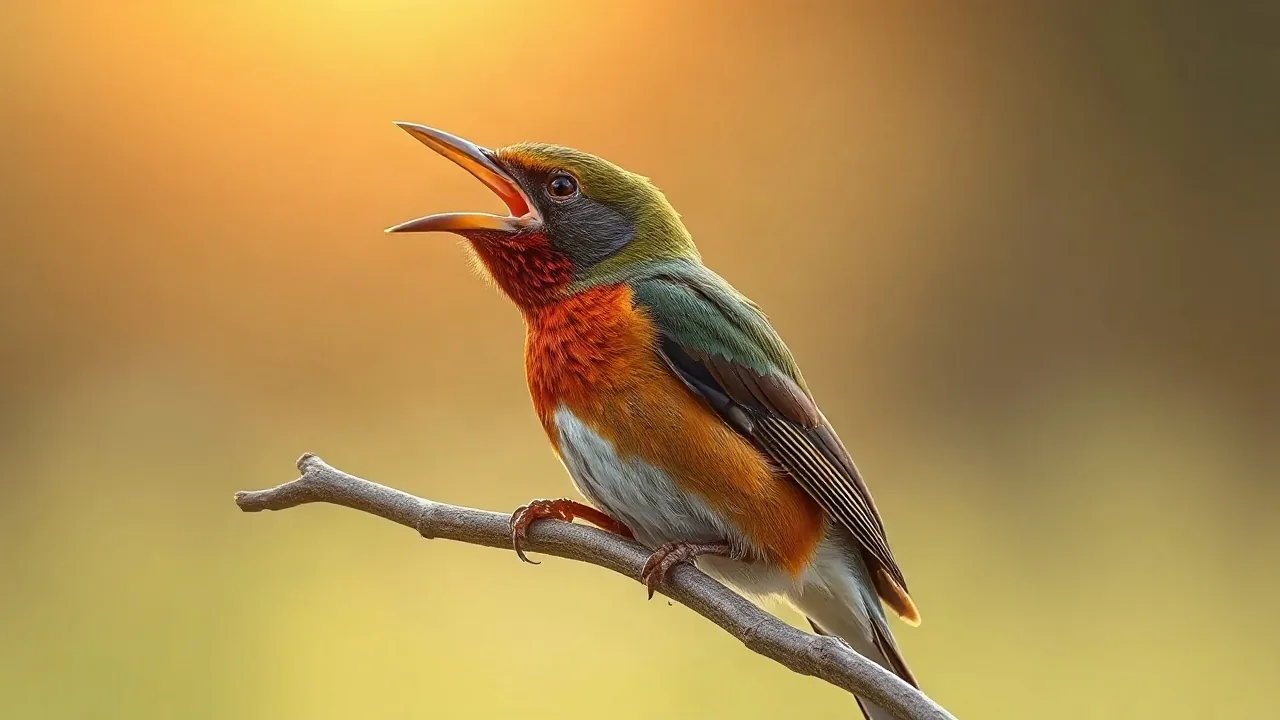
The intricate and diverse melodies produced by songbirds, a group encompassing over 4,000 species, have long captivated human listeners. These vocalizations are not merely pleasant sounds but are fundamental to the birds' survival, playing critical roles in mate attraction, territorial defense, and social bonding. Understanding the origins of these songs offers a window into avian evolution and highlights the ecological significance of these feathered musicians.
The evolutionary path to complex bird song is a subject of ongoing scientific inquiry. While the exact timeline remains debated, fossil evidence and genetic studies suggest that vocal learning—the ability to learn songs from others—likely emerged early in the lineage of modern birds. This capability is particularly pronounced in the order Passeriformes, commonly known as perching birds or songbirds, which account for more than half of all bird species. The development of sophisticated syrinxes, the vocal organs in birds, alongside specialized neural pathways, enabled these birds to produce a vast repertoire of sounds.
The Deep Roots of Avian Vocalization
Recent paleontological discoveries and comparative genomics are shedding light on the ancestral traits that paved the way for elaborate bird song. Researchers have identified key genetic mutations and neural structures that distinguish vocal learners from non-learners, such as parrots and hummingbirds, which also possess impressive vocal abilities but learn differently or have innate song repertoires. The evolutionary pressures driving the development of song likely included the need for effective communication in diverse and often noisy environments, where complex signals could convey more information than simple calls.
Dr. Eleanor Vance, an evolutionary ornithologist at the Cornell Lab of Ornithology, explained the significance of these findings. "The ability to learn and produce complex songs is a hallmark of many bird species, and it has profound implications for their social structures and reproductive success," Vance stated. "Tracing these abilities back through evolutionary time helps us understand not only bird behavior but also the evolution of communication itself, including in humans."
The diversification of song patterns across different species is also a key aspect of this evolutionary story. Geographic isolation, sexual selection, and adaptation to various ecological niches have all contributed to the incredible variety of songs heard around the globe. For instance, the elaborate courtship songs of a lyrebird in Australia, capable of mimicking a wide range of sounds, serve a very different purpose and evolved under different pressures than the simpler territorial calls of a sparrow in an urban park.
The importance of songbirds extends beyond their evolutionary narrative; they are vital components of healthy ecosystems. Their songs facilitate reproductive success and maintain social order within bird populations. Furthermore, many songbird species play crucial roles as pollinators, seed dispersers, and insectivores, helping to regulate insect populations and maintain plant biodiversity. The decline in certain bird populations due to habitat loss, climate change, and pollution underscores the urgent need to understand and conserve these species and their unique vocalizations.
Conservation efforts are increasingly recognizing the value of acoustic monitoring, using the songs of birds as indicators of ecosystem health and biodiversity. By studying the nuances of avian melodies, scientists can gain insights into environmental changes and the impact on wildlife. The ongoing research into the origins and function of bird song not only enriches our appreciation for the natural world but also provides critical data for safeguarding avian populations and the environments they inhabit for future generations.