
Moto Watch (2026) Review: Design Falters Under Pressure
Motorola's latest smartwatch, the Moto Watch, boasts an appealing design but falls short in performance and user experience. Its Real Time OS limitations hinder functionality, making it a disappointing option.

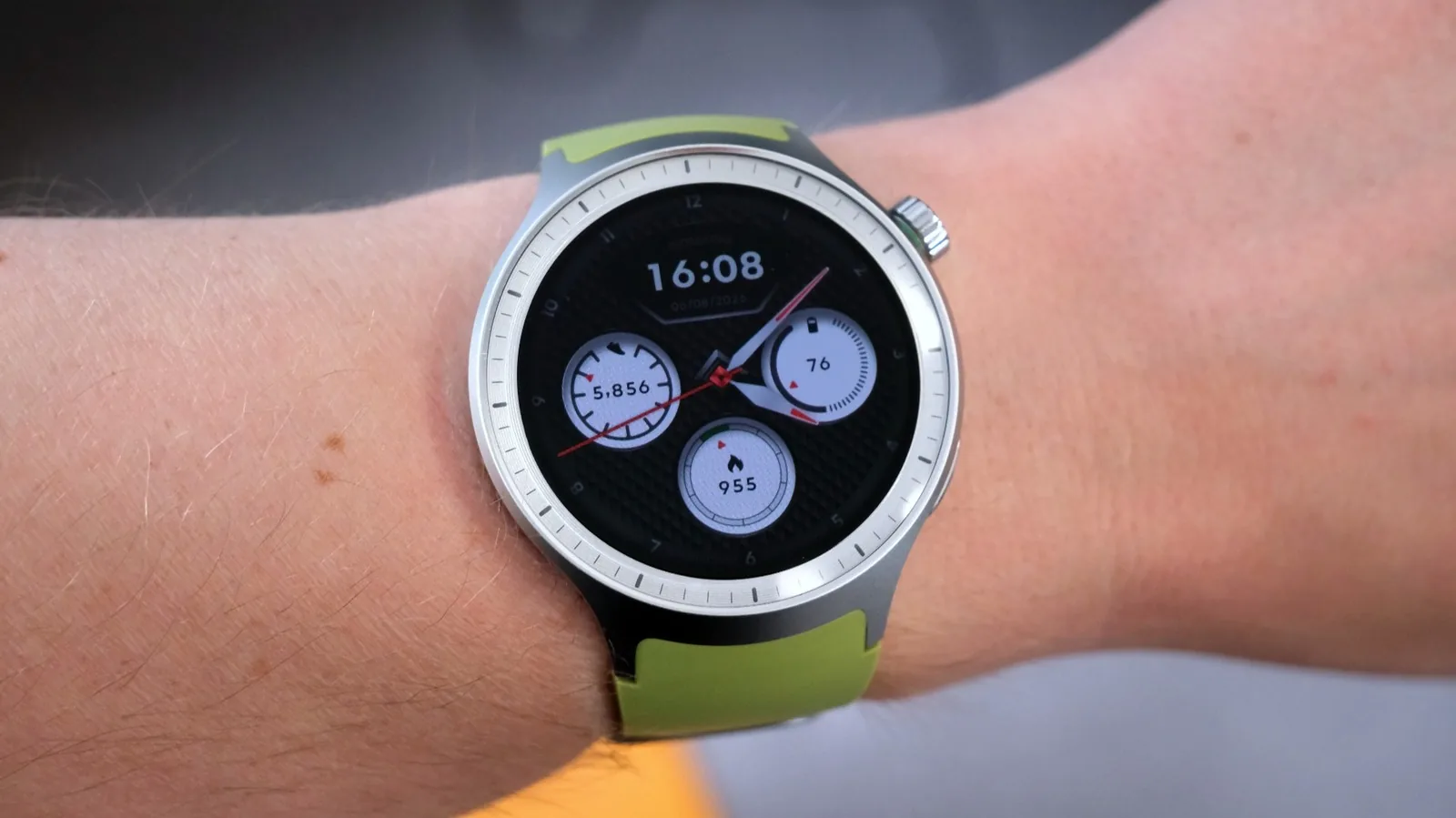
The new Motorola Moto Watch (2026) presents a stylish exterior but struggles to deliver a compelling user experience, according to recent reviews. While the special edition arrived with both a steel link band and a green silicone strap, initial handling revealed quality concerns, with retaining pins from the steel band detaching easily. The 47mm aluminum case, while aesthetically pleasing, raises durability questions due to its susceptibility to scratches and dents, though the stainless steel crown offers a more robust contrast.
Underneath its attractive facade, the Moto Watch operates on Real Time OS (RTOS), a departure from the more capable Wear OS. This low-power system, typically found in embedded devices, significantly limits the smartwatch's functionality. The review highlights that the UI, while visually similar to Wear OS, suffers from stuttering animations and freezes, particularly during setup and daily use. The need to download a separate Moto Watch app and create a Motorola account, despite initial indications otherwise, adds to a frustrating initial setup process. Multiple restarts were required before the device was fully operational.
User Interface and Notifications Frustrations
A major point of contention is the notification management system. Unlike many smartwatches that allow users to selectively filter notifications from their phones, the Moto Watch requires manual selection of every app whose alerts should appear on the wrist. This cumbersome process makes it easy to miss critical alerts, such as calendar reminders. This lack of flexibility is a direct consequence of using RTOS instead of Wear OS, preventing access to third-party apps, mobile payments, and native Google services.
The device does perform basic functions like timekeeping, step counting, heart rate monitoring, and calorie tracking. It also includes standard tools such as stopwatches, timers, sleep tracking dashboards, a compass, and remote camera shutter functionality. Users can make calls from the wrist when tethered to a smartphone, and a dialer is present on the watch itself. However, these capabilities are overshadowed by the absence of essential smartwatch features commonly found in competing devices.
Motorola partnered with Polar for its health and fitness tracking features, evident in the app's presentation and Polar branding. The app offers a well-designed interface for viewing vital statistics, including activity rings for steps, calories, and active minutes, alongside detailed sections for sleep, recovery, workouts, heart rate, and stress levels. Despite the Polar integration, the watch fails to offer automatic activity detection, a feature present in much older wearable technology. Users must manually start workout tracking, a significant drawback for casual fitness enthusiasts. The extensive list of trackable exercises, from common sports to niche activities like jazz dancing and kabaddi, is impressive but undermined by the need for manual initiation.
GPS performance also presented issues. The dual-band GPS struggled at times to acquire a signal, even in open areas where other devices perform reliably. Temporary signal outages further complicated the user experience, often requiring users to navigate through pre-recorded voice warnings from the watch. This inconsistency in a key feature detracts from its utility for outdoor activities. The only area where the Moto Watch truly shines is its battery life. Exceeding its advertised claims, the watch consistently lasted up to eight days with the always-on display enabled, providing a significant advantage over many competing smartwatches that require daily charging.