
Roku Overhauls Smart TV OS With Prominent Ad Space
Roku has significantly updated its smart TV operating system, introducing a large, permanent ad placement on the right side of the home screen. The change aims to boost advertising revenue for the streaming device maker.

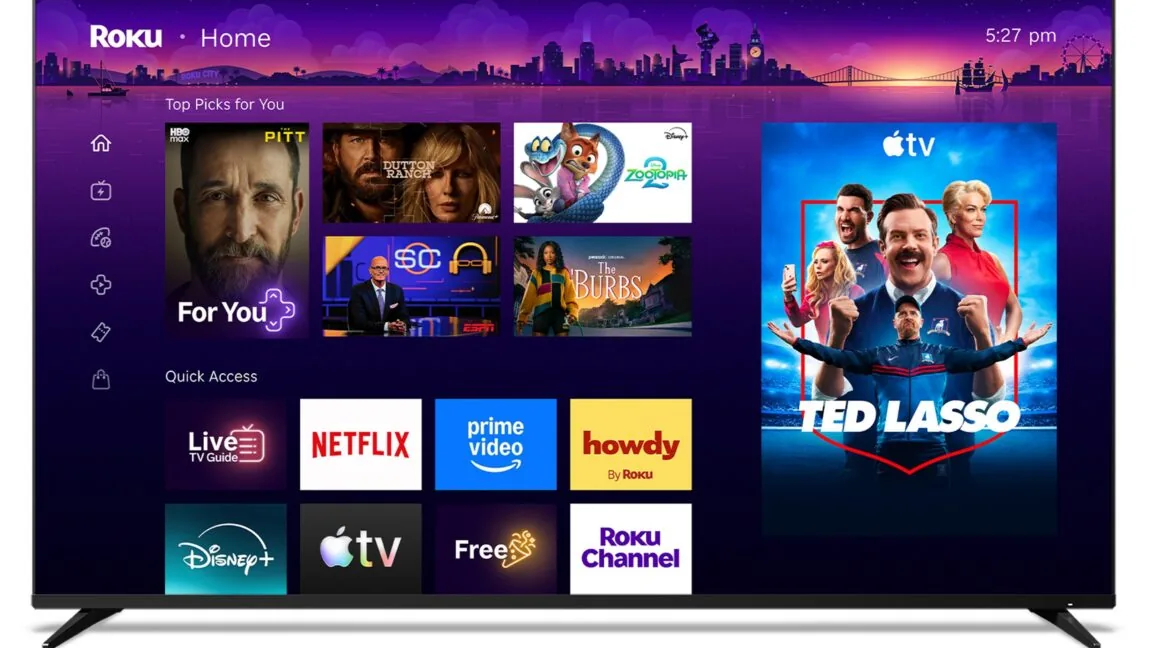
Roku users in the United States are now encountering a substantially revamped smart TV operating system, featuring a prominent, persistent advertisement on the right side of the home screen. This significant overhaul, the most extensive in a decade, shifts the user interface from a left-aligned menu with content tiles on the right to a design where advertising occupies a considerable visual area.
Previously, the Roku OS greeted users with a navigation sidebar on the left and a curated mix of recommended content and installed applications on the right. The new layout, however, dedicates a large portion of the screen's real estate to ads. This advertising space remains visible as users navigate through different sections of the Roku menu, reducing the available screen area for apps and content discovery. Examples of advertisements shown include promotions for streaming shows like Apple TV+'s "Ted Lasso" or consumer products such as dog food, illustrating the varied nature of the ad placements.
Preston Smalley, Roku's VP of viewer product, indicated in discussions with CNET that the proportion of different ad types—whether paid placements or content-driven promotions—is not fixed and may evolve. This strategic shift in the home screen design appears to be directly linked to Roku's ongoing efforts to enhance its profitability. After first achieving annual profitability in 2021, the company saw a resurgence in 2025, largely driven by a substantial increase in advertising revenue. In its latest financial report, Roku generated $371 million in advertising revenue, contributing significantly to its Platform business, which includes advertising and subscriptions and posted a gross profit of $584.1 million. In contrast, Roku's hardware devices experienced a net loss of $19.1 million.
Interface and Personalization Changes
Beyond the new ad integration, the Roku OS update introduces other interface modifications. The left-hand sidebar has been slimmed down, incorporating images in place of text for navigation elements. The central area now features a "Top Picks for You" row, which Roku describes as a personalized feed designed to surface trending and relevant content based on individual user interests, ensuring a unique viewing experience for each user. Below this is the "Quick Access" row, which leverages artificial intelligence to display users' most frequently used apps and shortcuts.
Smalley explained to Fast Company that user engagement with customizable app screens had been low, with many users scrolling through lengthy lists. The new design aims to consolidate and prioritize content and apps in a more intuitive manner. The update also introduces a "Destinations" section, offering curated hubs for different genres and moods, such as comedy or sports, aggregating content from various streaming services.
Despite these changes, the new home screen has drawn criticism from some users. On platforms like Reddit, users have expressed dissatisfaction with the prominent ad placement and perceived intrusion on content discovery. One user, Kruse, posted, "I don’t want recommendations! I know what I watch. Plastering ads for shit you think I want to see is the fastest way to get me to not watch it. This is going to suck." The update's focus on AI-driven recommendations, rather than prioritizing recently watched content across different applications for easier resumption, has also been noted.
Roku CEO Anthony Wood previously stated in a February earnings call that the updated home screen, then in testing, was expected to "increase monetization over time, whether that’s getting viewers to sign up for subscriptions or watch more ad-supported content." The company believes these changes will help bolster its financial performance. The new Roku OS home screen is being rolled out automatically to Roku TVs and streaming devices across the United States, with users beginning to see the updates on May 27, 2026.