
2026 Solar Eclipse: Europe to Witness Celestial Spectacle August 12
Europe is set to experience its first total solar eclipse since 1999 on August 12, 2026. The moon's shadow will traverse Greenland, Iceland, and northern Spain, offering a rare celestial event.

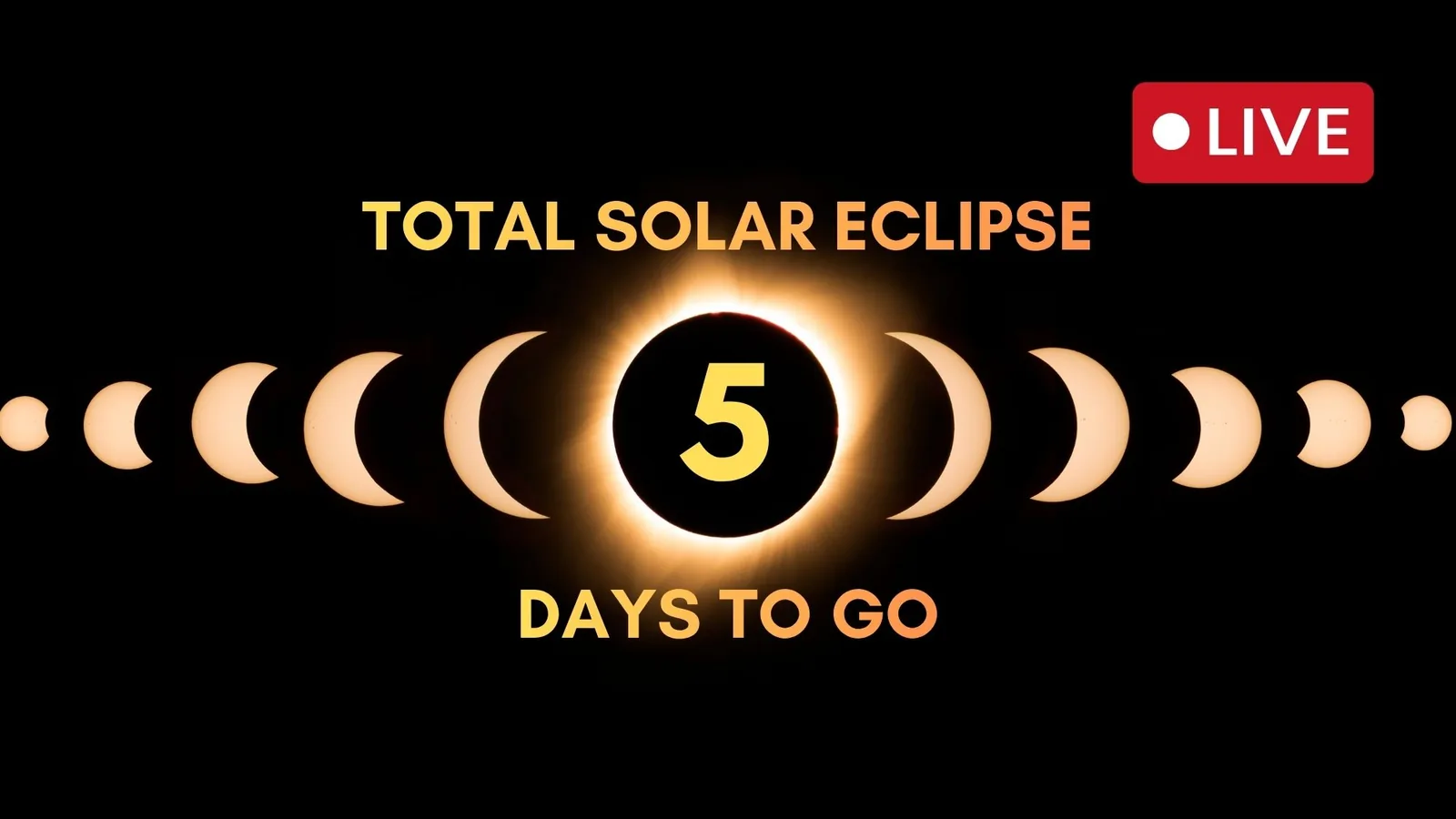
Europe is on the cusp of a rare celestial event as the continent prepares for its first total solar eclipse since 1999 on August 12, 2026. Skywatchers across Greenland, Iceland, and northern Spain, including the Balearic Islands, will have the opportunity to witness the moon fully obscure the sun, plunging the daytime sky into a brief twilight and revealing the sun's ethereal outer atmosphere, the corona. Millions more throughout much of Europe and parts of northeastern United States and eastern Canada will observe a partial eclipse, where the moon appears to take a significant bite out of the solar disk.
This significant astronomical event is being closely monitored by scientific teams and enthusiasts alike. Among them is skywatching editor Daisy Dobrijevic, currently aboard the MS Spitsbergen operated by HX Expeditions. Dobrijevic is positioned in Greenland's Scoresby Sund, the world's largest fjord system, hoping for a clear view of totality. Her previous eclipse experience was unfortunately hampered by weather, but she aims for better fortune this time while navigating the Arctic waters.
Another observer, writer Anthony Wood, is joining the DEB (Distributed Eclipse Broadcast) initiative in Valoria la Buena, Spain. This location offers a unique vantage point where the eclipsed sun will be visible low on the western horizon just before sunset. For Wood, this marks his inaugural experience with a total solar eclipse. The DEB initiative is a citizen science project aimed at gathering valuable data during the brief period of totality.
Path of Totality and Visibility
The path of totality, where the sun is completely covered by the moon, is a relatively narrow band. For those outside this specific path, the experience will differ. A partial solar eclipse will be visible across a much wider area, offering a less dramatic but still captivating view. For some regions, the eclipse may not be visible at all. Detailed maps and predictions are available to help people determine what kind of eclipse, if any, they will see from their specific location. Experts recommend using specialized solar viewing glasses to safely observe any phase of the eclipse.
This 2026 solar eclipse is more than just a visual spectacle; it presents opportunities for scientific research. During the moments of totality, scientists can study the sun's corona, its outermost layer, which is normally obscured by the sun's bright light. This research can provide insights into solar activity, space weather, and the sun's influence on Earth's atmosphere. The event also serves as a reminder of the dynamic relationship between Earth, the Moon, and the Sun, and the predictable yet awe-inspiring cycles of our solar system.
The upcoming eclipse builds on a history of public fascination with these celestial alignments. Total solar eclipses have been observed and recorded for millennia, often inspiring wonder and driving early astronomical understanding. The ability to witness such an event in 2026, with widespread reporting and scientific participation, highlights advancements in both technology and our understanding of the cosmos. Millions are expected to follow the event, whether in person or through live streams, showcasing humanity's enduring curiosity about the universe.