
2026 Solar Eclipse: Europe Prepares for Rare Celestial Event
Europe is set to witness its first total solar eclipse since 1999 on August 12, 2026. The celestial event will briefly turn day into twilight along its path across Greenland, Iceland, and Spain.

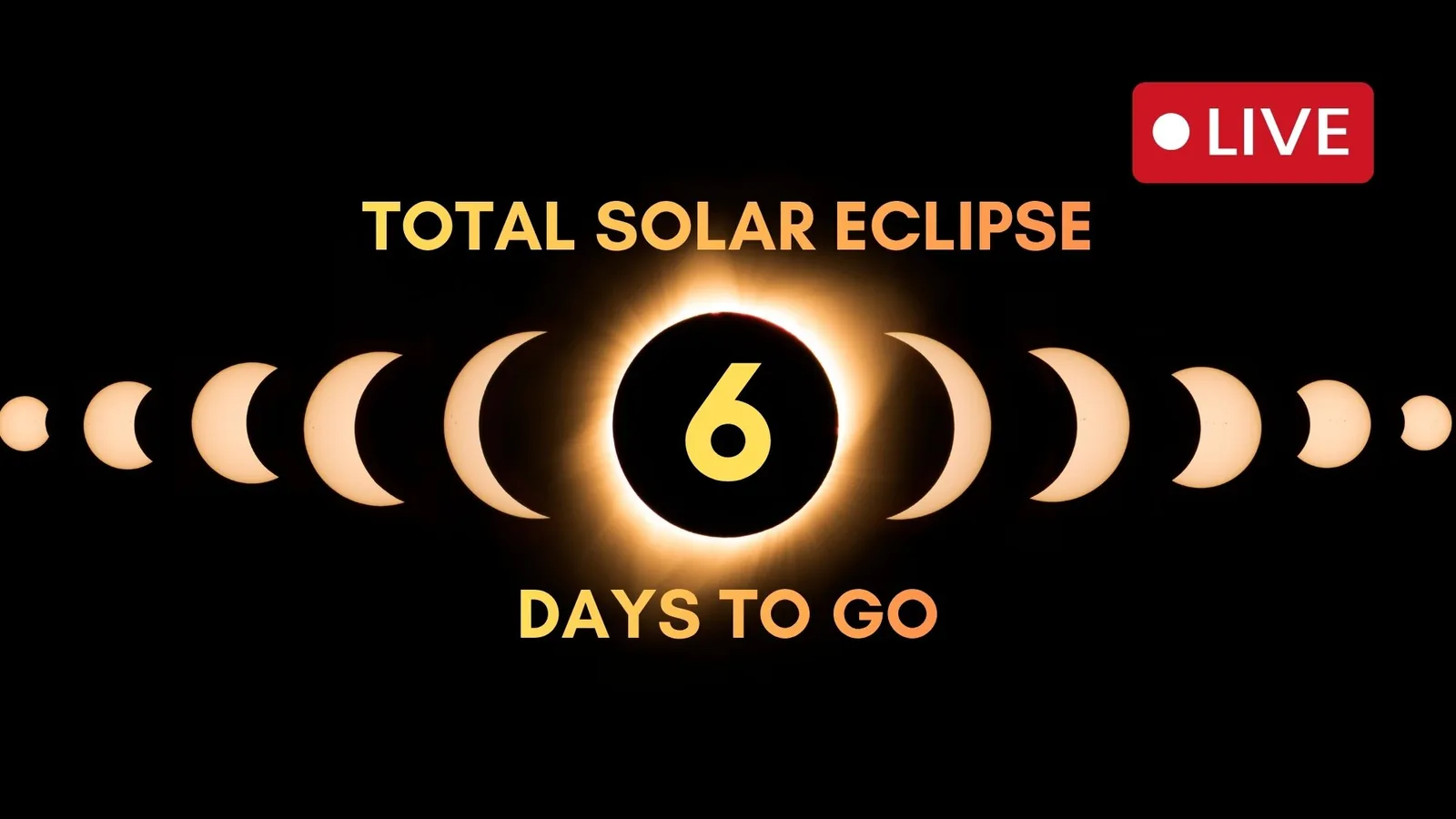
Millions across Europe and parts of North America will have a chance to witness a spectacular solar eclipse on August 12, 2026. The moon's shadow will cast a path of totality across Greenland, Iceland, and northern Spain, where the sun will be completely obscured for a few minutes. Skywatchers in other regions of Europe and northeastern United States will experience a partial eclipse as the moon takes a noticeable bite out of the sun.
This rare phenomenon marks Europe's first total solar eclipse since 1999. The path of totality, a narrow band where the sun is fully covered, is anticipated to be a breathtaking spectacle. As the moon aligns perfectly with the sun, its outer atmosphere, known as the corona, will become visible, transforming daylight into an eerie twilight.
This year's event is particularly significant for space enthusiasts and scientists. Reporting live from the edge of the Arctic, skywatching editor Daisy Dobrijevic is aboard the HX Expeditions' MS Spitsbergen. She aims to observe the totality from Scoresby Sund, the world's largest fjord system, located in Greenland. Dobrijevic hopes for clearer skies after a previous eclipse viewing was hampered by unforeseen circumstances.
Meanwhile, in Spain, writer Anthony Wood is joining the Distributed Eclipse Broadcast (DEB) initiative in Valoria la Buena. This location offers a unique vantage point, with the eclipsed sun expected to hang low on the western horizon just before sunset. This will be Wood's inaugural experience of a total solar eclipse, adding a personal element to the scientific observation.
Observing the Eclipse Safely
While the allure of witnessing a solar eclipse is strong, safety remains paramount. Looking directly at the sun, even when partially eclipsed, can cause severe and permanent eye damage. Experts strongly advise using certified solar viewing glasses or safe solar filters when observing any phase of the eclipse. Regular sunglasses are insufficient and do not offer adequate protection. For those unable to obtain specialized eyewear, indirect viewing methods, such as using a pinhole projector, are recommended alternatives.
The visibility of the eclipse will vary significantly by location. While a select few will experience the full totality, a much larger audience will witness a partial solar eclipse. For some, the eclipse may not be visible at all. Resources such as eclipse maps and dedicated viewing apps are available to help individuals determine what they can expect to see from their specific vantage point. Planning ahead is crucial for maximizing the viewing experience and ensuring safety.
The scientific community is gearing up to utilize this event for research. Citizen science projects, like the DEB initiative Wood is participating in, aim to gather valuable data on solar phenomena. Understanding the sun's corona and its behavior during an eclipse can provide insights into solar weather patterns and their potential impact on Earth's technology and infrastructure.