
Antarctic 'Supermountains' Fueled Ancient Life Explosion, Study Finds
Scientists have discovered evidence of massive, ancient mountain ranges beneath Antarctica's ice that may have fueled an explosion of early life on Earth. These 'supermountains' played a crucial role in geological processes that supported life's diversification.

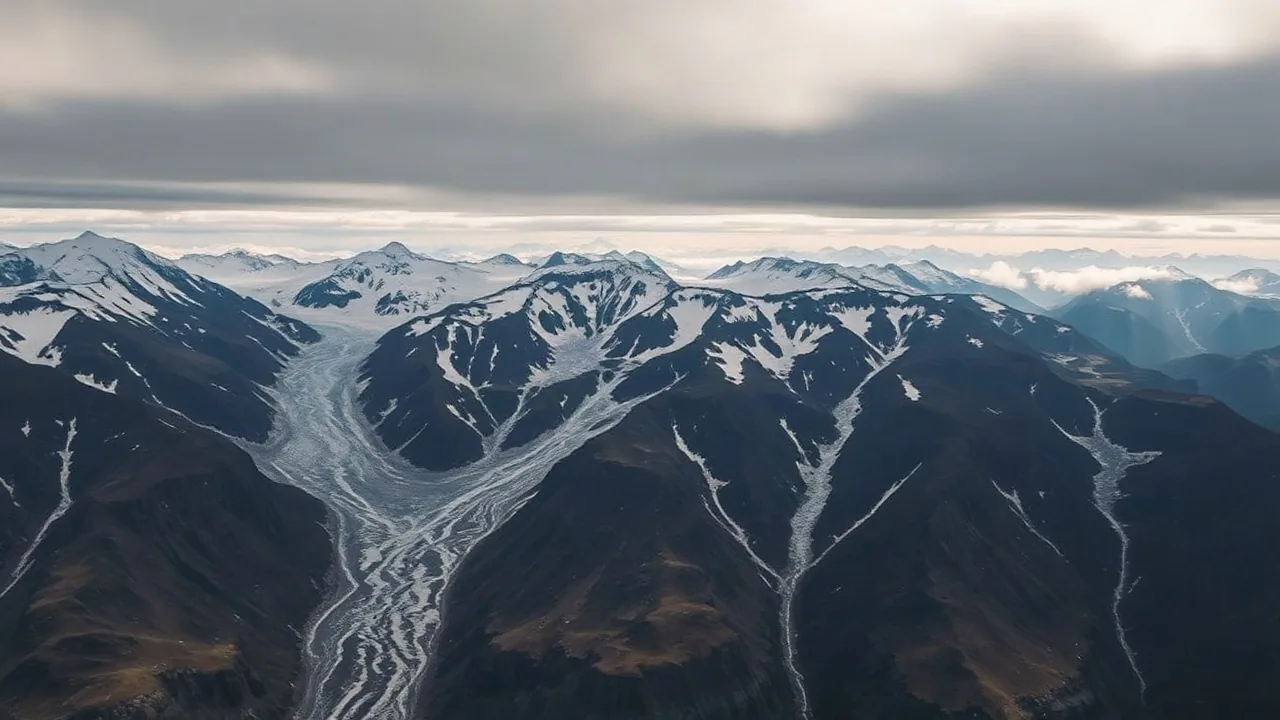
Massive mountain ranges, dubbed 'supermountains,' long ago eroded and now buried deep beneath Antarctica's ice sheets, may have been instrumental in sparking a significant explosion of complex life on Earth approximately 650 million years ago, according to new scientific findings. These geological titans, far larger than any mountains existing today, are believed to have significantly influenced the planet's early geochemistry, creating conditions favorable for the proliferation of life.
The research, published recently in the journal Nature Geoscience, utilized advanced geophysical modeling to reconstruct the landscape of Earth's ancient continents. The study suggests that these colossal mountain ranges, formed during a period of intense tectonic activity, released vast quantities of vital nutrients into the oceans. This nutrient influx is hypothesized to have triggered the Cambrian explosion, a pivotal evolutionary event that saw the rapid diversification of multicellular organisms.
Dr. Evelyn Reed, a lead geophysicist on the project from the Polar Research Institute, explained the significance of the findings. "We've long suspected that Antarctica held secrets to Earth's past, but uncovering evidence of mountains of this scale, and linking them directly to a major evolutionary leap, is truly remarkable," Dr. Reed stated. "These ancient geological features acted as potent engines for continental weathering, continuously supplying the oceans with essential elements like phosphorus and iron, which are critical for biological growth."
Geological Drivers of Evolutionary Change
The period surrounding 650 million years ago was a transformative time for life on Earth, marking the transition from simpler, single-celled organisms to more complex, multicellular forms. Scientists have attributed this evolutionary burst to a confluence of factors, including rising oxygen levels and geological changes. The new study adds a significant piece to this puzzle by highlighting the role of 'supermountains' in Antarctica.
These mountains, according to the research team, were not just large; they were geologically active, contributing to significant erosion and sediment transport. The resulting nutrient-rich runoff would have traveled across the globe, seeding life in various marine environments. The immense scale of these mountains meant that this process was sustained over millions of years, providing a consistent and abundant source of sustenance for nascent life forms.
"It's a profound realization that a landscape so dramatically different from today, buried under miles of ice, could have had such a direct impact on the trajectory of life," commented Dr. Kenji Tanaka, a paleobiologist involved in the study. "The scale of nutrient delivery from these ancient supermountains would have been unprecedented, effectively creating super-highways for biological innovation. This provides a compelling mechanism for how the Earth's biosphere became so much more complex."
The implications of this research extend beyond understanding ancient life. It underscores the profound connection between Earth's geological processes and its biological evolution. Understanding how past geological events shaped life can offer insights into how current and future geological changes might influence biodiversity. The findings also highlight the dynamic nature of our planet, where landscapes can undergo transformations of epic proportions, leaving behind only faint geological echoes that scientists like Dr. Reed and Dr. Tanaka painstakingly uncover.
Further research will aim to pinpoint the exact locations and extent of these ancient mountain ranges using more detailed seismic imaging and by analyzing ice core samples for geochemical signatures. The team hopes to refine their models to better understand the precise rate of nutrient release and its direct correlation with specific evolutionary developments during the Neoproterozoic era and the subsequent Cambrian period. The hidden Antarctica, it seems, continues to hold keys to Earth's deepest mysteries.