
Antarctic 'Supermountains' May Have Fueled Complex Life's Rise
Vast mountain ranges, dubbed 'supermountains,' are theorized to have been hidden beneath Antarctic ice for hundreds of millions of years. Scientists suggest these geological features may have played a crucial role in fostering the development of complex life on Earth.

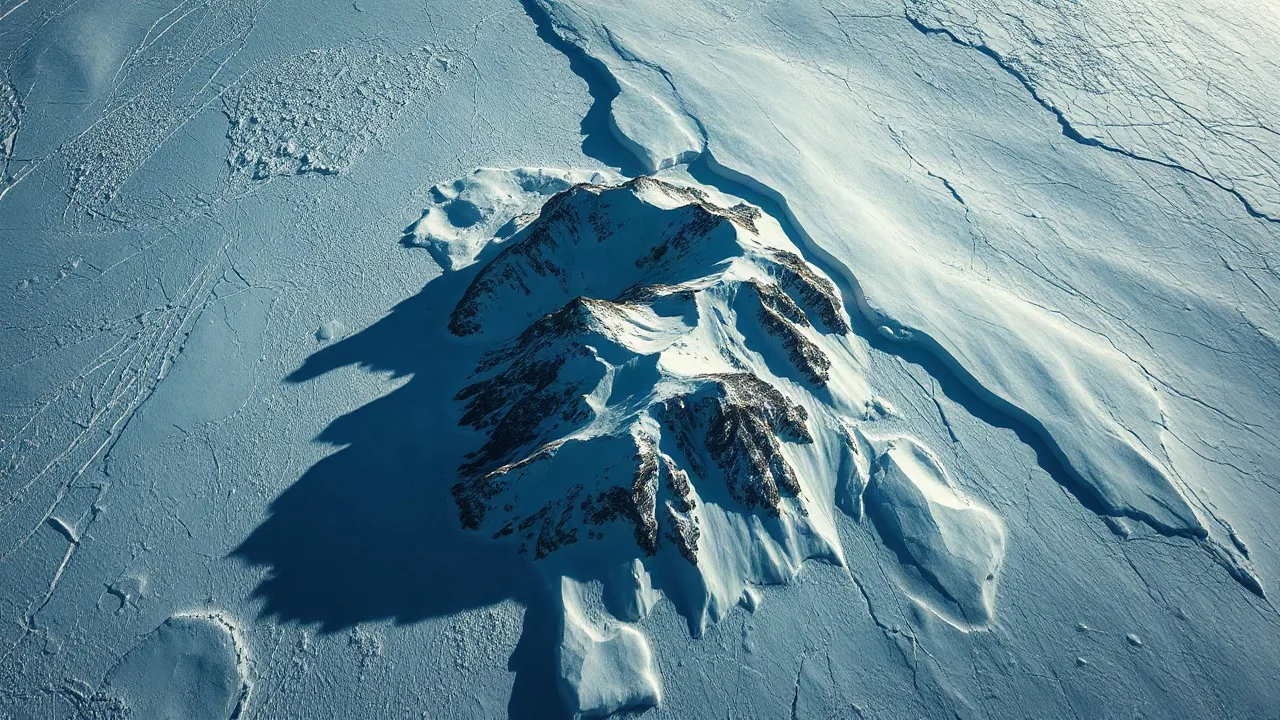
Scientists have put forth a compelling theory that colossal mountain ranges, referred to as 'supermountains,' may have been concealed beneath the Antarctic ice sheet for over 650 million years. These ancient geological formations are now believed to have potentially fueled the explosion of complex life on Earth during a pivotal period in the planet's history. The research suggests that erosion from these immense mountains released vital nutrients into the ancient oceans, creating environments conducive to the evolution of multicellular organisms.
The hypothesis, detailed in recent scientific discussions, posits that these mountain ranges, far larger than anything seen today, were once part of a supercontinent. As these mountains eroded over eons, they would have released a steady supply of phosphorus and iron into the surrounding oceans. These elements are considered critical building blocks for life, particularly for the development of early eukaryotic cells and the subsequent emergence of more complex organisms. The slow, sustained release of these nutrients over millions of years could have provided the necessary conditions for life to diversify and thrive.
Unveiling a Hidden Geological Past
While direct evidence of these specific mountain ranges remains elusive due to their burial under ice and subsequent erosion, the theory is supported by geological and geochemical models. Researchers are using advanced imaging techniques and analyzing sediment cores from the region to find indirect clues about Antarctica's ancient topography and its impact on global ecosystems. The sheer scale of these proposed mountains suggests a significant geological event or period that reshaped the planet's early continents and oceans. The implications for understanding early Earth conditions and the origins of life are profound, offering a new perspective on how our planet became habitable.
Dr. Evelyn Reed, a paleogeologist involved in related research, commented on the significance of such findings. "If these supermountains existed as proposed, their long-term erosion could have been a primary driver for the Neoproterozoic Oxidation Event and the subsequent Cambrian Explosion," she stated. "The gradual input of essential minerals over vast timescales is a factor we are increasingly recognizing as fundamental to biological innovation." This period, known as the Neoproterozoic Era, saw dramatic shifts in Earth's atmosphere and oceans, paving the way for the diversification of life forms.
The Antarctic continent, currently a vast expanse of ice, was once part of the supercontinent Gondwana and before that, Rodinia. Its geological history is rich with periods of tectonic activity, volcanism, and significant landscape formation. The potential existence of these ancient mountain ranges adds another layer to this complex history, suggesting that Antarctica may have played a far more active role in Earth's biological evolution than previously understood. Understanding the extent and impact of these lost geological features could reshape our models of early Earth climate, ocean chemistry, and the very timeline of life's development.
Further research will focus on seismic surveys and deep ice core analysis to potentially uncover geological signatures of these ancient supermountains. Identifying mineral compositions within ice and subglacial rock could provide definitive proof of their existence and their nutrient-releasing capabilities. The challenge lies in penetrating the miles-thick ice sheet that currently covers the Antarctic continent, a formidable barrier to direct geological investigation. Nevertheless, the ongoing quest to understand Earth's deep past continues to reveal surprising connections between geology and the history of life.