
Aurora Borealis: Northern Lights Expected Across North America This Weekend
A geomagnetic storm is set to illuminate the night skies across much of North America with the aurora borealis. Residents in the northern U.S. and Canada have the best chance to witness the natural light show on Saturday and Sunday.

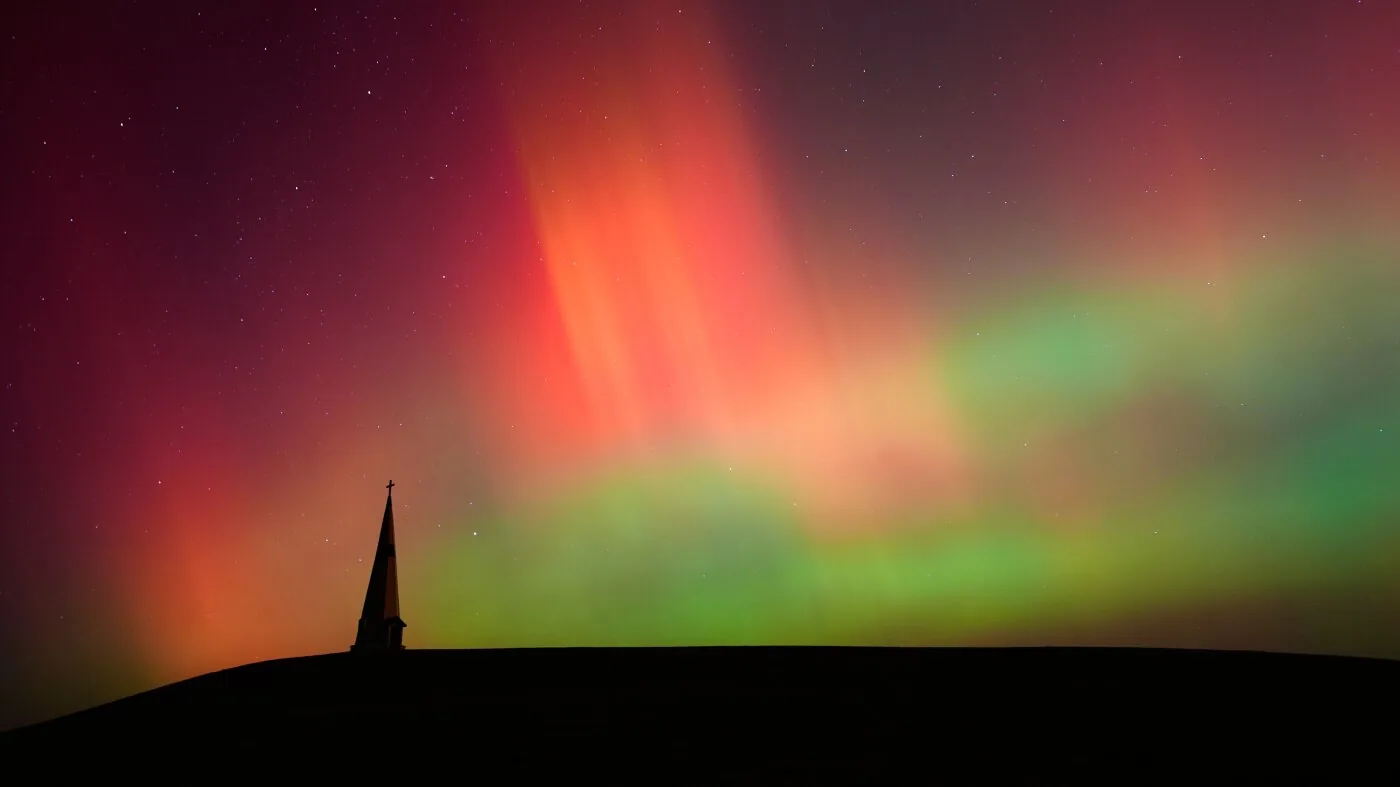
Stargazers across North America are anticipating a spectacular celestial event this weekend as the aurora borealis, also known as the Northern Lights, is expected to paint the night sky with vibrant colors. The dazzling display, caused by charged particles from space colliding with Earth's atmosphere, is predicted to be most visible on Saturday and Sunday nights. According to the National Oceanic and Atmospheric Administration (NOAA), areas in the northern United States and much of Canada will have the prime viewing opportunities.
The intensity of the aurora is directly linked to space weather activity. NASA explains that these auroral displays occur when high-energy particles ejected from the sun interact violently with atoms of gas in a planet's upper atmosphere, particularly near its magnetic poles. This particular event is driven by a geomagnetic storm anticipated to peak on Saturday night, offering onlookers their most significant chance to witness the phenomenon.
While auroras are most commonly observed at higher latitudes in places like Russia, Norway, Greenland, and Alaska, this upcoming display presents a rare treat for those living further south. The NOAA advises that while the most direct viewing will be when the lights are overhead, they may be discernible from up to 1000 kilometers away. The optimal times to catch sight of the aurora are shortly after sunset or just before sunrise, as the lights are not visible during daylight hours.
Understanding the Aurora Phenomenon
Scientists note that the prevalence of auroras in March and November for North American observers is a phenomenon not yet fully understood. The dynamic interplay between solar wind and Earth's magnetosphere dictates the frequency and intensity of these light shows. This weekend's event underscores the dynamic nature of space weather and its tangible, visible impacts on our planet.
The current geomagnetic storm is a result of solar activity, likely a coronal mass ejection (CME) from the sun. When these CMEs are directed towards Earth, they can cause significant disturbances in our planet's magnetic field, leading to geomagnetic storms. These storms can affect satellite operations, power grids, and, of course, produce breathtaking auroral displays. The strength of these storms is categorized on a scale, with higher categories indicating a greater potential for widespread auroral visibility and potential technological disruption.
NOAA's Space Weather Prediction Center plays a crucial role in monitoring solar activity and forecasting its effects on Earth. They issue alerts and warnings to inform the public and relevant industries about upcoming space weather events. For many, especially those in less frequent viewing zones, this event is an exciting opportunity to witness one of nature's most stunning visual phenomena. Planning to be in a location with minimal light pollution will significantly enhance the viewing experience, allowing the subtle greens, purples, and pinks to stand out against the darkness of the night sky.