
Curiosity Rover's Damaged Wheel Examined in New Mars Images
NASA's Curiosity rover shows significant wear on its wheels after 14 years exploring Mars' Gale Crater. New images reveal cracks and holes from rugged terrain.

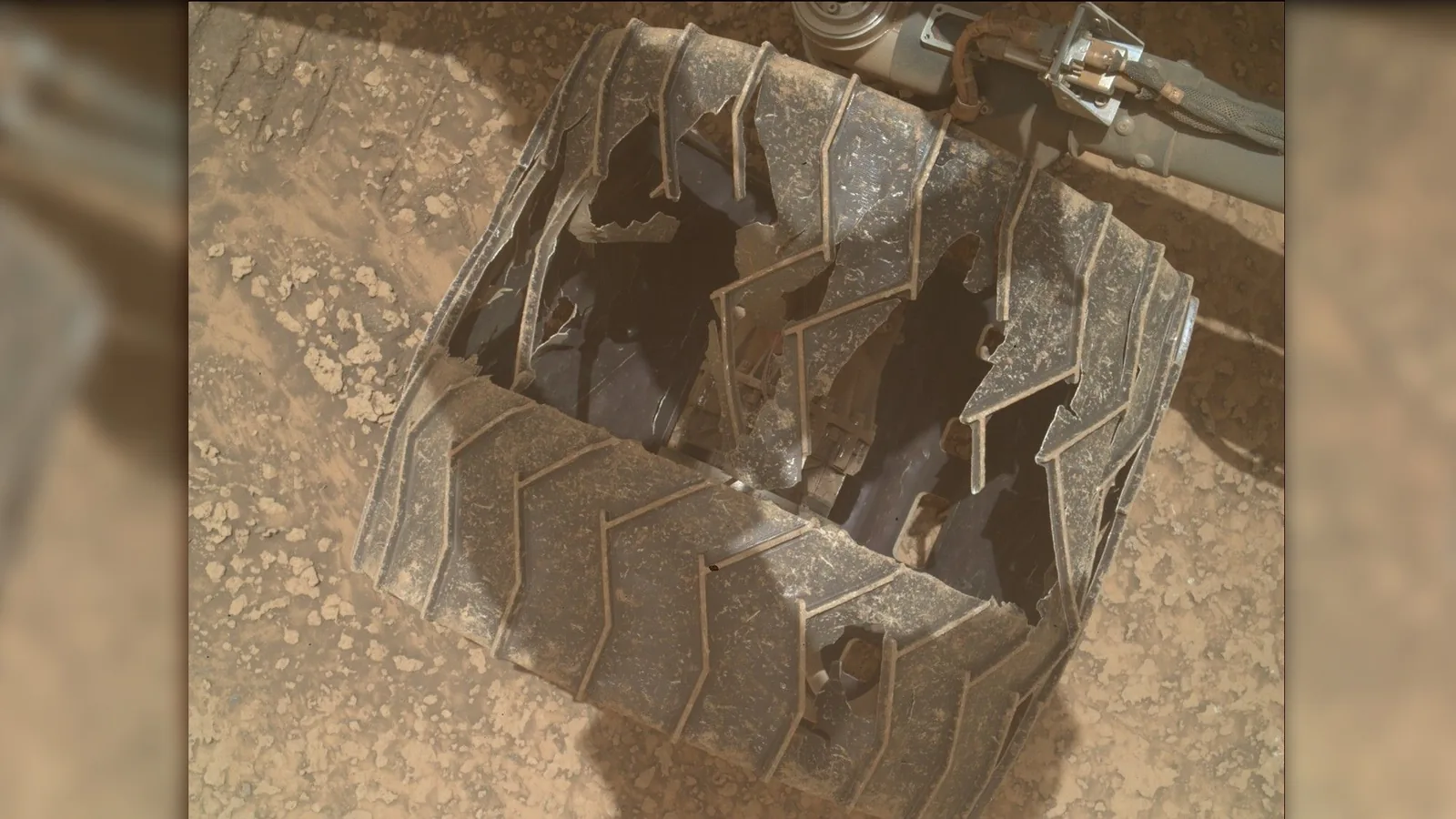
NASA's veteran Curiosity rover has provided a striking, up-close look at the toll its nearly 14-year mission has taken on its wheels. A recent image shared from the Red Planet reveals extensive wear, including cracks and holes, on one of the rover's crucial mobility components as it continues its exploration of Mars' Gale Crater.
The 1,984-pound (900-kilogram) rover, which landed on Mars on August 5, 2012, has traversed over 20 miles (32 kilometers) of rugged Martian terrain. This arduous journey, undertaken in the search for evidence of ancient microbial life, has inevitably led to significant deterioration of its aluminum wheels. NASA and the Jet Propulsion Laboratory (JPL), which manages the Curiosity mission, periodically use the rover's onboard cameras to assess the condition of its wheels.
Despite the visible damage, mission engineers have consistently reported that the wheels are performing admirably. A statement from NASA in 2024 indicated that the wheels were "holding up well despite taking some of the worst abuse from Mars." This resilience is a testament to the robust engineering behind the rover, designed to withstand the challenging and rocky Martian surface.
Engineering resilience on a harsh world
The images of Curiosity's damaged wheels serve as a powerful visual reminder of the immense engineering challenges involved in robotic exploration of other planets. Successfully landing a one-ton rover and enabling it to travel dozens of miles across alien landscapes requires groundbreaking advancements in materials science, robotics, and navigation.
These wheeled explorers are not just scientific instruments; they represent humanity's initial steps toward becoming an interplanetary species. The data and experiences gathered by Curiosity and its counterpart, the Perseverance rover, are laying crucial groundwork that could eventually facilitate human missions to Mars and beyond. The persistent wear on Curiosity's wheels underscores the demanding nature of this endeavor and the remarkable durability of the technology deployed.
The ongoing mission continues to yield invaluable scientific insights, even as its hardware faces the relentless effects of the Martian environment. Each mile covered, and each image transmitted back to Earth, contributes to our growing understanding of the Red Planet's history and potential for past habitability. The inspection of the wheels, while highlighting wear, also reinforces the success of the mission's design and operational longevity, showcasing the ability of NASA's robotic explorers to endure extreme conditions for extended periods.