
Earthquake 'Brake Zones' Mystery Solved by Underwater Fault Study
Researchers have uncovered the mechanism behind mysterious underwater "brake zones" that naturally halt earthquakes. The study, focusing on the Gofar fault, reveals how seawater and porous rock formations work together to stop seismic activity.

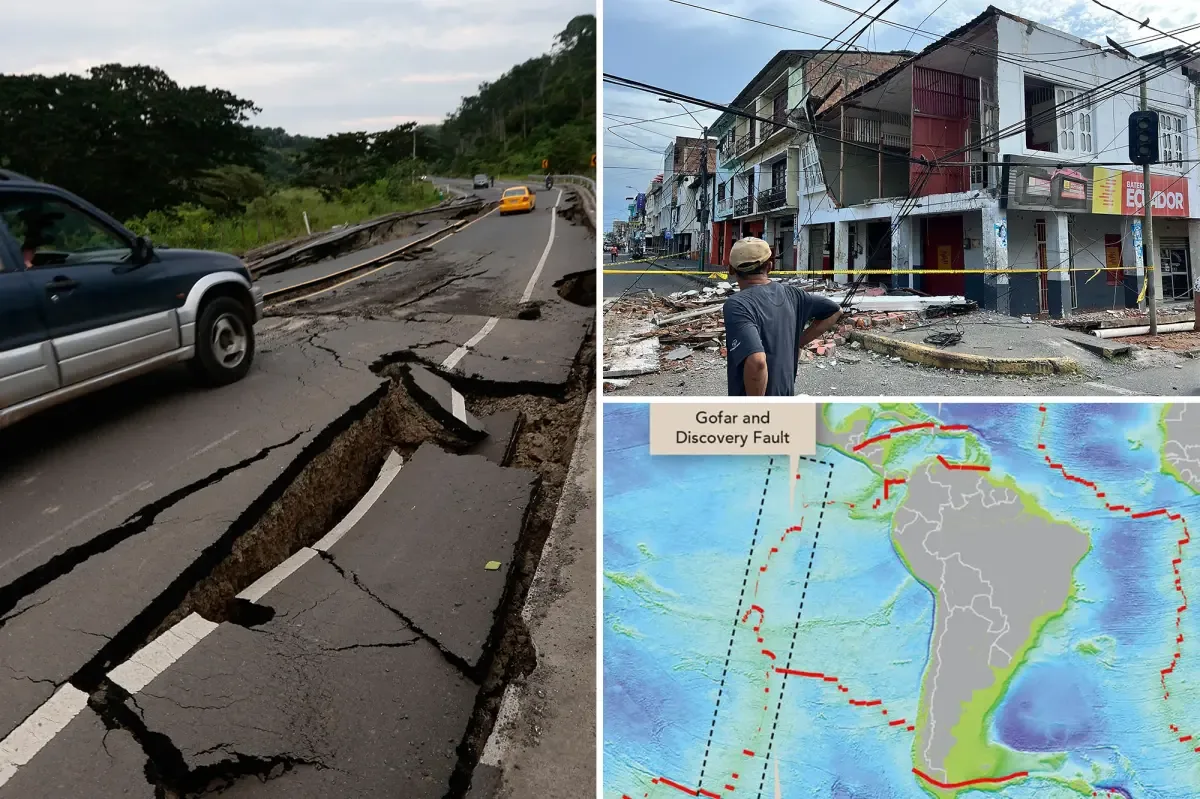
Scientists have identified the natural mechanism behind elusive underwater "brake zones" that halt earthquakes in their tracks, according to a significant new study published in the journal Science. These phenomena, observed for years, have long puzzled researchers who questioned their composition and reliability in stopping seismic events.
Jianhua Gong, Assistant Professor of Earth and Atmospheric Sciences at Indiana University Bloomington and lead author of the study, stated, "We’ve known these barriers existed for a long time, but the question has always been, what are they made of, and why do they keep stopping earthquakes so reliably, cycle after cycle?" The research focused on the Gofar fault, a seafloor fracture approximately 1,000 miles off the coast of Ecuador in the Pacific Ocean. This particular fault has produced nearly identical magnitude six earthquakes at regular intervals for the past three decades, occurring in the same locations every five to six years.
This consistent seismic pattern remained a mystery until recently, when researchers discovered that a combination of seawater and specific rock structures creates these natural buffers, effectively stopping tremors before they escalate. To investigate these earthquake faults, Gong and his team analyzed data from two major ocean-floor experiments. The first was conducted in 2008, followed by a more extensive study from 2019 to 2022. During these expeditions, scientists strategically placed specialized seismometers on the seafloor across two distinct sections of the Gofar fault.
These instruments meticulously recorded thousands of minor tremors in the periods leading up to and immediately following two major magnitude six ruptures on the fault. This detailed data allowed researchers to observe the fault's behavior before and after significant seismic events. They found that the so-called brake zones exhibited intense tremor activity prior to a major earthquake but fell silent immediately afterward.
Understanding the Dynamic Mechanism
The key discovery reveals that these barriers are not static rock formations but rather complex regions where the main fault fans out into multiple smaller branches. These branching cracks create precise openings that fill with seawater. When a large earthquake occurs, the porous rock within these openings rapidly seizes up, acting like an integrated kill switch that halts the tremor's progression.
Professor Gong emphasized that these brakes are not passive elements but are "active, dynamic parts of the fault system." He added, "Understanding how they work changes how we think about earthquake limits on these faults." The implications of this research are far-reaching, as scientists suspect that similar quake-inhibiting zones may exist throughout the world's oceans. Further study could significantly improve methods for predicting the timing and location of future seismic activity.
This knowledge is particularly relevant given the seismic risks facing the United States. For instance, the Hayward Fault in California, one of the nation's most dangerous seismic zones, is considered overdue for a major earthquake. This fault is capable of generating magnitude seven tremors, events far more powerful than the 1989 Loma Prieta earthquake, which resulted in 63 fatalities and injured 3,757 people in the San Francisco Bay Area. Understanding these natural seismic inhibitors could one day contribute to mitigating the impact of such devastating events.