
Giant 90-Foot Dinosaur Nagatitan Unearthed in Thailand
Paleontologists in Thailand have discovered Nagatitan chaiyaphumensis, a 90-foot-long sauropod dinosaur weighing an estimated 30 tons. This massive herbivore is the largest dinosaur ever found in Southeast Asia.

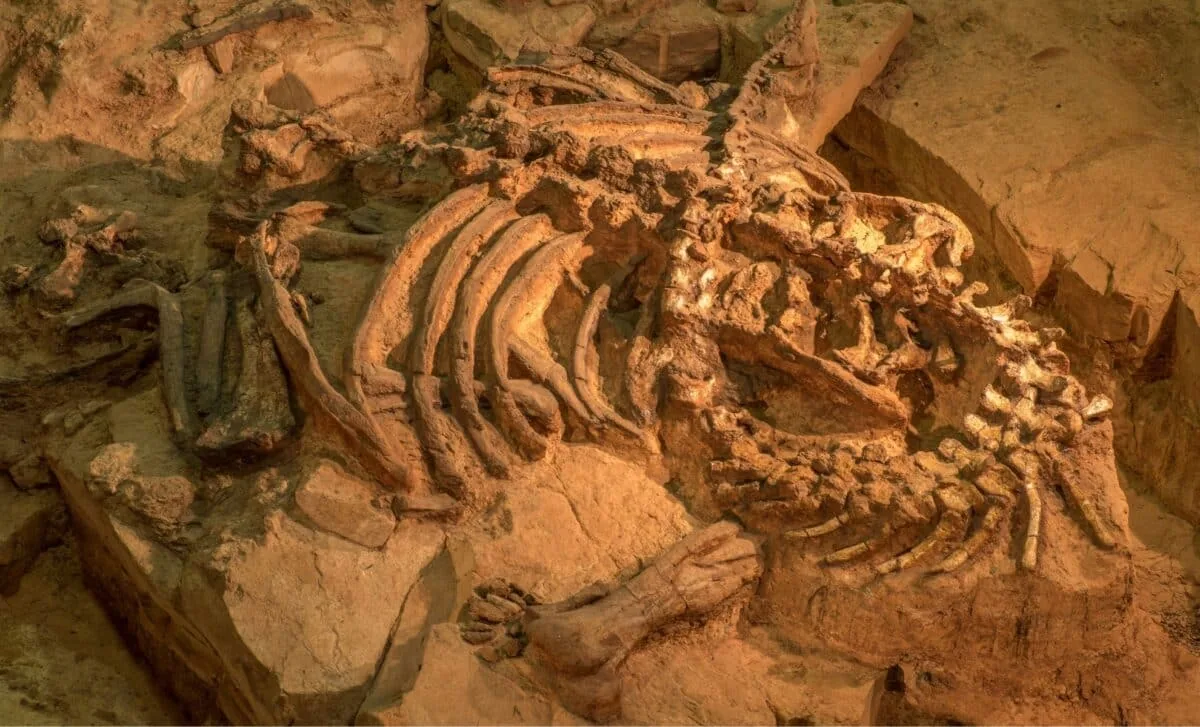
Scientists in Thailand have unearthed the fossilized remains of a colossal new dinosaur species, Nagatitan chaiyaphumensis, now recognized as the largest dinosaur ever discovered in Southeast Asia. The massive sauropod stretched an estimated 90 feet in length and weighed approximately 30 tons, surpassing the bulk of even a Tyrannosaurus rex. This remarkable find offers crucial insights into the period when sauropods began their evolutionary journey toward immense sizes during the late Early Cretaceous period, approximately 100 to 120 million years ago.
Thitiwoot Sethapanichsakul, a Ph.D. student at University College London and the study's lead author, described the newly identified dinosaur as falling within the "upper middle" tier of the largest species ever recorded. While Thailand has yielded a growing number of dinosaur fossils, the Nagatitan stands out due to its sheer scale and the excellent preservation of its skeletal elements. The research, published in the journal Scientific Reports, details the recovery of multiple fossilized parts, including significant portions of the spine, pelvis, ribs, and leg bones.
A Prehistoric Giant's Scale
The Nagatitan was a herbivorous sauropod, characterized by its long neck and tail, adapted for grazing on vegetation. Sethapanichsakul highlighted that this species lived during a pivotal time in dinosaur evolution when sauropods were beginning to attain prodigious dimensions. Although this particular species weighed around 30 tons, subsequent sauropods from the Cretaceous period would grow even larger, with some specimens estimated to have reached weights of up to 70 tons. Paul Upchurch, a paleontologist at UCL and co-author of the study, explained the evolutionary advantage of rapid growth: "Indeed, sauropods are known to have grown very quickly after hatching, and this probably relates to the dangers of predation. The sooner sauropods could become large, the safer they were because they would have been more difficult to tackle."
Researchers meticulously estimated the dinosaur’s dimensions using the recovered bones. A single front leg bone measured nearly 6 feet in length, a striking testament to the creature's overall size. Mathew Wedel, a paleontologist at Western University of Health Sciences who was not involved in the research, commented on the quality of the fossils, noting that the bones were "pretty nice material" with minimal distortion, thereby providing valuable data regarding the dinosaur's anatomical structure. "In fact, when I first saw the specimen, the kind of front leg bone is actually taller than me, which is quite surprising," Wedel stated, adding, "This dinosaur is very unique for us, especially in Southeast Asia, because of its size. It is massive in comparison to what we currently know of."
The discovery of such immense prehistoric creatures in regions like Southeast Asia helps paleontologists construct a more complete picture of dinosaur distribution and evolution across the globe. Each fossil find contributes to mapping the ancient ranges and diversification of dinosaur species, filling in gaps in our understanding of prehistoric ecosystems.
The name Nagatitan chaiyaphumensis thoughtfully blends local mythology with the dinosaur's extraordinary size. The first part, "Naga," references the mythological serpent creature revered across Southeast Asia, while "Titan" denotes its immense scale. The species name, "chaiyaphumensis," honors Chaiyaphum province in Thailand, the location of the discovery. The initial fossils were found by a local resident in 2016, with excavations continuing until 2019. The work was temporarily halted due to funding constraints but resumed in 2024 with renewed support. The rock formation where the fossils were found is believed to be the last known site in Thailand for large dinosaur discoveries, leading researchers to dub Nagatitan the country's "last titan." Sethapanichsakul also emphasized the broader impact of such discoveries: "We are trying to get people, especially in rural areas, to understand the values of paleontology. And we do that through outreach and things like that, and having a brand-new dinosaur to announce really helps get people excited."