
Google Satellite AI Sends First Data From Orbit
Google's Project Suncatcher satellite, equipped with a Tensor Processing Unit (TPU), is now operational in orbit. It has successfully transmitted its first AI-generated content back to Earth.

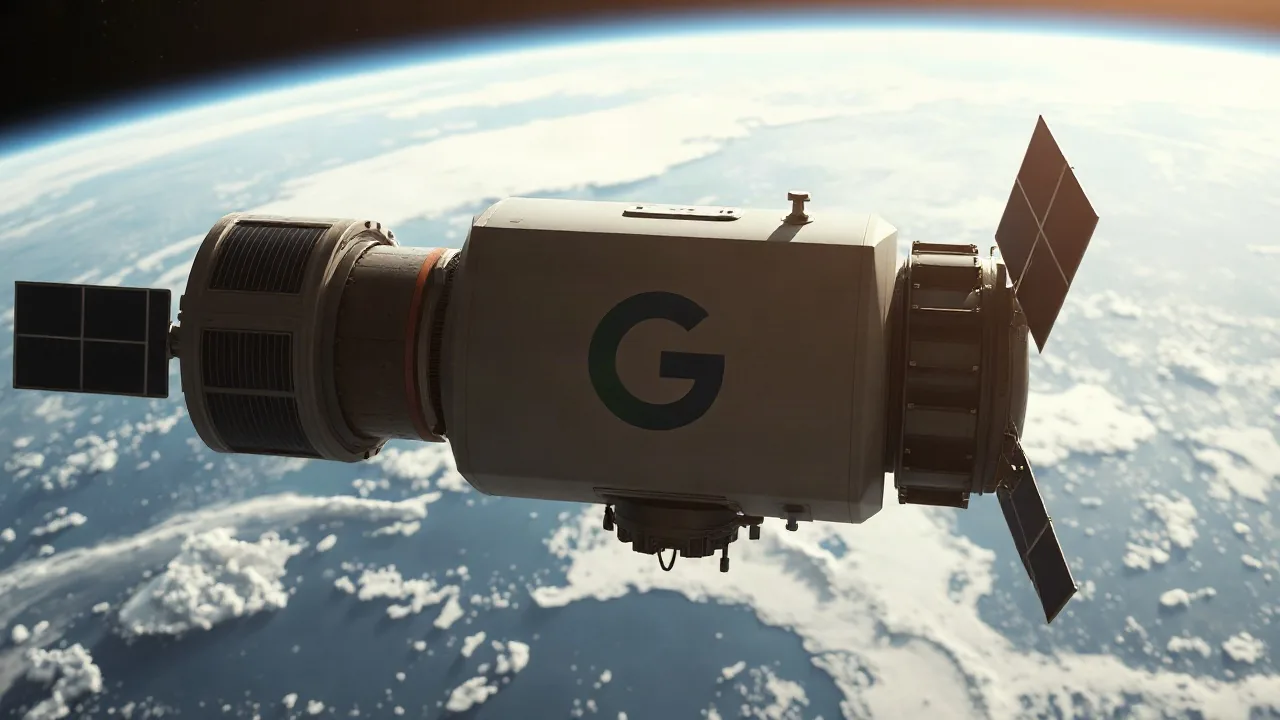
Google has officially brought its first data center satellite, codenamed Project Suncatcher, online, marking a significant step in extending its computing infrastructure into space. The satellite, launched recently, has already transmitted its initial data payload, including an AI-generated poem, back to ground control.
The Project Suncatcher prototype is equipped with a specialized chip known as a Tensor Processing Unit (TPU), designed by Google to accelerate artificial intelligence tasks. This orbiting TPU is capable of performing complex computations directly in space, reducing the need for constant communication with Earth-based servers. The successful transmission of its first AI-generated haiku signifies the system's operational readiness and the potential for future space-based AI applications.
AI Capabilities in Orbit
The AI running on the satellite generated a haiku, a three-line Japanese poem with a 5, 7, 5 syllable structure. While the specific content of the poem was not immediately released, its creation demonstrates the satellite's ability to perform creative and complex tasks autonomously. This capability could be crucial for future space missions, enabling immediate analysis of data collected by spacecraft, quicker responses to events, and more efficient on-board decision-making.
This development is part of Google's broader strategy to integrate its AI expertise with its extensive cloud infrastructure. By placing processing power in orbit, Google aims to reduce latency and improve the reliability of data transmission for its own operations and for potential customers in the future. This could include applications in Earth observation, telecommunications, and scientific research conducted in space.
The implications of having a data center in orbit are far-reaching. It could revolutionize how we conduct space exploration and resource management. Imagine telescopes in space that can process their own findings instantly, or communication satellites that can intelligently route data traffic without constant human intervention. This technology is not just about faster internet in remote areas; it's about enabling a new generation of space-based artificial intelligence that can operate semi-independently.
Google has been a leader in AI development for years, with its TPUs powering many of its services on Earth. Project Suncatcher represents an ambitious extension of this work, pushing the boundaries of where and how AI can be deployed. The company has stated that this is an experimental phase, and further testing will be conducted to assess the long-term performance and reliability of the system in the harsh environment of space. The successful deployment of this orbiting TPU is a testament to the advancements in miniaturization and resilience required for such an undertaking.