
NASA Curiosity Rover Drill Stuck on Mars; Arctic Seafloor Explored
NASA's Curiosity rover experienced a drill malfunction on Mars, while scientists released new findings from the Arctic seafloor and thousands of images from the Artemis II mission.

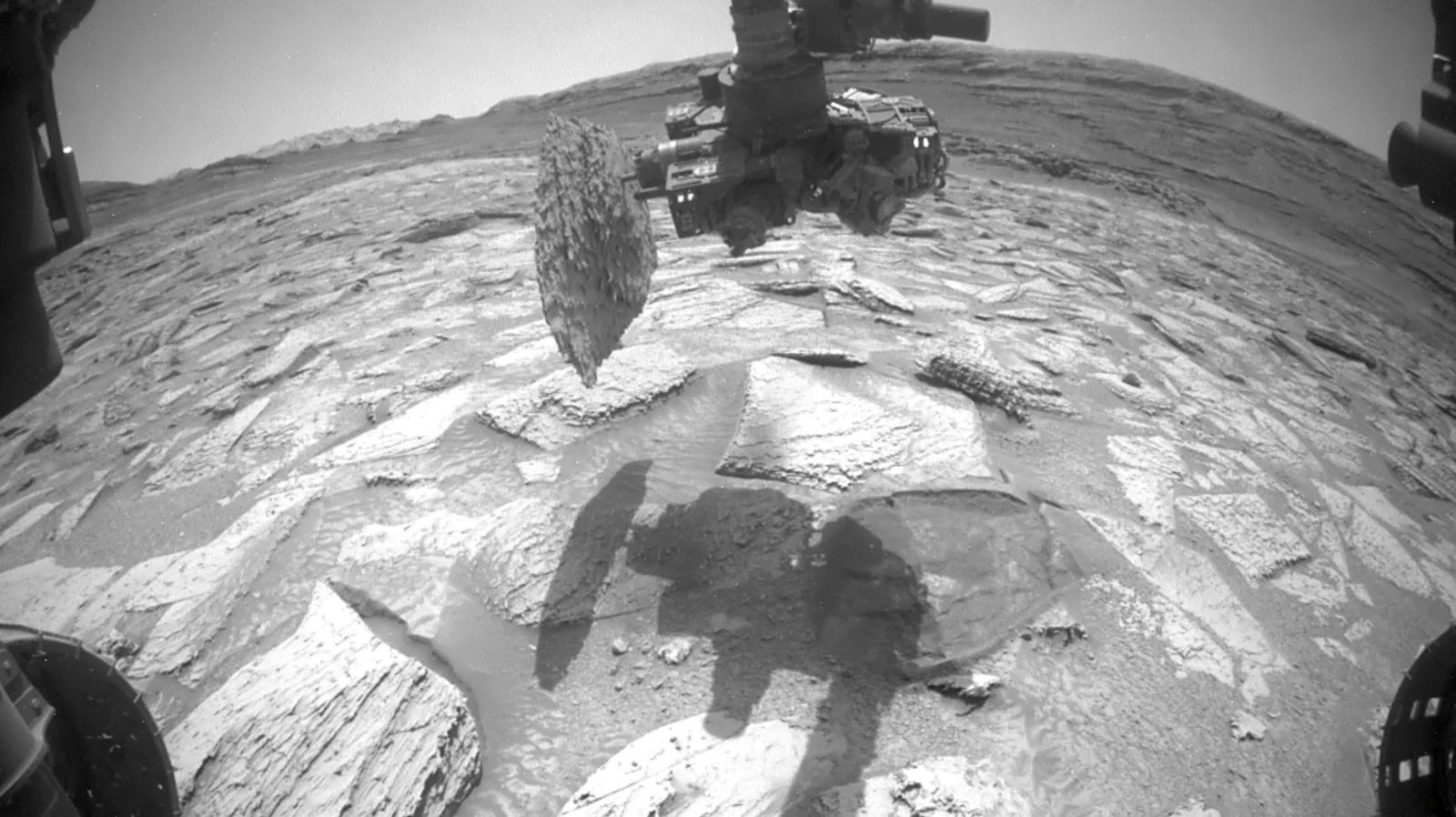
NASA's veteran Curiosity rover encountered an unusual problem on Mars this past week, getting its drill stuck while attempting to collect a rock sample. Meanwhile, scientists have unveiled intriguing new data from the Arctic seafloor and NASA released a trove of images from the recent Artemis II mission, highlighting a diverse week in space and Earth science.
The incident involving the NASA Curiosity rover occurred on April 29 when the vehicle attempted to sample a rock, nicknamed Atacama. This particular rock, estimated to be about 1.5 feet wide and weighing nearly 30 pounds, proved unexpectedly stubborn. When the rover retracted its arm, the entire rock detached from the Martian surface and became lodged in the drill's fixed sleeve, a situation NASA officials noted had not occurred in the rover's 14 years of operation on the Red Planet.
Initial attempts to dislodge the rock using vibrations were unsuccessful. The rover team then employed a more intricate series of maneuvers, including tilting, rotating, and vibrating the drill, along with spinning the drill bit itself. These combined efforts finally proved effective, and images captured on May 1 showed the rock successfully detached and breaking apart. This mishap briefly interrupted the rover's primary mission of collecting powdered rock samples for analysis by its onboard Sample Analysis at Mars (SAM) and Chemistry & Mineralogy (CheMin) instruments, but the issue has since been resolved, allowing Curiosity to resume its scientific investigations.
Arctic Fjord Reveals Hidden Ecosystem
In a separate scientific endeavor, researchers have published new findings from a deep exploration of an Arctic fjord in northwest Greenland. For a week in August 2025, a research program deployed a video camera and hydrophone 260 meters below the surface in Inglefield Bredning. The goal was to document the seafloor environment and its biodiversity. The study, published in PLOS One, revealed a surprisingly active ecosystem, with researchers recording 478 distinct organisms, including various species of comb jellies, arrowworms, snailfish, and shrimp.
One particularly notable observation captured on video was a snailfish passively drifting backward with the current, an unusual behavior for the species. The underwater audio equipment also detected the presence of narwhals on all but one day of the study, alongside the sounds of calving icebergs and distant boat engines. The footage also documented significant amounts of "marine snow"—organic debris from dead plants and animals—which serves as a crucial food source for many deep-sea inhabitants.
The researchers emphasized that this method of using compact, portable moorings with video recorders offers a feasible and valuable approach to studying these remote Arctic ecosystems, which have historically been difficult to access for direct observation. "So far, there have been few direct underwater observations in the Arctic for ecological research," the authors stated. "With video setups becoming accessible, more studies would be beneficial for filling this knowledge gap."
Adding to the week's scientific highlights, NASA released over 12,000 photographs taken during the recent Artemis II mission. While the mission's primary objective was to orbit the moon, the released images offer stunning views not only of lunar landscapes but also of Earth and the Milky Way galaxy. These images are available through a government website, providing the public with a vast visual record of humanity's ongoing ventures into space.