
NASA Finalizes Mars Orbiter Contract Bids for Enhanced Communication
NASA has issued its final request for proposals for a Mars Telecommunications Network (MTN) orbiter. The project aims to bolster communication capabilities for future missions on the Red Planet.

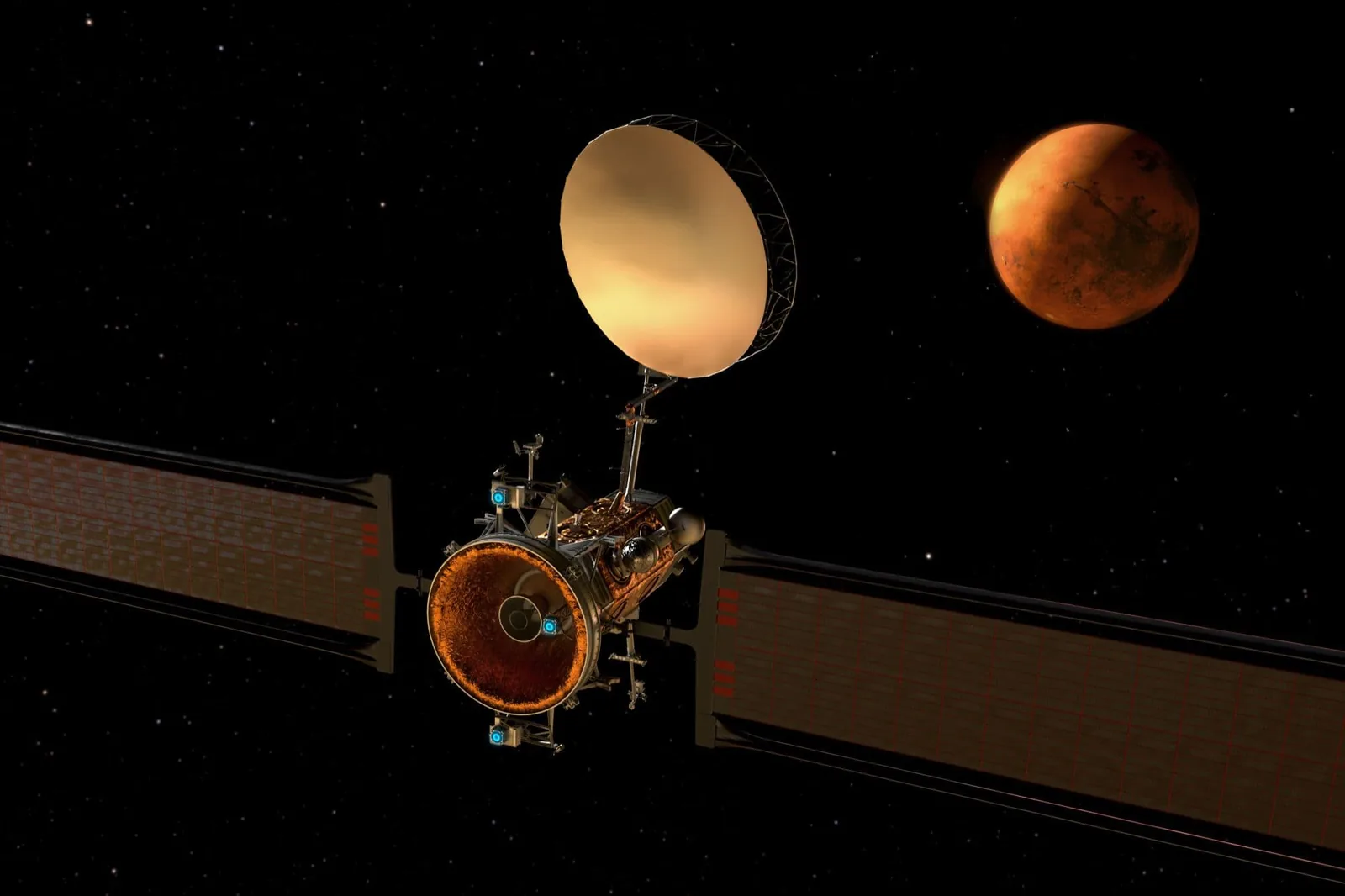
NASA has released the final request for proposals (RFP) for its Mars Telecommunications Network (MTN) project, setting a submission deadline of June 15 and aiming to award a contract by October 1. This initiative is designed to establish a dedicated communication system for future missions on Mars, ensuring a robust data relay infrastructure as existing orbiters age.
The MTN project, funded by a significant allocation in last year's budget reconciliation act, specifically earmarked $700 million for a Mars telecommunications orbiter scheduled for readiness by the end of 2028. The legislation also stipulated that eligibility for the contract would be limited to companies that received funding in fiscal years 2024 or 2025 for Mars sample return commercial design studies. These companies were required to have proposed a separate, independently launched Mars telecommunication orbiter as part of their study concepts.
However, initial indications from a draft RFP in April suggested a more open competition. This led to concerns in Congress that NASA might not adhere to the legislative intent of prioritizing companies already involved in Mars telecom orbiter research. In response, NASA clarified in the procurement filing for the final RFP that while the competition will be 'full and open,' it will include specific 'eligibility requirements' tied directly to the budget reconciliation act.
New Requirements for Mars Telecom Orbiter Proposals
Companies must demonstrate that they conducted commercial Mars sample return studies and included a Mars telecom orbiter concept within those studies. Eight companies initially participated in these commercial Mars sample return studies: Blue Origin, L3Harris, Lockheed Martin, Northrop Grumman, Rocket Lab, SpaceX, Quantum Space, and Whittinghill Aerospace. NASA has not publicly identified which of these firms incorporated telecom orbiter proposals into their designs.
Blue Origin and Rocket Lab have been particularly vocal advocates for a dedicated Mars telecom orbiter, actively discussing their proposed solutions for meeting NASA’s dual requirements for communication and scientific capabilities. The final RFP also incorporates updated plans, added since the draft request, to accommodate a 20-kilogram science payload. This payload will measure 55 by 55 by 45 centimeters and utilize 60 watts of power, suggesting an increased capacity for scientific instruments on the orbiter.
Dave Limp, chief executive of Blue Origin, commented on the project via social media on May 7, stating, "Our Mars Telecommunications Orbiter, based on our existing Blue Ring vehicle, meets the urgent need for communications, navigation, and relay while also flying up to 500 kg of science instruments to Mars." This indicates a strong focus on dual-purpose functionality for the upcoming orbiter, balancing essential communication relays with the potential for significant scientific data collection.
The development of the MTN is a critical step for NASA's long-term exploration goals on Mars. Reliable, high-bandwidth communication is essential for transmitting vast amounts of scientific data collected by rovers and landers back to Earth, as well as for enabling more complex remote operations. As missions like the Mars Sample Return campaign progress, the demand for advanced communication infrastructure will only intensify. This competitive process aims to leverage private sector innovation to meet these growing needs, ensuring that future exploration efforts are well-supported by a robust and dedicated telecommunications network.