
NASA Meaning: America's Space Agency Acronym and Mission
NASA stands for the National Aeronautics and Space Administration, the U.S. government agency founded in 1958 to lead American space exploration and scientific discovery.

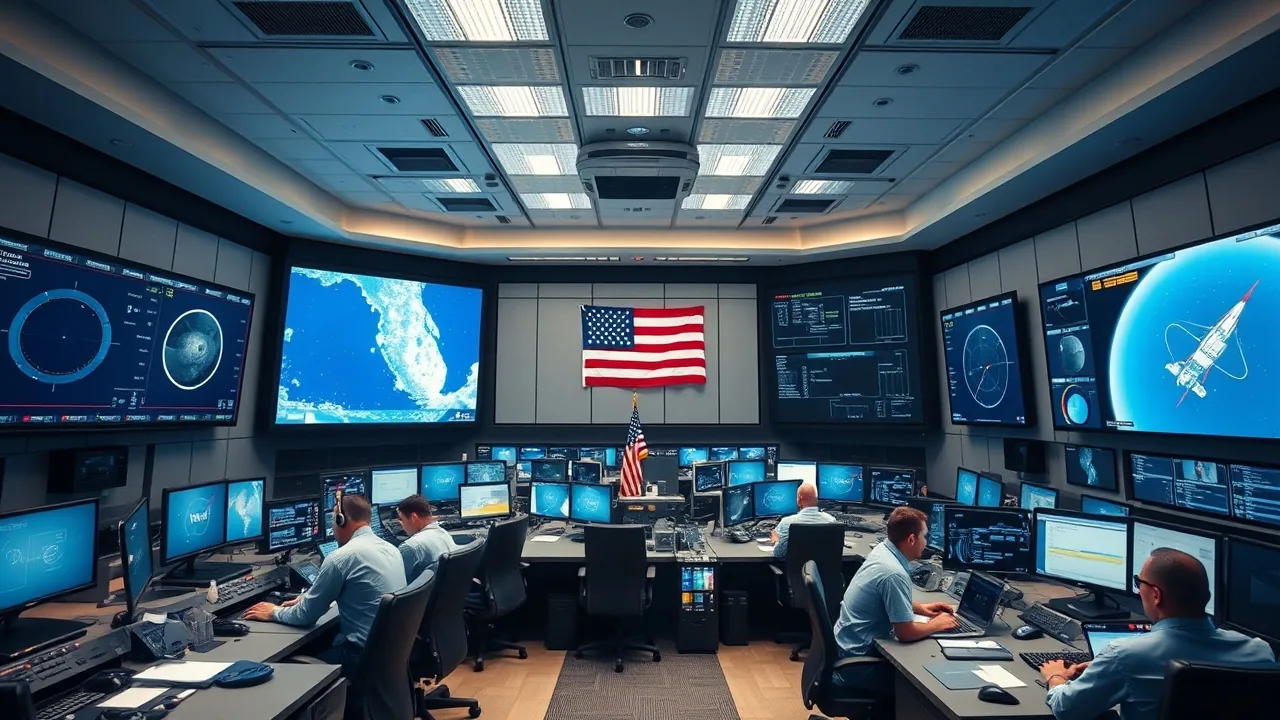
On July 29, 1958, President Dwight D. Eisenhower signed the National Aeronautics and Space Administration into law, creating the civilian agency that would define American space exploration history for decades to come. The acronym NASA breaks down simply: National Aeronautics and Space Administration, a name deliberately chosen to signal both ambition and civilian purpose during the height of Cold War competition.
The creation of NASA was not inevitable. The Soviet Union had shocked the world on October 4, 1957, by launching Sputnik 1, the first artificial satellite. American leaders felt an urgent need to respond, and NASA emerged as the institutional answer to that challenge. The agency absorbed the earlier National Advisory Committee for Aeronautics (NACA) and immediately began recruiting scientists, engineers, and pilots from across the country.
"NASA was established not just to match Soviet achievements, but to pursue knowledge about space that belonged to all humanity," said Thomas Pax, senior historian at the Smithsonian National Air and Space Museum in Washington, D.C. That dual mandate—competition and exploration—shaped NASA's DNA from day one.
The NASA Acronym and What It Really Means
Breaking down the NASA acronym reveals a deliberate structure. National emphasizes the agency's role serving all Americans. Aeronautics covers both atmospheric flight and the science of moving through air. Space Administration signals executive authority to plan, fund, and execute ambitious missions beyond Earth's atmosphere.
Unlike military space programs, NASA's founding legislation made it explicitly civilian in character. This distinction mattered politically and symbolically. A civilian American space agency could pursue scientific goals without the appearance of militarization, though NASA and the Department of Defense have collaborated extensively since the 1960s.
The original NASA budget in fiscal year 1959 was roughly $340 million. By 1966, as the Apollo program accelerated toward the Moon, NASA's budget had swollen to $5.4 billion annually, representing about 4 percent of all federal spending at that peak. Today, in 2026, NASA's annual budget hovers around $25 billion, funding operations at ten field centers and supporting thousands of contractors across the nation.
NASA Mission: From Mercury to Mars
The NASA mission has evolved continuously since 1958, but its core remains unchanged: advance human knowledge, develop spaceflight capabilities, and inspire the next generation of explorers. Early programs revealed this progression clearly.
Mercury (1961-1963) put Americans in space for the first time. Gemini (1964-1966) perfected the techniques needed for Moon landings. Apollo (1967-1972) achieved President John F. Kennedy's goal of landing humans on the lunar surface and returning them safely. Each program built directly on the lessons of its predecessor, creating a continuous learning curve that made later achievements possible.
After Apollo, NASA shifted toward sustained orbital operations and scientific discovery. The Space Shuttle Program (1972-2011) made spaceflight routine, though 135 missions produced two tragic losses and hard lessons about risk. The International Space Station, continuously inhabited since November 2000, became NASA's flagship demonstration that nations could work together in space.
In 2026, NASA origins matter not just historically but operationally. The agency is executing the Artemis program, which aims to land humans on the Moon again and establish sustained lunar presence. Mars exploration missions are in development, with robotic rovers and eventual human missions on the horizon. Meanwhile, NASA maintains Earth observation satellites tracking climate change, funds commercial partnerships through companies like SpaceX and Blue Origin, and runs the James Webb Space Telescope, which continues revealing the oldest galaxies in the observable universe.
The agency also manages the Lower Earth Orbit economy, certifying and funding commercial space stations that will replace the ISS as it approaches retirement around 2030. This shift reflects NASA's evolution from an operator to a customer and regulator of commercial spaceflight.
Why NASA's Name and Mission Still Matter
Seventy-seven years after its founding, NASA remains the most visible symbol of American technological capability and scientific ambition. The agency's name appears in school textbooks, museum exhibits, and household conversations whenever a space mission launches or a discovery makes headlines.
Understanding what NASA stands for requires understanding what it does: NASA employs roughly 18,000 civil servants and works with over 300,000 contractors and partners. It operates four primary centers focused on human spaceflight (Johnson Space Center in Texas), aeronautics (Langley in Virginia), planetary exploration (Jet Propulsion Laboratory in California), and astrophysics (Goddard Space Flight Center in Maryland). Each contributes specialized expertise to the broader aerospace history and present-day mission.
Recent announcements in May 2026 confirmed NASA's commitment to commercial lunar landers, in-situ resource utilization experiments on the Moon, and the Gateway platform that will orbit the lunar south pole. These initiatives directly reflect NASA's founding mandate to explore space and advance human knowledge, applied to challenges that didn't exist in 1958.
The National Aeronautics and Space Administration was created to ensure America would lead in space. Seven decades later, that mission continues, adapted for a world of international cooperation, commercial partners, climate science, and the prospect of human footprints on Mars.