
New Dinosaur Species Unearthed in England's Ancient Wetlands
Paleontologists have identified a new species of dinosaur from fossils discovered at a brickworks in Surrey, England. The herbivore, which lived 125 million years ago, is a significant find for understanding prehistoric life in Europe.

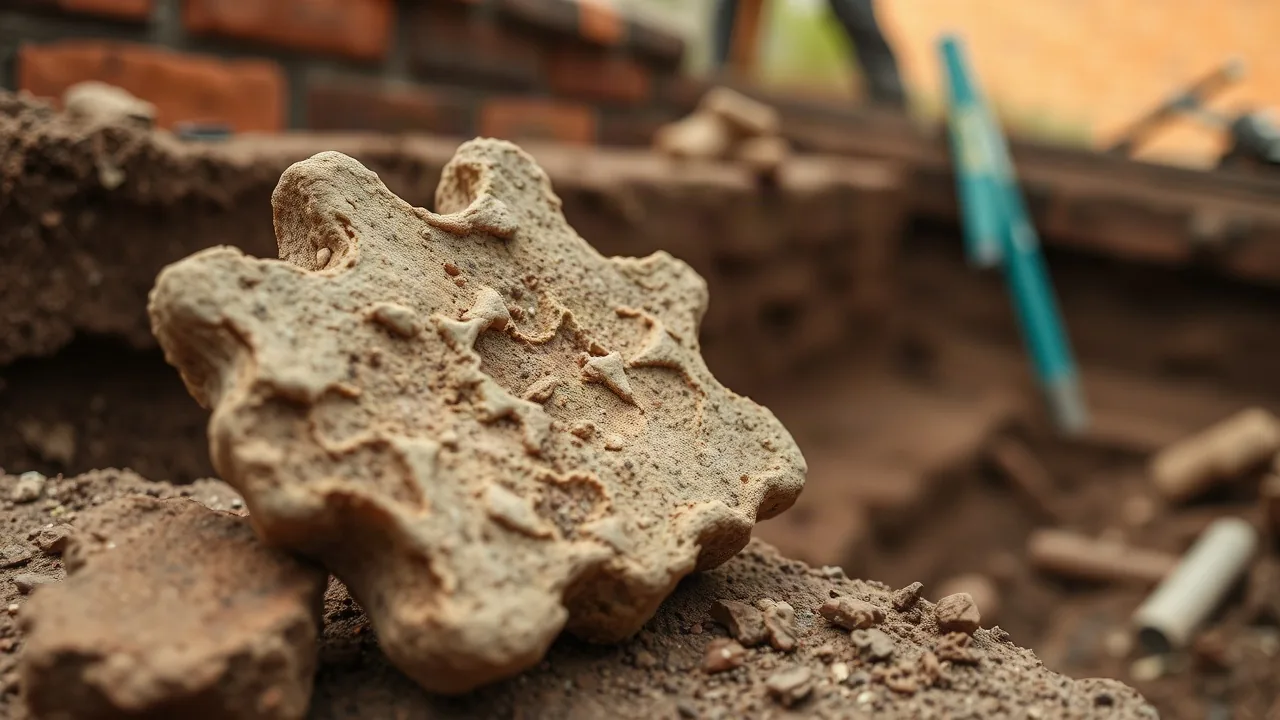
A previously unknown species of dinosaur has been identified from fossils unearthed at a brickworks in Surrey, England, shedding new light on the prehistoric creatures that inhabited the region 125 million years ago. The discovery, announced in 2026, marks a significant addition to the paleontological record of Europe during the Early Cretaceous period. The dinosaur has been named after a local Surrey resident whose family donated the specimens to a museum.
The fossils, consisting of limb bones and vertebrae, were originally discovered over 25 years ago at the historic brickworks. For decades, these remains were part of a private collection before being examined by paleontologists who recognized their unique characteristics. Analysis revealed that the bones belonged to a herbivorous dinosaur, distinct from any previously cataloged species, characterized by its unusually robust build and what appears to be a spiked thumb.
A Glimpse into Cretaceous Wetlands
The discovery site, a former brickworks, offers a unique window into the ancient environment. Paleontologists believe that 125 million years ago, this area was part of a vast wetland ecosystem, teeming with diverse plant and animal life. The presence of this new herbivore indicates a complex food web within these prehistoric wetlands. The specific type of dinosaur is thought to be related to iguanodonts, a group of ornithopod dinosaurs that were common during the Cretaceous period.
Dr. Lena Hanson, lead paleontologist on the study from the Natural History Museum, London, stated, "This find is incredibly exciting because it fills a gap in our understanding of dinosaur diversity in Europe. The preservation of these fossils, even after being embedded in clay for millions of years, is remarkable." She added that the unusual features of the dinosaur, particularly its limb structure, suggest adaptations for navigating its wetland environment.
The naming of the dinosaur, provisionally referred to as *Polypodion rex*, honors a local Surrey resident whose family's long-standing stewardship and eventual donation of the fossils were instrumental in the scientific study. This act of public contribution highlights the importance of private collections in scientific discovery and the role of community involvement in paleontological research. The fossils are now undergoing further detailed analysis to determine the full anatomical features and phylogenetic relationships of this new species.
The Early Cretaceous period was a time of significant evolutionary change for dinosaurs. While much research has focused on North America and Asia, discoveries like this one from the United Kingdom emphasize the need for continued exploration of European fossil sites. Understanding the distribution and evolution of dinosaurs across different continents provides crucial data for reconstructing the Earth's ancient geography and the migratory patterns of its inhabitants.
This new species adds to a growing list of dinosaur discoveries in England, further cementing its importance as a region for paleontological research. The study, published in the *Journal of Vertebrate Paleontology*, details the morphological characteristics of the fossils and their implications for dinosaur evolution in Europe. Further expeditions to the brickworks and surrounding areas are planned to search for additional specimens that could offer more clues about this ancient creature and its environment.