
North America Partial Solar Eclipse Arrives Aug. 12
Millions in North America can witness a partial solar eclipse on August 12, 2026. While not a total event for the continent, eastern regions of the U.S. and Canada will see significant obscuring of the sun.

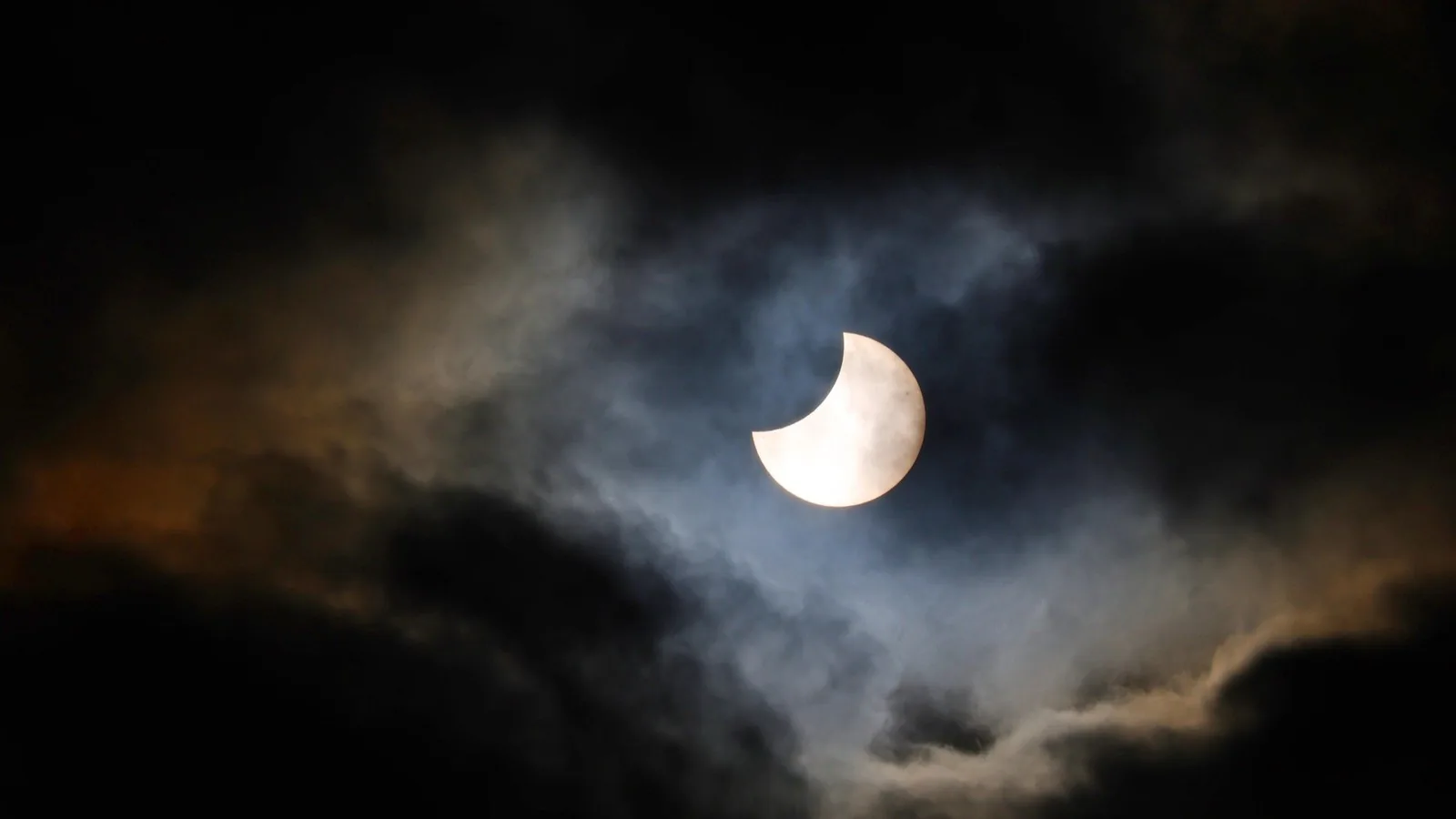
A partial solar eclipse will grace the skies over North America on August 12, 2026, offering millions an opportunity to observe the celestial event. While this eclipse will not be total for any location on the continent, significant portions of the sun will be obscured by the moon, particularly in the northeastern United States and eastern Canada.
The eclipse's visibility and magnitude will vary across the continent. In the U.S., the partial eclipse will be observable between 7:34 a.m. AKDT and 2:52 p.m. EDT across 20 states, though the most substantial views will be reserved for the northeastern states. Similarly, in Canada, all provinces will have a chance to see some part of the eclipse from 8:38 a.m. MST to 4:38 p.m. NDT, with eastern regions experiencing a more pronounced event.
Astronomers and enthusiasts are preparing to capture this cosmic alignment. The event occurs during daylight hours, with the partially eclipsed sun appearing as a crescent shape, sometimes likened to a smile. Unlike a total solar eclipse, this phenomenon will not cause noticeable dimming of daylight. Safety precautions are paramount; direct viewing of the sun requires certified solar eclipse glasses to prevent eye damage.
Observing Venus and Meteor Showers
For those with a keen interest in the night sky, the partial eclipse coincides with other significant astronomical events. On August 12, Venus reaches its dichotomy, a phase where it appears half-illuminated when viewed through a telescope. This occurs as Venus transitions from its status as the "Evening Star" towards a shrinking crescent. Adding to the excitement, the early hours of August 13 mark the peak of the annual Perseid meteor shower, promising a dazzling display of shooting stars.
This partial solar eclipse serves as a prelude to future celestial spectacles visible from North America. Following this event, a more significant partial eclipse is expected on August 2, 2027, visible in Newfoundland, Canada, with about 23% of the sun obscured. Looking further ahead, an annular solar eclipse on January 26, 2028, will provide a small partial view for eastern U.S. states and Canada, with Florida offering the best perspective at approximately 15% blockage. A larger partial eclipse is anticipated for January 14, 2029, sweeping across all of North America, with up to 81% blockage visible in northern Canada and 74% in northwestern U.S. regions.
The upcoming celestial events highlight the dynamic nature of our solar system and offer consistent opportunities for public engagement with astronomy. Each eclipse and meteor shower provides a unique perspective and moment for discovery, reinforcing the ongoing fascination with space and our place within it. The North American partial solar eclipse of August 12, 2026, though modest, is another chance for skywatchers to connect with the cosmos.