
Solar Eclipse 2026: Weather Forecast for Europe and North America
A solar eclipse is set to grace the skies of western Europe, Canada, and parts of the northern U.S. on Wednesday. However, cloud cover and potential rainfall may obscure the view for some.

A significant solar eclipse is anticipated to be visible across western Europe, Canada, and the northern United States on Wednesday, August 12, 2026. While the celestial event promises a spectacular display, prevailing weather conditions may present challenges for optimal viewing in certain regions. The moon will pass between the Earth and the sun, casting a shadow and partially or fully obscuring the sun from view.
The eclipse will occur in the morning hours for viewers in Alaska and northern Canada, transitioning to early afternoon for the northern U.S. and eastern Canada, and reaching its peak in the evening for western Europe, including the United Kingdom and Iceland, as well as parts of northwest Africa. A particularly captivating aspect of this event will be a sunset eclipse experienced in regions of western Europe and northwest Africa.
A total solar eclipse, where the moon completely covers the sun for approximately two minutes, will be observable along a path stretching from extreme northern Russia to eastern Greenland, western Iceland, and northern Spain. This is the only time when the sun's outer atmosphere, known as the corona, becomes visible from Earth. For those outside this path, within the areas indicated by yellow arcs on astronomical maps, a partial eclipse will be visible, affecting Canada and portions of the northern and eastern U.S.
Weather Outlook for Viewing
Forecasting specific cloud cover several days in advance remains challenging, but a general overview provides insight into potential viewing conditions. In Canada and the U.S., areas like New England, northeastern Montana (barring wildfire smoke), and northern Alaska are expected to offer the best conditions for viewing the partial eclipse. Conversely, regions including the mid-Atlantic, Midwest, Northern Plains, eastern Canada, the Canadian Rockies, and southern Alaska might experience cloudier skies.
In western Europe and northwest Africa, a heatwave is forecast for much of the continent. Despite the high temperatures, clear skies are anticipated for most of western Europe, including Spain, Portugal, France, southern England, Belgium, the Netherlands, Germany, Czechia, Poland, the Baltics, and southern Sweden and Finland, promising excellent viewing opportunities. However, Iceland, Ireland, Scotland, and Norway may contend with cloudier conditions.
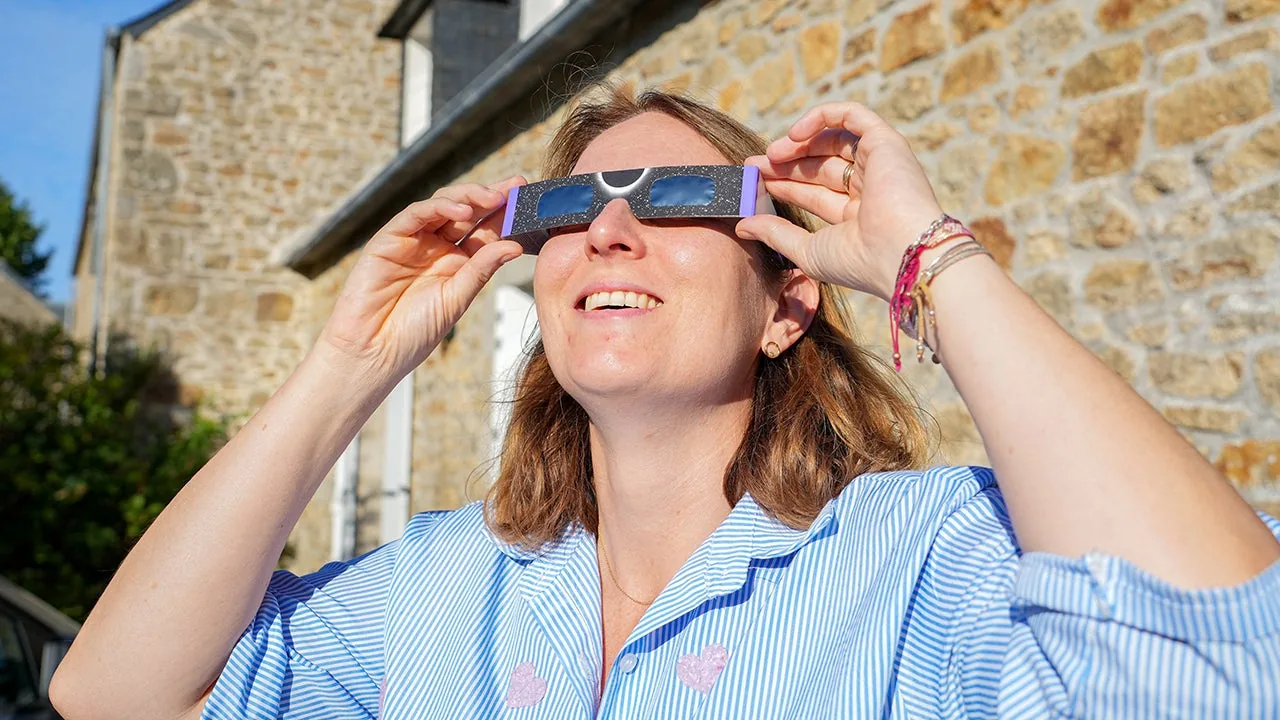
It is crucial for anyone planning to observe the eclipse to use certified eye protection, such as eclipse glasses or solar filters, to prevent severe eye damage. Regular sunglasses are not sufficient for safe viewing of a solar eclipse. The solar eclipse glasses and filters market has seen significant growth in anticipation of such events.
This solar eclipse serves as a reminder of the dynamic celestial mechanics that govern our solar system. Events like these offer valuable opportunities for scientific observation and public engagement with astronomy, fostering a greater appreciation for space phenomena. Understanding the path and visibility of eclipses also highlights the importance of meteorological forecasting, especially when weather can significantly impact the viewing experience for millions.