
Solar Eclipse, Perseid Meteor Shower Peak on Same August Night
August 2026 offers a celestial double feature: a total solar eclipse crossing parts of the Northern Hemisphere and the peak of the annual Perseid meteor shower under ideal dark skies.

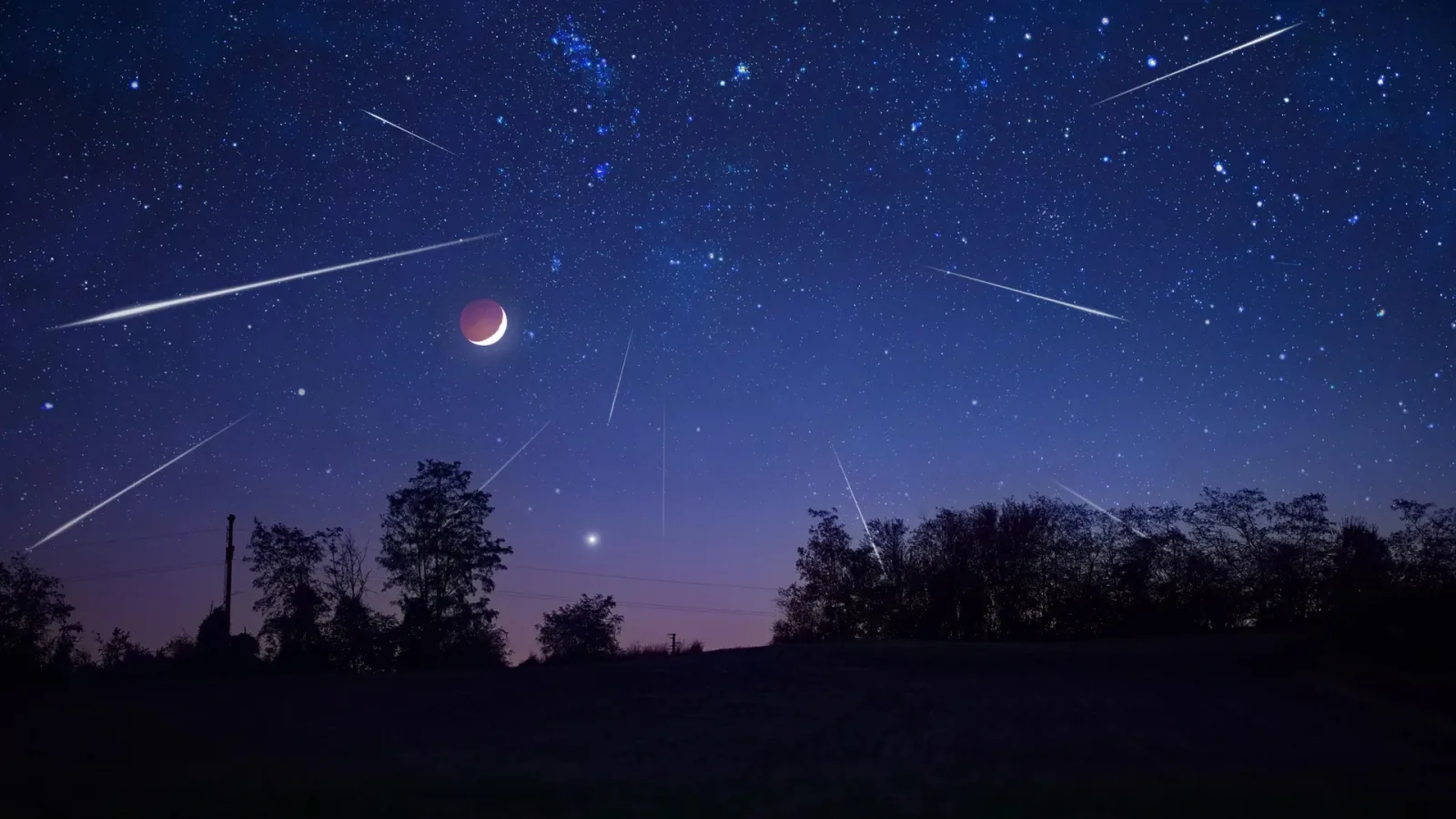
Skywatchers in August 2026 are in for a treat with a rare alignment of major astronomical events. On August 12, a total solar eclipse will traverse across northern Russia, Greenland, Iceland, northern Spain, and a sliver of Portugal. Simultaneously, a partial eclipse will be observable from various parts of the United States. The same date also marks the peak of the beloved Perseid meteor shower, benefiting from the dark skies of a New Moon.
The path of totality for the solar eclipse is a striking spectacle, where the Moon completely obscures the Sun. For observers in the U.S., including regions from Alaska to North Carolina, the view will be of a partial eclipse. This means only a fraction of the Sun will be covered, with the extent varying by location. Safety is paramount when viewing any solar eclipse; certified eclipse glasses or solar viewers are essential to prevent eye damage, as standard sunglasses offer insufficient protection. Never look directly at the Sun without proper eye protection or a specialized solar filter for optical devices.
Dark Skies Enhance Meteor Shower Viewing
Following the solar eclipse on August 12, the Perseid meteor shower will reach its zenith, with activity expected to continue into the early morning of August 13. The coincidence of the New Moon on the same night provides exceptionally dark conditions, free from the usual interference of moonlight, making it an ideal opportunity to witness the shower's brilliance. The Perseid meteor shower occurs annually as Earth passes through the debris trail left by Comet Swift-Tuttle. These minuscule particles, upon entering Earth's atmosphere at high velocities, ignite, creating the bright, fleeting streaks of light across the night sky.
To best enjoy the Perseids, skygazers should seek a location away from city lights with an unobstructed horizon. Looking northeast, toward the constellation Perseus, is recommended as meteors often appear to emanate from this region. However, the streaks can appear anywhere overhead, so a wide scan is advised. Patience is key; allow your eyes at least 30 minutes to adapt to the darkness for the most rewarding viewing experience.
Beyond the eclipse and meteor shower, Venus will grace the evening sky. From August 14 to 16, the planet will attain its greatest eastern elongation, appearing as a brilliant point of light low in the western sky shortly after sunset. It will outshine all surrounding stars. For those with telescopes, Venus will exhibit a distinct phase, similar to a miniature moon.
Concluding the month's celestial highlights, a partial lunar eclipse is set for the night of August 27-28. The Full Moon will pass through Earth's shadow, the umbra, causing about 93% of its diameter to be obscured. While not a total eclipse, the Moon will appear significantly dimmed, potentially taking on a coppery or rusty hue. Unlike solar eclipses, lunar eclipses are safe to view with the naked eye, though binoculars or telescopes can offer a closer look at the Earth's shadow creeping across the lunar surface.