
South Korean Satellite Images SpaceX Moon Rocket Crash Site
South Korea's Danuri satellite has captured the first images of the lunar surface following the crash of a SpaceX rocket's upper stage. The images reveal a darkened impact area and ejecta from the collision.

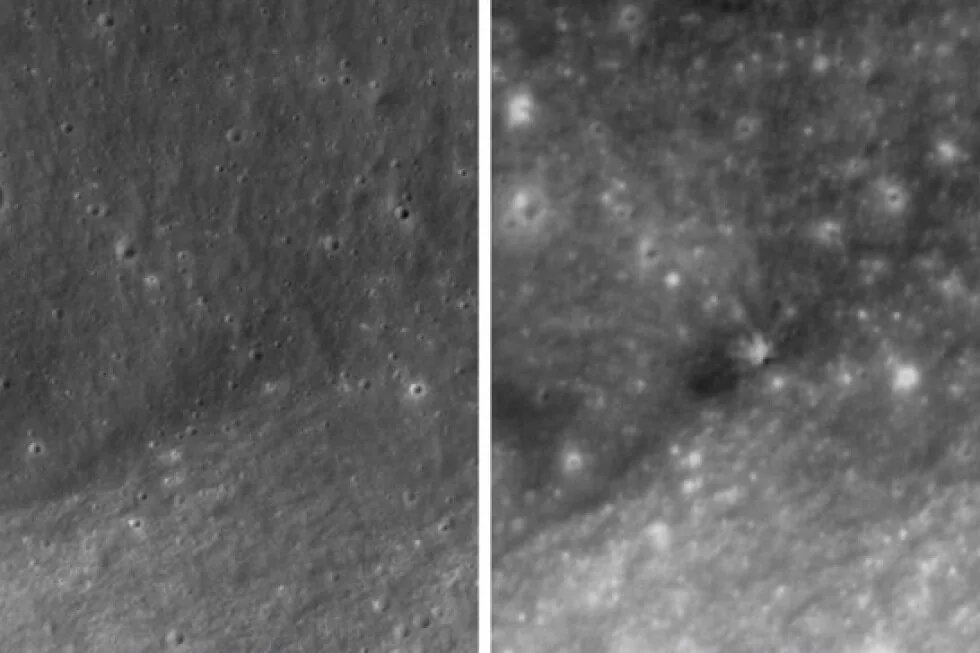
A South Korean satellite has provided the first visual evidence of the moon's surface after an errant SpaceX rocket stage impacted the lunar body. The Korea Aerospace Research Institute's (KARI) Danuri spacecraft, orbiting the moon, captured detailed images of the crash site shortly after the Falcon 9 upper stage collided with the moon on Wednesday. These images, released by KARI on Thursday, showcase a distinctly darker patch of terrain where the rocket struck, indicating significant disturbance and the creation of a crater that scattered lunar dust and rock.
Danuri, launched by SpaceX in 2022 from Cape Canaveral, Florida, made multiple passes over the impact zone to gather comparative photographic data. Officials confirmed that the satellite collected both "before" and "after" views of the specific lunar region. This event marks a rare instance of human-made debris unintentionally impacting the moon.
Unexpected Lunar Collision
The rogue component was the upper stage of a SpaceX rocket that had been launched the previous year as part of a mission to deliver private lunar landers. According to SpaceX, the stage was placed on an unintentional collision course due to a combination of solar activity and gravitational forces influencing its trajectory over time. The spacecraft impacted the moon at an estimated speed of 5,400 miles per hour (8,700 kilometers per hour). The unintended nature of the crash underscores the challenges of tracking space debris and predicting orbital mechanics over extended periods.
NASA is also expected to direct its Lunar Reconnaissance Orbiter (LRO) to fly over the crash site in the coming week. The LRO, equipped with sophisticated imaging instruments, is anticipated to provide further detailed observations of the aftermath, potentially offering insights into the precise nature of the impact and the resulting lunar disturbance. The information gathered by both South Korea's Danuri and NASA's LRO will contribute to a growing body of knowledge about lunar surface dynamics and the effects of space missions.
This incident highlights the increasing congestion in Earth's orbit and beyond, as more nations and private companies engage in space exploration. While this particular crash was accidental, it raises questions about the long-term management of space assets and the potential environmental impact on celestial bodies. KARI's successful capture of these images demonstrates the growing capabilities of international space agencies in lunar observation and data collection, contributing valuable scientific data for the moon exploration community.