
SpaceX Falcon 9 Booster Sets New Reuse Record at 35 Flights
SpaceX's Falcon 9 rocket booster achieved a new milestone, completing its 35th launch and landing. The booster carried Starlink satellites into orbit on Monday, June 8.

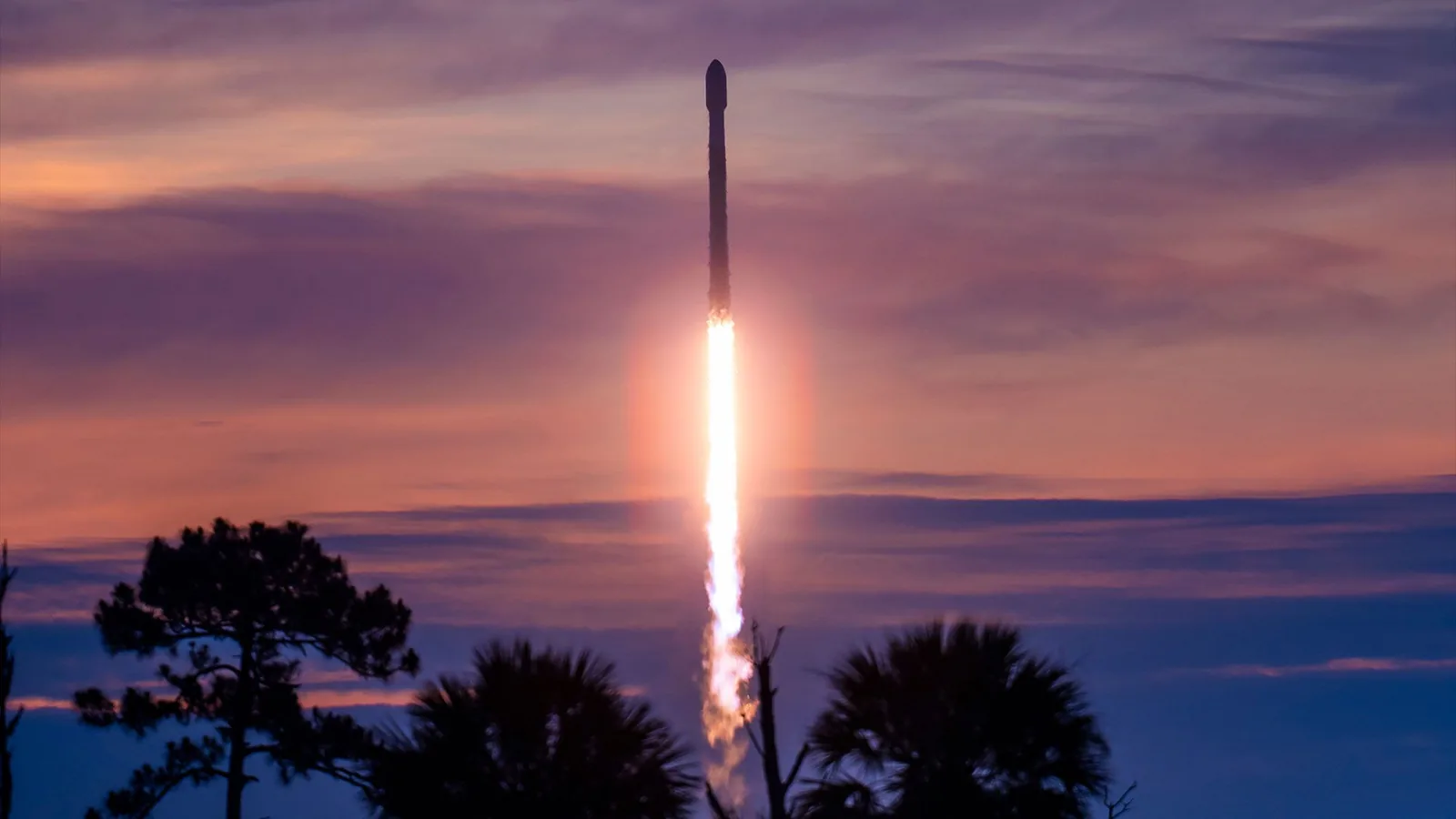
SpaceX has once again pushed the boundaries of rocket reusability, marking a significant achievement with the 35th launch and successful landing of a single Falcon 9 first stage booster. The historic flight occurred on Monday, June 8, 2026, deploying 29 Starlink satellites into low Earth orbit.
Liftoff took place at 6:13 a.m. EDT (1013 GMT) from Space Launch Complex 40 at the Cape Canaveral Space Force Station in Florida. Approximately one hour after launch, SpaceX confirmed the successful deployment of the Starlink payload, designated Group 10-35. The record-setting booster, identified as Booster 1067, completed its remarkable 35th journey to space and back, touching down safely on the autonomous droneship "A Shortfall of Gravitas" positioned in the Atlantic Ocean.
This latest milestone brings the Falcon 9 closer to the overall reuse record held by NASA's space shuttle orbiters, which completed up to 39 flights. The continuous advancements in booster technology by SpaceX are dramatically reducing the cost of space access, making ambitious projects like the Starlink constellation more feasible.
Expanding Global Connectivity
The successful launch further expands SpaceX's Starlink internet constellation, which now comprises over 10,580 active satellites, according to independent tracker Jonathan McDowell. This sprawling network aims to provide high-speed broadband internet access globally, including offering in-flight Wi-Fi for commercial aviation and direct-to-cell service capabilities for select mobile carriers. The expansion signifies a major step towards bridging the digital divide in remote and underserved regions worldwide.
Monday's mission represented SpaceX's 66th Falcon 9 flight of the current year, underscoring the company's rapid launch cadence. In total, this marked the 660th completed mission in SpaceX's operational history. The relentless pace of launches and the increasing reusability of the Falcon 9 boosters are central to the company's strategy of democratizing access to space.
The economic implications of such reusability are profound. By refurbishing and relaunching boosters multiple times, SpaceX significantly cuts down on manufacturing costs and lead times, enabling more frequent and lower-cost missions. This efficiency is crucial for sustaining large orbital infrastructures like Starlink and for future endeavors, including crewed missions and deep space exploration. The ability to launch multiple rockets within a single year, with a growing percentage of hardware being reused, demonstrates a paradigm shift in the aerospace industry, moving towards a more sustainable and economical model for space operations. The focus on reusability is not just an engineering feat but a fundamental business strategy that could redefine future space ventures.