
SpaceX IPO: What Investors Need to Know About Space
Speculation over a potential SpaceX public offering has intensified in 2026. We examine what an IPO could mean for investors and the commercial space sector.

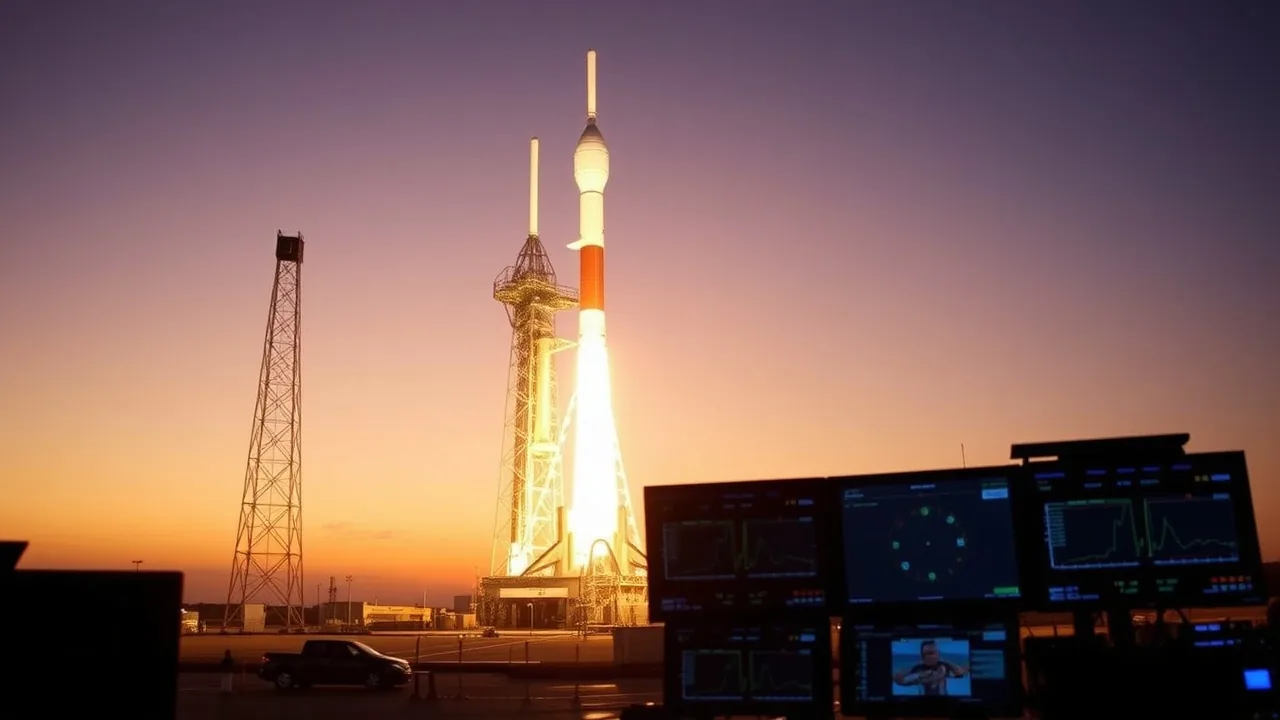
Elon Musk's SpaceX has long been the elephant in the room for institutional investors seeking exposure to commercial spaceflight. In May 2026, renewed chatter about a potential initial public offering has surfaced among Wall Street analysts, reigniting debate over whether the world's most valuable private aerospace company will finally open its cap table to public markets.
SpaceX, founded in 2002, has fundamentally reshaped the rocket and satellite launch industry. The company operates Falcon 9, the world's first orbital-class reusable rocket, and runs Starlink, a constellation of more than 6,000 low-Earth-orbit satellites providing global internet coverage. With a current valuation exceeding $180 billion according to recent secondary market transactions, SpaceX's scale rivals some of the largest aerospace and defense contractors already trading publicly.
"The private space economy is at an inflection point," said Morgan Stanley aerospace analyst Adam Jonas in a May 2026 client note. "A SpaceX IPO would legitimize the entire private spaceflight sector and unlock institutional capital that has been waiting on the sidelines." This sentiment reflects growing institutional appetite for pure-play commercial space exposure, a market segment largely absent from public equity markets until recent years.
The Case for Going Public
An SpaceX IPO would provide the company with public equity currency for acquisitions and expansion. The company's capital intensity is staggering: developing next-generation rockets, maintaining launch facilities, and expanding Starlink's satellite network requires billions in annual investment. A public listing would offer an alternative to the private funding rounds that SpaceX has relied upon since inception, which have diluted existing shareholder stakes.
SpaceX also faces maturing revenue streams. Falcon 9 launches now generate predictable government and commercial contracts. In 2025, the U.S. Space Force awarded SpaceX approximately $2.1 billion in National Security Launch Missions contracts. Starlink, while still unprofitable at scale, showed $1.3 billion in revenue during its fiscal year ending September 2025, a 42% year-over-year increase. These numbers suggest an increasingly stable cash flow profile that appeals to public market investors.
Musk himself has been ambivalent about a public offering. In previous statements, he cited concern over short-term market pressures conflicting with long-term mission objectives, particularly his stated goal of establishing a self-sustaining human settlement on Mars. However, Musk's positions have shifted before, and board pressure to monetize investor returns has historically proved persuasive.
Investment Opportunities and Risks
For retail and institutional investors, a SpaceX public offering would unlock exposure to several high-growth vectors within the space industry. Launch services, satellite internet, in-orbit refueling, and point-to-point hypersonic transport all represent potential revenue streams that do not yet exist for competing public companies.
However, risks are substantial. SpaceX faces regulatory scrutiny over Starlink spectrum usage and potential orbital debris. The Federal Communications Commission has already imposed constraints on Starlink launches pending environmental review. International competition from China's state-backed rocket programs and emerging private launchers like Relativity Space and Axiom Space could compress margins.
Concentration of voting power presents another structural concern. SpaceX's governance structure has historically vested disproportionate control with founders and early-stage shareholders. Public float shareholders would likely hold limited voting influence, a structure that has generated pushback in past aerospace IPOs, though the market has ultimately accepted similar arrangements.
Dependency on government contracts introduces policy risk. The U.S. Space Force, National Aeronautics and Space Administration, and Department of Defense collectively account for a significant portion of SpaceX's revenue. Changes in federal space budgets or geopolitical tensions could materially affect earnings. Additionally, national security concerns could constrain foreign ownership or technology licensing opportunities.
Timing and Market Conditions
Several factors suggest 2026 may be a viable IPO window. Aerospace stocks have outperformed the broader market, with the Aerospace and Defense Select Sector SPDR Fund up 18% year-to-date through May 2026. Investor appetite for space-themed equities remains strong, evidenced by the performance of pure-play commercial space companies and aerospace suppliers.
The space economy itself is accelerating. Commercial space revenue reached $469 billion globally in 2025, according to the Space Foundation. Launch capacity utilization in the United States is near 90%, a sign of healthy market demand. Competitor Relativity Space conducted its first orbital launch in February 2026, signaling maturation of the emerging launch market and reducing SpaceX's perceived monopoly risk.
However, macroeconomic headwinds and potential capital market volatility could defer an IPO into 2027 or beyond. Fed interest rate policy, equity valuation multiples, and broader market sentiment would all influence timing. Musk's personal schedule and ongoing litigation related to his Twitter acquisition also create unpredictable variables.
Comparable Companies and Valuation
Potential IPO comparables offer insight into what a public SpaceX might command. Northrop Grumman, a legacy aerospace contractor focused partly on space and missiles, trades at a 14x forward earnings multiple. Axiom Space, which went public via SPAC in 2021, currently trades at a significant loss. Relativity Space remains private but recent funding rounds valued it near $2.3 billion, a fraction of SpaceX's current valuation.
SpaceX's profitability profile and growth trajectory would likely justify a premium to historical aerospace multiples. Goldman Sachs, in an internal model reviewed by industry observers, estimated a potential IPO price range implying a $200 billion to $250 billion post-money valuation, though such figures remain speculative absent an official prospectus.
For investors considering investment opportunities in commercial space, a SpaceX IPO would be a watershed event. Whether announced in 2026 or deferred, the company's eventual public listing would reshape the landscape of aerospace equities and establish a valuation benchmark for the entire sector. Until then, investors seeking space exposure must navigate a limited set of legacy contractors and smaller emerging companies, each with distinct risk profiles and growth potential.