
SpaceX Launches 81 Satellites in Latest Rideshare Mission
SpaceX successfully launched 81 satellites into orbit from California on July 7 as part of its 17th Transporter mission. The Falcon 9 rocket's first stage later landed on a droneship.

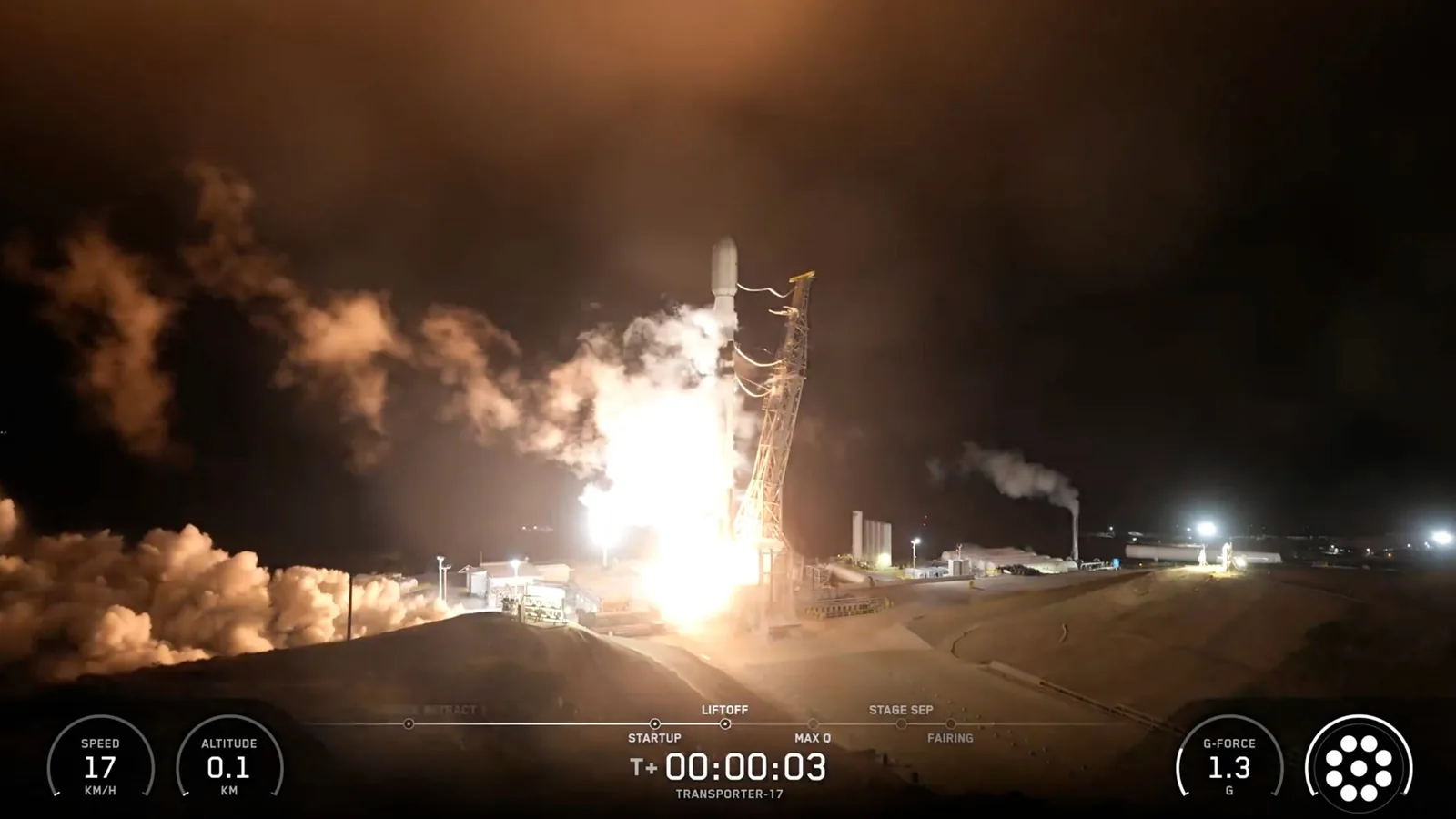
SpaceX successfully deployed 81 satellites into Earth orbit early Tuesday, July 7, from Vandenberg Space Force Base in California. The Falcon 9 rocket lifted off at 3:12 a.m. EDT (0712 GMT) for the mission designated Transporter-17, the latest in the company's ongoing rideshare program designed to ferry multiple small payloads to space.
The Transporter-17 mission carried a diverse array of payloads, including cubesats, microsats, hosted payloads, and orbital transfer vehicles. SpaceX stated that eight of these payloads would be deployed at a later time. Among the significant payloads was CAS500-4, a South Korean Earth-observation satellite weighing approximately 1,100 pounds (500 kilograms). This satellite, the fourth in a planned five-satellite series, is intended to assist the South Korean government in monitoring agricultural and forest resources, among other critical tasks.
This launch marks the 17th flight of SpaceX's Transporter rideshare series, which, along with its Bandwagon program, has sent over 1,800 payloads into orbit across 20 previous missions. Transporter-1, launched in January 2021, still holds the global record for the most satellites deployed in a single launch with 143 payloads.
Rocket Recovery and Mission Overview
Approximately 8.5 minutes after liftoff, the first stage of the Falcon 9 rocket executed a pinpoint landing on the SpaceX droneship named "Of Course I Still Love You." This vessel was positioned in the Pacific Ocean to recover the booster. The mission description indicated that this specific booster had previously flown 11 times. While the first stage returned to Earth, the Falcon 9's upper stage continued its journey, carrying the 81 satellites towards low Earth orbit (LEO). The deployment of most payloads began about 50.5 minutes after launch, with CAS500-4 scheduled for release nearly 2.5 hours after liftoff.
Transporter-17 represents the 79th SpaceX Falcon 9 launch of 2026. While SpaceX is known for its Starlink constellation, which has dominated nearly 80% of this year's launches aimed at building out its global broadband network, rideshare missions like Transporter-17 highlight the company's capability to serve a broader range of commercial and governmental satellite customers. These missions are crucial for enabling smaller organizations and countries to access space affordably.
The success of Transporter-17 further solidifies SpaceX's position as a dominant force in the commercial launch market. By offering frequent and reliable access to orbit through its rideshare program, the company lowers the barrier to entry for satellite deployment, fostering innovation across various sectors, including Earth observation, telecommunications, and scientific research. The consistent recovery of its Falcon 9 boosters also contributes to reducing launch costs, making space access more sustainable.